

Tarot readings often walk us through life’s shadows and sunlight. Among the Minor Arcana, the Five of Pentacles stands out for its depiction of adversity. But there’s more beneath the snowy surface of this card. In our work at MysticLog, we’ve seen how deeply its message resonates—not just about tough times, but about transformation and resilience. Let’s begin with the card’s visual cues, and then unfold its meaning layer by layer.
The symbolic landscape of the Five of Pentacles
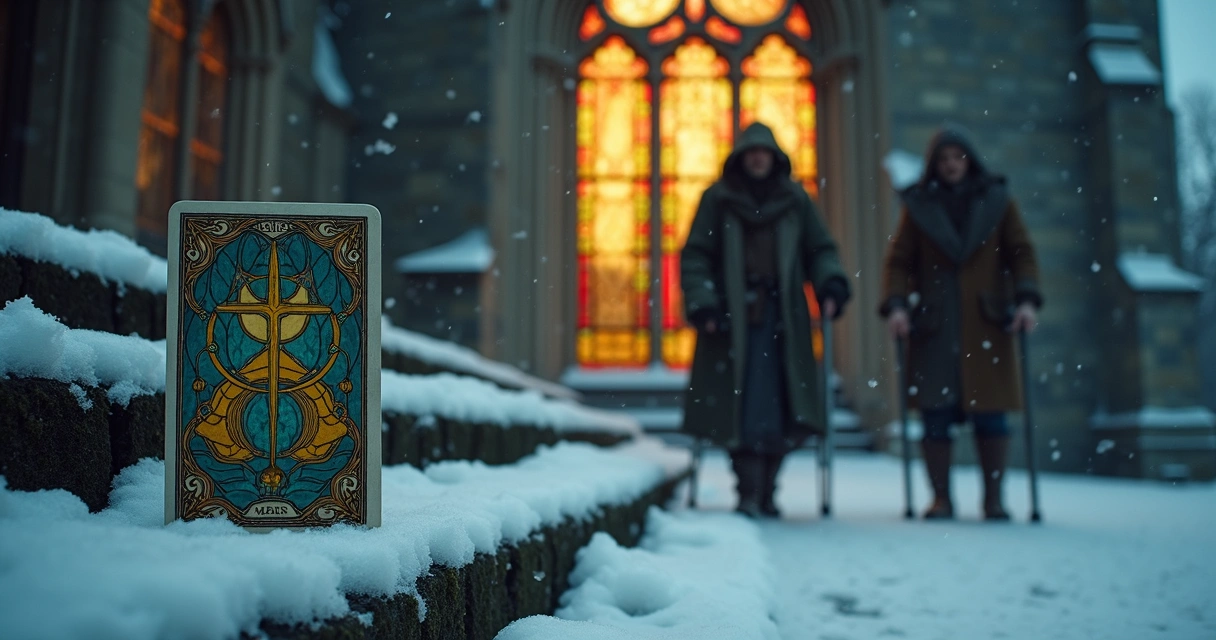
When we first look at the Five of Pentacles in the Rider-Waite-Smith deck, we notice two figures trudging through snow. One leans on crutches. The other wears worn-out clothing. Both pass beneath a brightly glowing stained-glass window shaped with pentacles. The window suggests sanctuary, yet the figures remain outside.
This image is striking. Cold, isolation, and a sense of lack fill the scene. The pentacles, usually signs of material stability, are unreachable here—hinting at resources that are close but not used. In our experience, this card usually stops querents in their tracks; its pain is palpable but so is its invitation to look for hope.
- The context of the church window suggests spiritual help is available, waiting a step away.
- The pair’s connection reminds us that we are rarely alone in hardship—even if it feels so.
- The falling snow and makeshift clothing emphasize vulnerability and survival.
“Help exists even when we can’t see it.”
Upright and reversed: Two faces of hardship
We often see both positions unveil powerful readings. The upright orientation contrasts sharply with the reversed; together, they reveal how adversity is both an external and an internal experience.
Upright: The weight of hardship and exclusion
In the upright position, the card signals tough times. We’ve observed it appearing when someone faces:
- Financial stress—real or perceived scarcity and debts.
- Health troubles—chronic issues or acute setbacks.
- Emotional loss—feelings of abandonment and alienation.
The Five of Pentacles upright calls out both material loss and the sting of isolation. It’s a reminder of being excluded or overlooked, with resources just out of reach. In spiritual readings, this might point to losing faith or struggling to find meaning when life hurts. Research underscores that spirituality can sometimes be turned inward negatively, with up to 15% of people experiencing faith as abandonment or punishment during distress (National Library of Medicine).
Reversed: Glimpses of hope and recovery
Turn the card upside down, and the message shifts. Relief is possible. Difficult circumstances may continue, but the worst has passed or resources are finally seen. Blame and bitterness begin to unravel. Pride softens, making it easier to ask for help.
The reversed Five of Pentacles signals recovery, spiritual insight, and renewed connections.
It may also show someone stepping out of the victim mindset, opening up to support, or seeing light at the end of a dark path—echoing studies that faith and community can be powerful in post-disaster recovery (National Library of Medicine).
Real life connections: Hardship in finances, health, and emotions
Whenever we handle this card in MysticLog readings, it strikes us that pain here is multi-layered. It is not just about losing money or work—it’s about the lasting effects on our spirit and self-worth.
- Financial hardship: This card can manifest during job loss, business failure, or relentless bills. It often invites us to talk about a client’s self-worth, not just their bank balance.
- Health concerns: Chronic illness, injury, or even emotional burnout may be present. The sense of exclusion—a friend group going out while you’re at home—becomes as real as any pain.
- Emotional struggles: Even in a crowd, loneliness or shame can follow. The card points out inner wounds, not just outer misfortunes.
 It is easy to see how, left unaddressed, these conditions spiral. Studies confirm that people sometimes use faith negatively, but most draw strength from it during aging or adversity (National Library of Medicine). The Five of Pentacles shows us both sides—crisis and potential rescue.
Spiritual lessons: Mindset, gratitude, and seeking support
What spiritual insights does this card teach? When we work with clients, we have found that the pentacles in the glowing window hint at unseen resources—especially those inside us.
- Mindset: Where attention goes, energy flows. Focusing exclusively on lack deepens feelings of exclusion. If the querent looks up, support may be found.
- Gratitude: Even a small act—acknowledging one thing that is working, or someone who cares—can help. Research shows that belief and gratitude offer resilience (see National Library of Medicine).
- Seizing support: The figures in the card remind us: we don’t have to go alone. Seeking community, faith, or professional help changes the story.
“The way out starts with noticing the light.”
In MysticLog’s experience, a key tip is to avoid spiritual bypassing. We encourage naming pain, but also searching for hidden help—just like searching for patterns using our app to notice when adversity repeats, and when recovery shows up too.
Shifting scarcity and energy blocks
A common theme in Five of Pentacles readings is the “scarcity mindset”: a belief that there’s never enough—money, love, or worthiness. We often observe a stuck or blocked root chakra (the base of security) in spiritual counseling. This results in chronic anxiety, withdrawal, or shame. Energy-wise, the solution starts with acknowledging these feelings, then slowly shifting them.
Shifting from a mindset of lack to one of possibility opens the door to new outcomes.
Ways to encourage clients (or ourselves) toward recovery:
- Gently suggest seeking physical or spiritual support—therapy, a faith community, or even a trusted friend.
- Keep a gratitude journal that lists small daily wins or kindnesses.
- Practice self-compassion: offer kindness to oneself, as if comforting the cold figures in the card.
- Engage in grounding or root chakra exercises to strengthen courage.
The beauty of the Five of Pentacles? It reminds us to honor hardship, but also to invite transformation. This mirrors findings that spirituality can help people make meaning and reshape their identities during recovery (National Library of Medicine).
Applying the card: Practice tips for professionals
Interpreting this card takes care. Over time, we’ve gathered these practical insights:
- Notice the position: Upright often signals present or pressing hardship; reversed can show exiting a hard spell or refusing victimhood.
- Encourage self-reflection: Ask: “Where in your life do you feel left out? What support are you overlooking?”
- Check surrounding cards: A mix of pentacles cards heightens attention to resources. Swords or Cups may bring in themes of thought or emotion, like in the Ten of Swords or Five of Cups.
- Be specific and gentle in advice: Offer concrete steps but avoid minimizing pain (“just be positive!” rarely helps).
Using platforms like MysticLog, readers can organize notes on how often hardship arises—and if the card’s meaning changes over time for a querent. This practice can deepen insight and confidence in interpretation.
Love and relationships
In relationships, the Five of Pentacles can highlight periods of disconnection, outsider feelings, or stress about security. Clients may be worried about abandonment, not feeling seen, or carrying old hurts. We gently recommend focusing on mutual support—just as the two figures in the card lean on one another.
Recovery in love often begins with honest conversation about vulnerability, rather than hiding wounds. Professional readers may use spreads that invite both partners to name their needs, or encourage solo querents to seek community elsewhere while a relationship recovers.
Career and finances
This card’s presence in a career or money reading usually warns of uncertainty, cutbacks, or fear of job loss. At the same time, it cautions against tunnel vision. We may suggest brainstorming overlooked resources or networking opportunities, rather than focusing on closed doors. Journaling about financial patterns and breakthroughs—recorded in MysticLog—can reveal repeated lessons about scarcity and recovery.
Spiritual path
Sometimes the Five of Pentacles points to a dry spiritual period: loss of faith, alienation from one’s beliefs, or discouragement. It is a call to reconnect—perhaps with a faith tradition, a new practice, or by serving others. Journaling about gratitude or reading more about spiritual growth, such as in our guide to the Major Arcana, can give context and hope.
 Opportunities for spiritual growth: Beyond the pain
What does the Five of Pentacles ask us to learn? Primarily, empathy—both for ourselves and others. This period of loss or struggle is temporary, though its impact can shape our future compassion. Many successful readers and spiritual counselors find it rewarding to see clients emerge from this phase with new gratitude, deeper faith, and a willingness to help others in turn.
For students and professionals alike, this card invites regular review and pattern recognition—one of MysticLog’s strongest tools. If this card arises often, what larger cycles are at play? Is it time to change a mindset or take a brave new step?
Sometimes we suggest clients journal about their darkest and lightest spiritual moments, then compare. They often find growth occurred most during “winters”—mirroring the path of the figures in the card toward sanctuary. We find it helpful for self-reflection, too (read more on self-reflection and growth in tarot).
“Even in hardship, hope is a step away.”
In conclusion: Transformation is possible
The Five of Pentacles does not promise instant relief—or easy answers. But it does offer a doorway: a chance to recognize pain, honor our experience, and reach for connection or meaning. In our journey with MysticLog, we’ve seen that tracking hardship and recovery makes both gentler. As guides and learners, we can use this card’s lessons to move from isolation toward renewed hope and gratitude.
Are you ready to turn hardship into insight? Begin your journey of self-discovery and mindful organization with MysticLog, and see how tracking your readings can light the way forward.
Frequently asked questions
What does the Five of Pentacles mean?
The Five of Pentacles describes hardship—often financial, health-related, or emotional—combined with feelings of isolation or being left out. It suggests adversity, but also hidden support or resources that may not be immediately visible. This card invites us to examine both our circumstances and mindset, showing that help may be closer than we think.
How does the Five of Pentacles relate to hardship?
In tarot, the Five of Pentacles directly represents difficult times. We see struggle, exclusion, and scarcity. Its appearance may reflect job loss, illness, or deep personal insecurities. However, it also points to the attitudes and beliefs—such as a scarcity mindset—that can make these hardships feel heavier.
Can the Five of Pentacles indicate recovery?
Yes, especially when reversed, the Five of Pentacles hints at improvement, the end of a crisis, or the willingness to seek new support. It suggests that after a period of adversity, there is hope for recovery, especially if we open ourselves to community, faith, or practical help.
How to interpret Five of Pentacles in love?
In love readings, the card may reveal emotional distance, insecurity, or the fear of abandonment. We recommend focusing on honest conversations, support, and reconnecting with compassion. It often helps to acknowledge shared vulnerabilities, just as the two figures rely on each other in the card’s image.
What are common symbols in Five of Pentacles?
The snowy environment, two struggling figures, and the glowing stained-glass window with five pentacles are key symbols. The cold and worn clothing reflect vulnerability. The illuminated window suggests sanctuary or resources that exist, but may require courage or openness to access.