


We all reach moments where difficult choices and discord rise to the surface—when every road seems shadowed by conflict, when words sting, and bridges feel at risk of burning. In these times, one Tarot card often emerges to meet us: the Five of Swords. Its presence in a reading can spark unease, but as we have learned through countless consultations at MysticLog, its wisdom can also lead us toward honest self-reflection, healing, and even new beginnings.
The story behind the Five of Swords
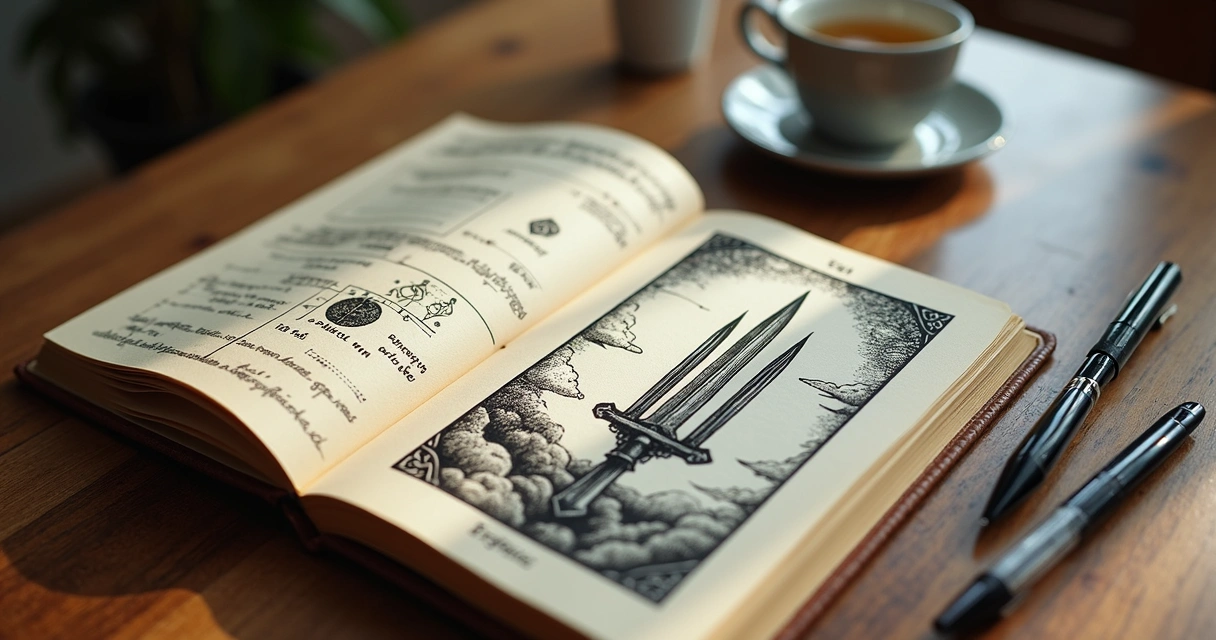
Let’s start by truly seeing it: the card’s artwork commonly shows a figure in the foreground holding three swords, a sly, sometimes satisfied expression on their face. Behind them, two figures retreat, appearing wounded in spirit, not just body. The landscape is stark—clouds hang low and waters rest uneasy. While every Tarot deck brings its unique illustration, these elements remain constant across interpretations.
The central image of the Five of Swords calls us to reflect on victory, loss, and the cost of both. Is the one holding the swords a winner, or have they sacrificed something far dearer for a hollow triumph? The defeated figures highlight the pain and fallout that often accompany even small battles.
Themes of conflict and consequence
Every Tarot reader working with the Five of Swords will sense confrontation in the air. This card highlights moments of friction, arguments, and differences that refuse to be ignored. But it is not simply about “winning” or “losing.”
- The price of victory: What must be given up to claim success?
- Regret and remorse: Are we truly satisfied with the outcome, or does something feel lost?
- Ethical crossroads: Is it better to have the last word, or to walk away?
- Lingering resentments: How do past disputes linger in our spirit?
Some clients, as we’ve seen in our practice, fear the Five of Swords because it can reveal uncomfortable truths. It does not just report the quarrel; it shines a light on how we handled it, and at what cost.
Symbolism and psychic insight
Tarot is a language of symbols, and the Five of Swords is no exception. The sky, often stormy or unsettled, represents mental turmoil or emotional friction. The swords themselves point to intellect and communication—making this card strongly connected to arguments, misunderstandings, and the spoken word. When we record readings in MysticLog, we have found reviewing these symbols with the querent helps anchor the card’s true impact.
We encourage psychic professionals to see the waters in the background not just as scenery, but as emotional undercurrents. The defeated figures’ posture can invite dialogue about pride, withdrawal, and the compulsion to “win” at any cost. The entire scene asks us: Is resolution really about who keeps the sword, or who finds peace?
 Five of Swords upright meaning
When the Five of Swords appears in its upright position, its signal is most direct. Tension hangs in the air; conflict has occurred or is about to. For querents, this can mean:
- A recent argument, or brewing tension that may soon erupt
- Feelings of betrayal, alienation, or loss—especially after verbal or intellectual disagreements
- Experiences where someone “won,” but the emotional cost lingers
- Difficult choices about whether to keep fighting or let go
The upright Five of Swords reminds us that in some situations, the battle may be won while the war of the heart is lost.
We always encourage Tarot professionals to ask extra questions when this card arises. The Mystic AI Assistant in MysticLog can be a powerful support, suggesting lines of inquiry such as “What was really lost during this conflict?” or “Is reconciliation possible and desired by both sides?” Recording these reflections allows us to track changes over time—sometimes, patterns of repeated conflict emerge, offering new opportunities for healing.
Upright in love readings
In matters of the heart, upright Five of Swords often hints at arguments or betrayals, perhaps unresolved wounds or words spoken in anger. This card suggests that both partners may be harboring pain from previous disagreements. It can signal the need to pause, reflect, and decide what each person truly values—a relationship, or winning a dispute. We’ve observed that sometimes, an honest conversation about deeper needs can pave the way toward healing.
Upright in career and finance
For career questions, the Five of Swords upright often represents competition, office politics, or a work environment marked by unspoken resentments. As one holds the swords while others walk away, it asks: “At what cost is success being pursued?” Sometimes, it can also mean someone feels isolated after a professional win. In financial readings, it’s wise to examine whether “victory” has created new problems—perhaps a windfall that brings envy, or clashes over resources with partners or family.
Upright in personal growth
Tarot isn’t only about forecasting; it is a mirror for our inner life. On a spiritual level, the upright Five of Swords encourages us to look at old grudges or self-destructive patterns. Are we caught in endless battles—against others, or even our own doubts? Here, the card becomes an invitation to break cycles and seek emotional freedom, not just victory.
Five of Swords reversed meaning
When reversed, the Five of Swords changes tenor. While upright it looks back at the conflict, reversed it gazes toward its end—resolution, regret, or possible healing.
- Desire to make amends or apologize
- Seeking peace after a painful break
- Letting go of need to always “win”
- Learning hard lessons from past mistakes
The reversed Five of Swords signals that the most difficult part of a dispute may finally be ending. We see clients open to dialogue, ready to let go, or simply exhausted by drama. Sometimes, it urges them to forgive themselves for mistakes, recognizing that all people are learning along the way.
Reversed, this card is a gentle nudge to reflect: “What must I release to truly move on?” The Mystic AI Assistant can guide readers and querents to ask, “What has this conflict taught me? What new boundaries do I wish to set, and what wounds need gentle tending?”
Reversed in love readings
Here, the sword is laid down. For couples, a time of argument may be giving way to quiet honesty, vulnerability, or apology. Sometimes, the Five of Swords reversed is a sign it’s time to move on from a connection where negative cycles have repeated too often. For singles, it can mean letting go of old heartbreak, or the release of shame linked to past choices.
Reversed in career and finance
At work, the reversed card may point to cooling tensions. This could be a workplace truce, or a decision to stop competing and start listening. For finances, it suggests setting aside competition with others and focusing on collaboration, or addressing mistakes with compassion and practicality.
Reversed in personal growth
Reversed, this card can bring relief—a softening of self-judgment, a willingness to see how past battles shaped new strengths. This is the moment to focus on acceptance and gentle self-discovery.
 Key topics in love, work, money, and growth
The Five of Swords rarely appears in isolation. Its message flows into all areas of life. Here is how we encourage Tarot professionals to interpret its core topics:
- Love: Arguments, blame, defensiveness, but also the hope of starting fresh or moving on from old wounds.
- Career: Unhealthy competition, office politics, pride before listening. Sometimes, the need to pick your battles.
- Finances: Gain with cost attached—a windfall tainted by loss, or disputes over money.
- Personal growth: A push to examine self-destructive habits, to recognize patterns, and to choose peace over the urge to always win.
We find a natural link between the Five of Swords and other Tarot cards bearing themes of challenge, such as the Five of Wands, which you can read about at our post on conflict and growth in Tarot readings. Together, these cards remind us that struggle brings opportunity for insight, not just suffering.
Practical counseling: Using the Five of Swords in readings
In our experience, what truly matters is not just knowing what the Five of Swords signifies—but how to sit with a querent and help them use its message for transformation. Here are our guidelines for interpreting this card with care and wisdom:
- Begin by grounding. When this card appears, offer the querent reassurance. The truth may sting, but the storm will pass.
- Clarify conflict. Gently ask: “Where have arguments or tensions been playing out in your life? Are these disagreements recent, or do they reach further back?”
- Highlight consequence and cost. Invite them to explore not just “who won,” but how everyone feels afterward. What was given up—or gained—that may linger emotionally?
- Open space for reflection. If the querent feels regret, prompt them to identify ways to process or address lingering wounds. If victory feels empty, nudge them to seek deeper, more lasting fulfillment.
- Explore reconciliation. If the card is reversed, suggest they consider who is ready for dialogue, what apologies are needed, or what peace might mean for all involved.
For more on Tarot card meanings and how to approach sensitive cards with clients, our Tarot card meanings category offers a range of guides and insights. It’s also helpful to contrast the Five of Swords’ solitary, painful victory with the sense of celebration in cards such as the Four of Wands or the recognition in the Six of Wands. Our deep dives on the Four of Wands and the Six of Wands help illuminate how every card brings a unique lesson.
Tips for making the most of MysticLog’s digital tools
One of the most transformative habits we’ve seen in the MysticLog community is journaling insights from each reading—especially when powerful cards like the Five of Swords arise. Storing and organizing readings allows the Tarot professional to:
- Track when patterns of conflict appear frequently, supporting long-term client healing
- Review notes on how reversed and upright appearances shifted outcomes over time
- Leave space for AI-generated follow-up prompts such as “What could help you break this conflict cycle?” or “Where can you practice forgiveness?”
- Tailor interpretations, tracking the querent’s preferred language and sensitivity to confrontation
“MysticLog not only stores readings; it nourishes growth and connection.”
With the Mystic AI Assistant, our readers can experiment with different phrasing, try out neutral or emotionally supportive tones, and receive new suggestions on how to frame hard conversations. For students and those newer to Tarot, having a digital record lets you practice and witness your own intuition deepening over time.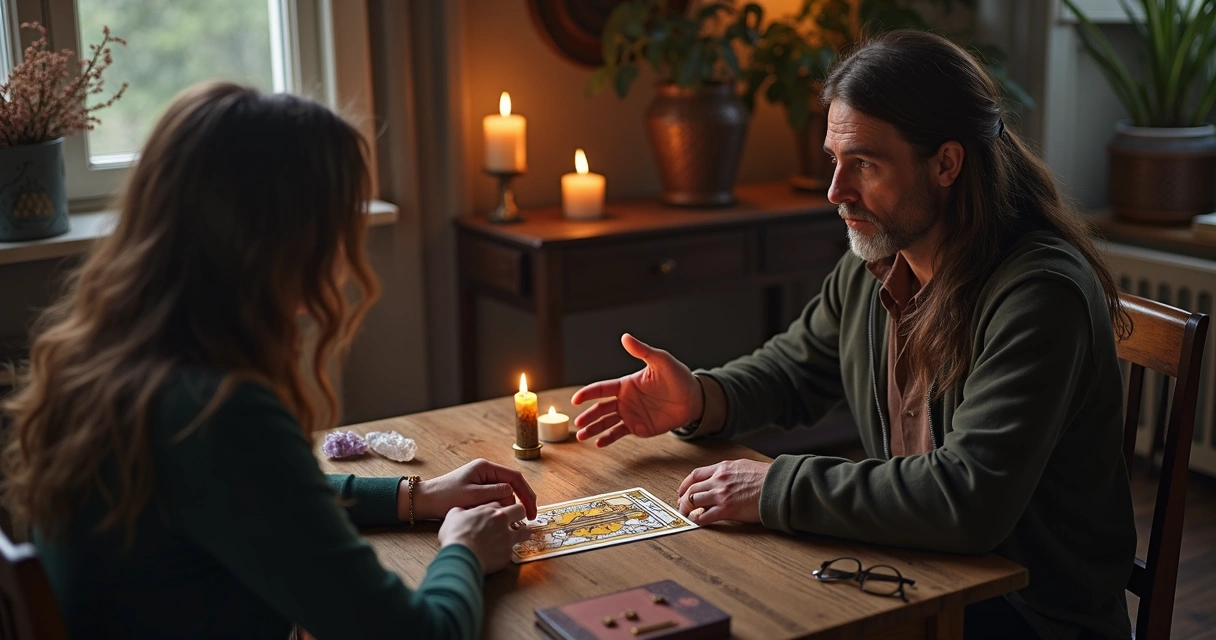 Turning conflict into a growth opportunity
When the Five of Swords appears, the first instinct can be to recoil—who wants to face drama, pain, defeat? Yet, in our work, we have seen this card open doors to the sorts of breakthroughs that change lives. It is an occasion for tough reflection, for considering not just what happened, but what should happen next.
The card pushes us to ask, “What do I truly value—the satisfaction of being right, or the deeper peace of understanding and connection?”
With time, a querent may see that so-called losing was, in fact, release. That the loneliness of a false victory makes space for searching honestly within. The Five of Swords, upright or reversed, never pushes judgment, only the question: “What are you ready to learn from this moment, and how will you move forward?”
Regularly recording and reflecting on these moments with MysticLog supports lasting healing. Patterns that once hid in the shadows can be brought gently to the surface, leading not to repeated drama, but to freedom from it.
Conclusion: Welcoming transformation beyond conflict
In every reading, the Five of Swords brings us to a crossroads. The message it offers is never comfortable, but it is always filled with possibility. At MysticLog, we have seen firsthand how embracing the lessons of this card leads to honest conversations, repaired relationships, and journeys toward self-compassion.
As you encounter the Five of Swords in your readings, recall its central lesson—transformation is possible, and it is never too late to choose growth over reactivity. Whether you are a professional reader looking to support your clients or a student learning the deeper layers of Tarot, we invite you to try MysticLog to help track your progress and develop your intuition. Your next step toward healing, insight, or reconciliation might well begin with this card.
Frequently asked questions
What does the Five of Swords mean?
The Five of Swords in Tarot signals conflict, tension, and often a dispute in which there are both winners and losers—but the victory may feel hollow. This card suggests examining the cost of arguments, unreconciled feelings, or the burden of needing to have the last word. In readings, we interpret it as urging reflection on recent quarrels or ongoing disagreements, focusing on what was truly gained or lost in the process.
How does Five of Swords show conflict?
The card’s imagery, with a figure holding swords while others depart in defeat, directly illustrates discord, arguments, or competition. Its appearance warns of unresolved tensions or the fallout from heated words. We see it as a clear marker that conflict is present, either active or still affecting those involved emotionally.
Can the Five of Swords mean resolution?
Yes. When reversed, especially, the Five of Swords can show a shift toward resolution, including apologies, forgiveness, or simply the urge to move on. Even upright, the card can prompt honest self-reflection, serving as a first step to break a negative cycle. The focus moves from winning the fight to finding peace after conflict.
Is Five of Swords a negative card?
The Five of Swords is often challenging but not strictly negative—it is a card of awareness. It brings up discomfort to highlight opportunities for growth, honesty, and eventual healing. Its lessons, though hard, lead to self-improvement when its messages are acted upon thoughtfully.
How to interpret Five of Swords in love?
In love readings, the Five of Swords highlights arguments, feelings of betrayal, or cycles of blame between partners. Upright, it can suggest lingering pain or resentment after disputes; reversed, it may mean reconciliation, apology, or the wisdom to let go. We suggest careful reflection and honest communication, using the card’s message as an opening for healing and understanding between those involved.