

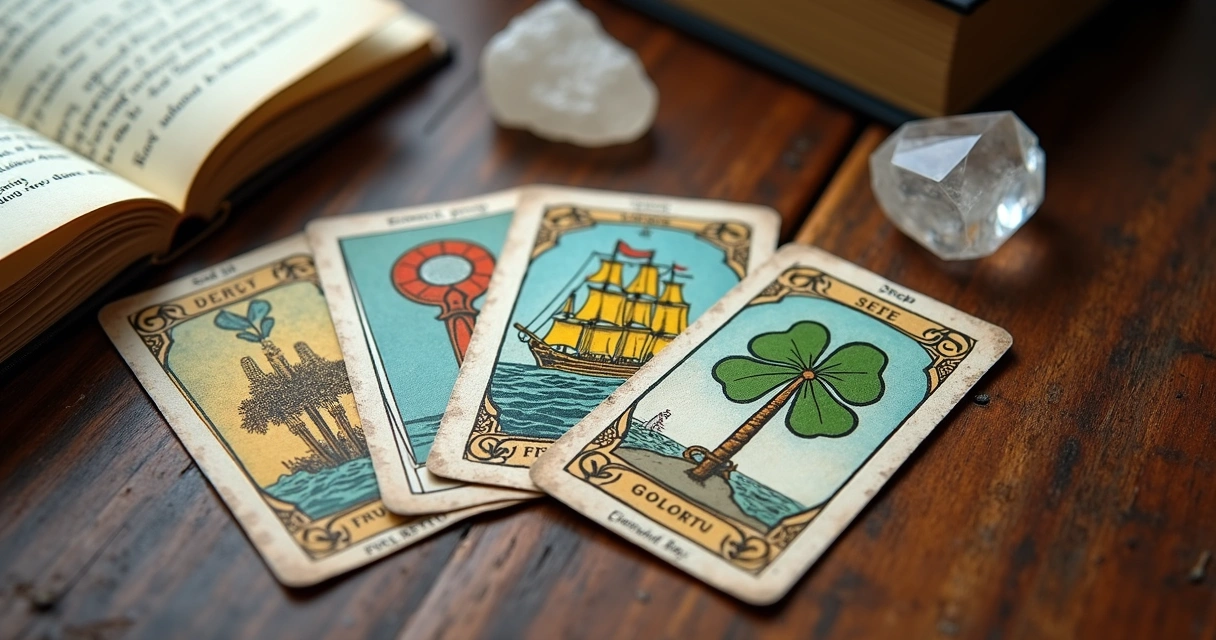
When we open a deck of Lenormand cards, we step into a long-standing tradition unlike any other. This practice, with roots woven through European fortune-telling history, offers straightforward, sharp messages. If you are new to cartomancy or have been reading other cards for years, the Lenormand system introduces a fresh language. It is clear. It is sometimes blunt. Yet, above all, it is practical.
We find ourselves drawn to the Lenormand approach for its stories and its structure. Today, let us share what makes this system remarkable, how to handle it, and ways you can sharpen your readings—without losing track of a single card or client.
The origins and spirit of Lenormand cards
Lenormand cards trace their name to Madame Marie-Anne Lenormand, a celebrated French cartomancer active in the early 1800s. While she became famous for reading for figures like Napoleon and Empress Josephine, the actual Lenormand deck as we know it emerged after her death. The “Petit Lenormand,” a 36-card pack, was first published in Germany, blending European folk symbols, playing card references, and a fortune-telling game called the “Game of Hope.”
What sets Lenormand apart is its use of familiar everyday symbols that speak plainly: Clover, Ship, Child, Coffin. Where Tarot leans on archetypes and deep psychology, Lenormand communicates through life’s objects and events. In our experience, this approach connects readings to daily concerns, everyday choices, and plain advice. It feels like having a wise friend who answers your questions without riddles.
Understanding the Lenormand deck
A standard Lenormand deck has 36 cards, each with a fixed symbol. Unlike Tarot, there are no suits or a division between Major and Minor Arcana. Instead, the deck presents an array of simple images whose meanings must be combined and woven together.
- Card 1 – Rider: News, visitors, changes coming fast.
- Card 2 – Clover: Luck, chance, little opportunities.
- Card 3 – Ship: Travel, commerce, movement, adventure.
- Card 4 – House: Home, family, security, private space.
- Card 5 – Tree: Health, growth, life force, ancestry.
- Card 6 – Clouds: Confusion, doubts, lack of clarity.
- Card 7 – Snake: Complications, betrayal, detours.
- Card 8 – Coffin: Endings, closure, sickness, finality.
- Card 9 – Bouquet: Gifts, invitation, happiness, pleasant surprises.
- Card 36 – Cross: Burdens, suffering, spiritual challenges.
Some find it helpful to connect each card with its corresponding playing card value, as shown in most decks, but in practice, we focus more on how symbols interact. In our view, that is where the magic happens.
 Structure and the meaning of card combinations
One of the unique characteristics of a Lenormand reading is that each card’s meaning changes based on its neighbor. This is different from systems where cards stand alone. For us, the meaning of Lenormand cards comes alive when combined with others in a line or tableau.
For example:
- Fox + Letter: Watch out for a deceptive message.
- Garden + Heart: Social romance or public display of affection.
- Child + Ship: A new trip or a fresh start in travel or commerce.
Lenormand is a language of pairs and sequences, not isolated images. The first card combines with the second, sometimes even with a third or fourth, to form a sentence. This fusion of images is what gives the readings their unique clarity and often amazing specificity.
Comparing Lenormand and Tarot: What’s different?
When we talk with other readers, we often hear the same question: How does Lenormand differ from Tarot? Both are card systems used for insight, but their approaches, symbolism, and structure contrast sharply.
- Archetypes vs. everyday life: Tarot cards focus on archetypes and spiritual lessons (e.g., The Fool, The Lovers), while Lenormand cards relate to concrete things—letters, ships, keys, and bouquets.
- Reading style: Tarot readings often ask for deep intuition and “feeling” the energy of the cards. Lenormand, in contrast, encourages readers to string images together matter-of-factly, like interpreting short sentences.
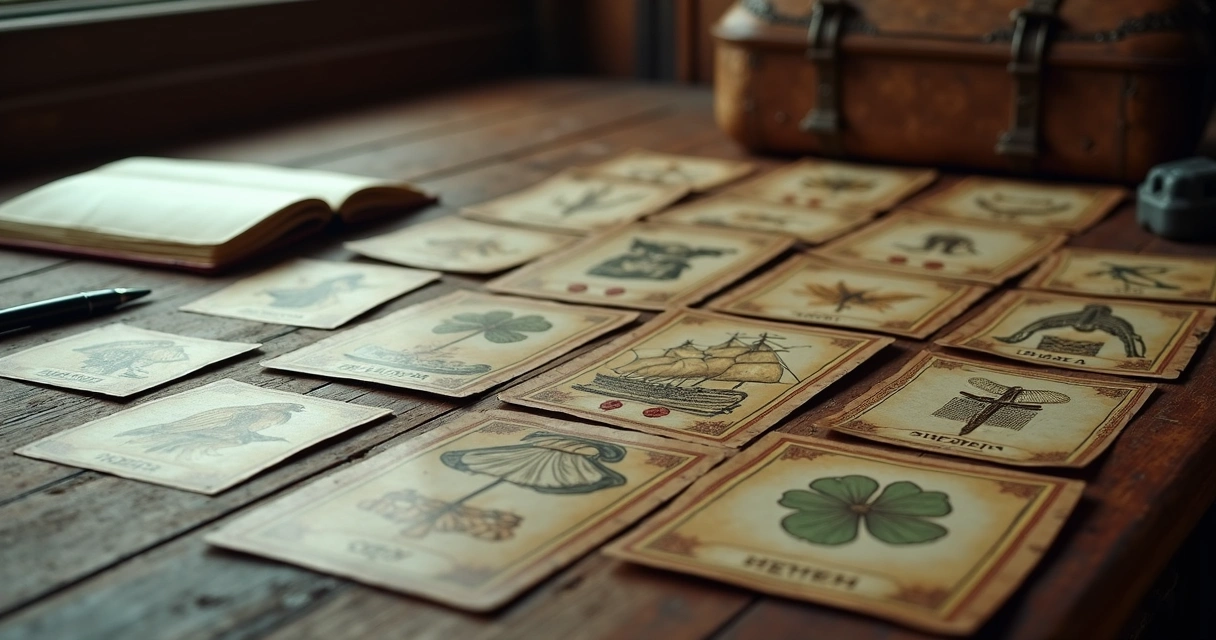
- Spread structure: Tarot spreads can range from one card to the complex Celtic Cross. Lenormand is famous for its line spreads and the full “Grand Tableau,” which uses the entire deck.
- Directness: In our experience, Tarot tends to deliver layered lessons, while Lenormand is quick, practical, and direct.
For a deeper comparison, readers may want to review the guide to Tarot spreads or our practical Tarot card reading for self-discovery.
Common Lenormand spreads and how to use them
With only 36 cards, you might imagine that readings are limited. In practice, nothing could be further from the truth. From simple daily draws to the famous Grand Tableau, there are layouts for every skill level and question.
The three-card line
If you are just starting out, the three-card spread is a great way to build confidence. Here’s how we work with it:
- Shuffle your deck and think of a question, focusing on something concrete.
- Draw three cards and lay them side by side from left to right.
- Interpret as a phrase: Past, present, future—or situation, advice, outcome.
- Read each card’s meaning, then link them into one flow.
Simplicity brings speed. The three-card line can answer almost any question when you stick to clear language.
The nine-card box
This layout is a miniature version of the Grand Tableau. Arrange cards in three rows of three. The center card is your main focus, while surrounding cards clarify it.
- Think of a situation that needs context.
- Shuffle, cut, and deal nine cards face up in a square.
- Interpret lines horizontally and vertically, giving special attention to the card in the middle.
We often use this spread when a querent faces a complex situation with several influences at play.
The Grand Tableau
The full 36-card spread is a signature Lenormand approach. It offers a panorama of your question, environment, and people involved. The Grand Tableau answers not just the question you ask, but reveals the patterns and background at work.
- Lay all 36 cards in four rows of eight, then a row of four (or sometimes two rows of nine and two rows of nine for a 9×4 format).
- Choose a significator—usually the Man or Woman card, or whichever represents the seeker.
- Find the significator in the spread, and “read the story” based on nearby cards—those directly to the left tell of the past, those to the right hint at the future.
- Diagonal, vertical, and horizontal lines offer context and further meaning.
The Grand Tableau is a map—from the moment you lay the cards, you see the journey unfold.
Significator cards and focus in interpretation
In nearly every Lenormand reading, we choose a card to represent the seeker (the significator). For many, this is as simple as picking the Man or Woman card. Some decks include additional options for different identities.
The significator centers your reading, marking your position in the spread and making interpretation personal and direct. When we look for patterns, relationships, or influences, we start with the cards closest to the significator, then move outward.
If you are exploring relationships, you might pick “Heart” or “Ring” as the significator. For work, “Anchor.” This approach helps focus and clarifies the spread’s message.
How to keep your Lenormand practice organized
We cannot talk about Lenormand reading without mentioning the value of keeping detailed notes. In our practice, writing down each spread—question, cards drawn, your interpretation—builds skill and trust in your intuition.
- Use a dedicated journal or notebook for your readings.
- Record the date, question, and cards for each spread.
- Take note of patterns—see if the same card combinations appear in your life or in the lives of your querents.
- Return regularly and review past readings, noting what came true or what might shift your approach.
We have found that using a modern Lenormand guide for readers or a digital logbook like MysticLog makes this process seamless, and even enjoyable. These tools let you store readings, review client questions over time, and detect subtle patterns that paper notes might miss.
A well-kept log turns random readings into a learning journey.
Using the Mystic AI Assistant for practice and growth
One of the advantages in modern times, as we have seen through MysticLog, is access to interpretation support. Our AI assistant provides quick access to standard Lenormand meanings, suggests new ways to combine cards, and offers communication tips tailored to each querent.
As you gain confidence, an AI assistant helps double-check tricky combinations or prompt deeper insights without judgment. For students, this often feels like practicing with a tutor who does not interfere, yet is available whenever needed.
With regular practice, and the right tools or companions, novice and experienced card readers can grow their skills steadily.
Daily practice tips: building intuition and consistency
The best way to grow with Lenormand is repetition and observation. We suggest the following habits to keep your practice sharp:
- Set aside a few moments each morning or evening for a quick three-card reading. Ask about the day ahead or review what happened.
- Write out the story woven by each combination, even if it seems mundane.
- After a week, look back and check your accuracy—see if themes match what happened.
- Practice interpreting the same spread for a friend or family member, noting how questions shift the interpretation.
- Pay special attention to triggering or recurring cards (like Snake, Clouds, or Cross), and explore what they point to in your own context.
- Seek patterns in your log—how does your interpretation change over time? Where did you miss or “hit” the message?
If you ever feel blocked, consider reaching for a new spread or reviewing a collection of sample Lenormand readings for ideas.
Conclusion: Mastery comes from observation, recording, and connection
We have found, through years of experience and hearing from countless readers, that mastering Lenormand cards does not require memorizing endless meanings—instead, it calls for consistency, curiosity, and self-reflection.
Staying organized, trying new spreads, and using careful observation builds both your skill and confidence as a reader.
If you want to build an effective practice—tracking client questions, noting changes, and keeping interpretation sharp—modern digital companions like MysticLog are there for you. We invite you to discover how organized notes, digital tools, and a helpful AI assistant can make your journey with Lenormand even more rewarding. Try out these strategies, revisit the simple guide to cartomancy, and see how your readings grow deeper over time.
Frequently asked questions about Lenormand cards
What are Lenormand cards used for?
Lenormand cards are mainly used for practical guidance, predicting events, and offering insight into daily life issues or specific questions. Readers use them for personal reflection, advice for querents, and even to track patterns in work, love, or well-being. Their direct style speaks to real-world concerns.
How do I read Lenormand spreads?
To read a Lenormand spread, lay out the cards in a chosen pattern—such as a three-card line, nine-card box, or full Grand Tableau. Begin by interpreting each card’s symbol, then connect them in sequence to form a sentence or story that answers your question. The real meaning emerges from how cards combine, not just their individual messages. Regular practice and keeping notes help improve clarity.
What is the difference between Lenormand and tarot?
Lenormand differs from tarot in its focus on clear, everyday symbols and direct messages. Tarot uses archetypes and encourages intuitive, layered readings. Lenormand relies on fixed meanings joined in combinations, making its answers specific and often practical. The spread method and card structure also set the two apart.
Where can I buy Lenormand card decks?
You can find Lenormand decks at local metaphysical shops, some bookstores, and online retailers specializing in card reading tools or spiritual practice products. Seek decks that include a booklet or guide to start learning, though many resources exist for in-depth study.
Are Lenormand readings accurate for beginners?
Yes, Lenormand readings can offer accurate insights even for beginners, thanks to the clear, fixed meanings and practice-based approach. As you record combinations and review results, your accuracy will improve. Support tools like digital logs or AI assistants, such as those found in MysticLog, can guide you through early readings and boost your confidence.