


In the evolving journey of Tarot practice, few cards spark as much interest and debate as the Page of Swords. This card, often misunderstood, stands as a messenger of insight, a champion of communication, and a catalyst for personal growth. We see the Page of Swords as more than just a symbol: it’s an invitation to step into life with curiosity, thoughtfulness, and mental flexibility.
We have found, through years guiding querents and working with tools like MysticLog, that understanding this youthful court card transforms not only your readings but also the journey of those seeking your guidance. In the following sections, we will share our perspective on the Page of Swords, covering upright and reversed positions, practical guidance for tarot and psychic professionals, and how reflective technology can deepen your work.
The spirit of the Page of Swords
To understand the message behind the Page of Swords, we revisit its roots. The Page belongs to the suit of Swords—associated with the mind, intellect, and communication. This court card is often depicted as a young person holding a sword upright, standing in a field swept by wind. The sky is turbulent. The pose is alert, curious, and ready for action.
 The energy is unmistakable: quick-thinking, inquisitive, and sometimes restless. In our experience, drawing this card signals a time when truth-seeking, honest expression, and new ideas are at the forefront.
The Page of Swords is the mind’s first spark of discovery.
In classrooms at Yale University, students use tarot cards like the Page of Swords to deepen their understanding of symbolism, showing how this card’s imagery fosters not only personal insight but collaborative discussion.
What does the Page of Swords mean upright?
When the Page of Swords appears upright, we associate it with clarity, bright ideas, and a drive for open communication. Querents encountering this card are often on the verge of speaking out, asking questions, or learning something that reshapes their outlook.
The upright Page represents:
- The beginning of a new intellectual path or study
- A desire to share ideas and perspectives
- Honesty—sometimes blunt, but always curious
- Fresh, youthful enthusiasm for knowledge
- Quick reflexes in thinking and speaking
- A need to express opinions, even if they challenge others
The upright Page of Swords encourages freedom of thought and honest dialogue. In readings, we often see this card reflecting someone who is eager to debate, question, or investigate, sometimes before all facts are in place. There’s a “testing the waters” quality—trying out their voice and ideas with the hope of gaining confidence.
For psychic and tarot professionals, the Page of Swords’ appearance can indicate:
- A young client learning to advocate for themselves
- A querent involved in studies or starting a new intellectual pursuit
- Someone wanting to resolve misunderstandings through honest communication
- An urge to confront an issue with openness rather than avoidance
It’s common for querents to feel the flutter of anxiety or excitement when this card appears. We have observed that the Page invites both: the nervousness of new beginnings and the thrill of discovery.
The Page of Swords reversed: caution and challenge
A reversed Page of Swords signals a change in the winds. The card’s natural curiosity may turn into impatience, miscommunication, or scattered thinking. We make it a point to handle reversals in a gentle and constructive way, as they often signal a teachable moment.
In our interpretations, the reversed card can reflect:
- Gossip, rumor-spreading, or information taken out of context
- Difficulty expressing true thoughts
- Restlessness or distraction hindering progress
- Jumping to conclusions
- Avoidance of deeper learning or thoughtful listening
- Using words as weapons rather than tools
The reversal asks us to slow down, check our facts, and listen with care before speaking. In client sessions, it can indicate hesitation to communicate directly, a struggle with self-confidence, or even a tendency to create drama as a defense.
With MysticLog, recording these subtle shifts helps us track patterns. We can revisit previous reversed Page of Swords appearances for each client, supporting growth over time and encouraging self-awareness in future readings.
Communication and curiosity in real readings
The Page of Swords demands active engagement. We often ask querents:
- What question are you truly seeking to answer?
- Are you ready to hear another’s side as much as your own?
- What have you learned recently that surprised you?
- Have you shared your thoughts honestly, or held back?
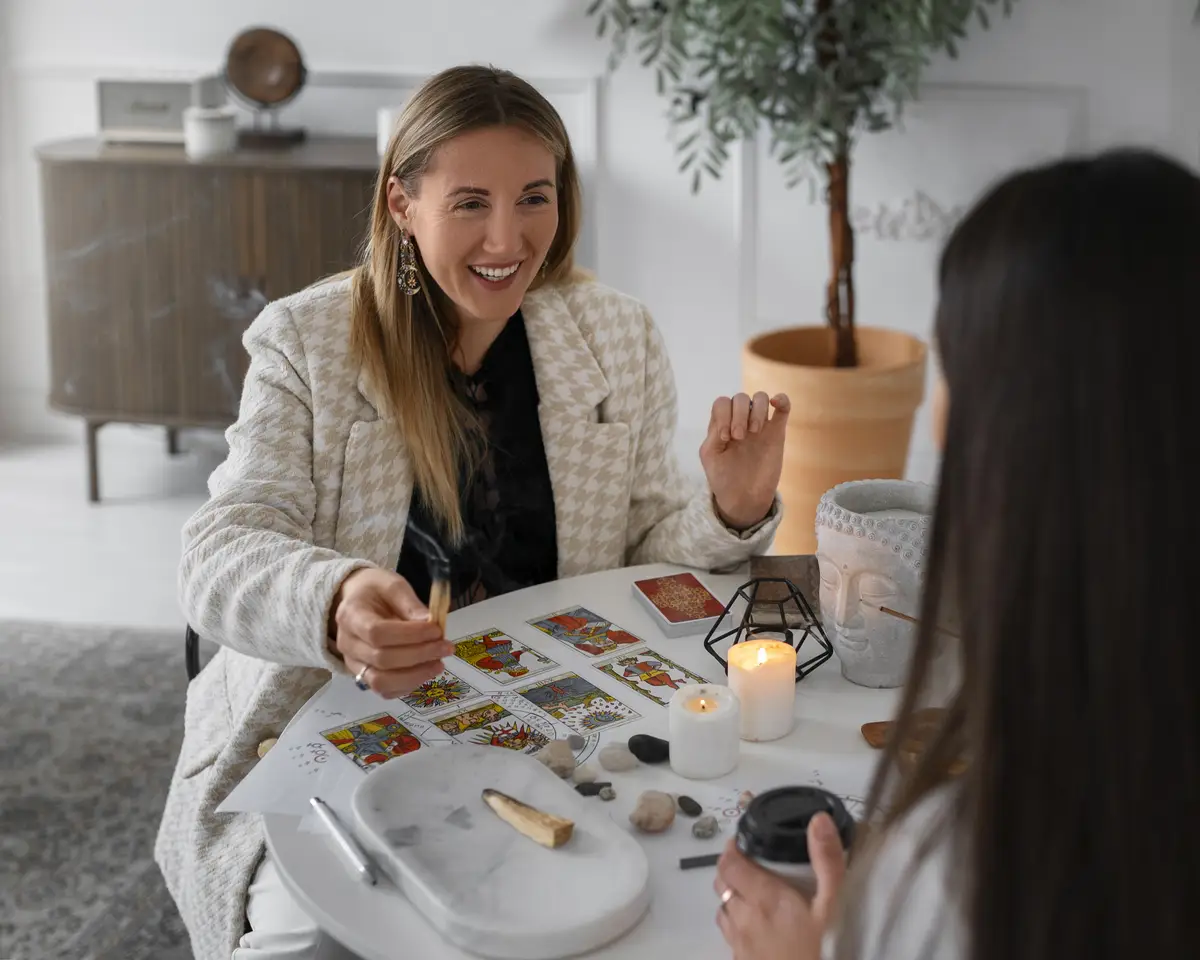 This approach is about more than just cards—it’s about inviting honest reflection. As noted in historical overviews from the University of North Texas, tarot began as a game but grew into a tool for meaningful self-discovery and artistic expression. The Page of Swords embodies this evolution: curiosity at play, with the goal of true understanding.
We find the Page lends itself to real-world scenarios especially in the following:
- Mediating family or workplace misunderstandings
- Encouraging a client to speak up during tense conversations
- Supporting students or young adults through challenging studies
- Breaking patterns of avoidance by fostering direct talk
Experience shows us that when querents meet the Page’s energy with honesty, even difficult conversations can become opportunities for connection.
Conflict, dialogue, and resolution
Sometimes, the Page of Swords brings friction. Words fly too quickly. Misjudgments happen. When this occurs, the card serves as a gentle nudge to step back, reflect, and clarify.
Clear communication opens the way to resolution.
For professionals, recognizing the Page in such moments is a signal to slow the pace and encourage all parties to clarify intentions. We often use these techniques:
- Guided journaling for points of misunderstanding
- Role-play exercises to practice non-confrontational speech
- Prompted questions to uncover underlying fears or desires
- Setting boundaries for respect in group readings
Drawing on resources like practical tarot reading guides, we combine card meanings with personal insight for transformation.
Conflict is not the end—it’s a doorway to truth.
Personal growth and the Page of Swords
Growth with this card is steady but sometimes unpredictable. The Page of Swords pushes us to look at life with new eyes, to reconsider old opinions, and to ask questions that break through assumptions.
We witness growth in our querents and ourselves in several ways:
- Developing mental flexibility—adapting quickly to new information
- Embracing continuous learning instead of seeking quick answers
- Practicing open, truthful communication
- Building self-awareness around impulsive thoughts or speech
Younger querents may experience this card as excitement for new studies or social encounters. Older adults may find it stirs up the desire to reconnect with lost passions or overlooked ideas. We encourage everyone to honor both—the adventure and the potential for growth.
For more tips on structured self-reflection, our resource on tarot and self-reflection for growth has become a valuable companion to Page of Swords teachings.
Mental agility and adaptability in sessions
Mental agility, the hallmark of the Page of Swords, supports not only sharp reasoning, but openness to change. In sessions, we look for signs of:
- Eagerness to shift perspective
- Readiness to ask powerful questions
- Willingness to consider multiple solutions
- Ability to adapt to evolving situations
If a querent appears stuck or defensive, we suggest focusing on the mental agility of the Page of Swords for inspiration. Our experience is that simple exercises—such as tracking changing thoughts in MysticLog—can build confidence and flexibility over time.
In group or classroom settings, as seen in the Yale classroom approach, even one card can spark meaningful group discussion, promoting adaptability and psychological insight.
Reflection prompts for querents
We believe in practical tools. Here are prompts we use with querents embracing the Page of Swords energies:
- When was the last time you changed your mind about something?
- What have you wanted to ask but held back?
- How do you respond to criticism or disagreement?
- What information might you be missing about your situation?
- Where could you practice better listening?
In our work at MysticLog, adding custom prompts to client records provides a history of reflective growth, making each reading meaningful beyond a single session.
Building on the Page of Swords for students and professionals
For those who are learning tarot, the Page of Swords is an excellent starting point for understanding how the mind interacts with the cards. We have integrated practices—such as visual journaling and story-building—into our sessions, inspired by techniques similar to the classroom assignments mentioned in academic studies.
If you wish to further expand your exploration of Page energies, insights from our deep dive into the Page of Wands can highlight creative aspects that work well alongside the Swords’ mental focus.
The Mystic AI Assistant: supporting deeper Page of Swords interpretation
Through MysticLog, our Mystic AI Assistant adds another layer of support for readers. When working with the Page of Swords, the assistant can:
- Suggest possible card and rune associations based on your querent’s situation
- Highlight subtle connections between spreads and past readings
- Recommend reflection prompts tailored to the lesson of clear communication
- Guide users in refining their written interpretations for clarity and impact
Digital support does not replace intuition—but it does encourage precision, self-reflection, and growth for both reader and querent.
By saving insights, tracking growth, and encouraging honest exploration, the AI assistant in MysticLog becomes a steady ally for those seeking to embody the Page of Swords principles of curiosity, dialogue, and thoughtful learning.
Integrating the Page of Swords into your ongoing tarot journey
We know that every reading tells a story. The Page of Swords reminds us to write our stories with fresh questions, openness to learning, and a willingness to communicate honestly. Whether upright or reversed, this card encourages mental clarity and continued curiosity, both in readings and in life.
If you’d like to broaden your practice through archetype work, our guide on major arcana and spiritual archetypes complements the lessons of the Page of Swords.
In practice, with each appearance of the Page of Swords, we invite you to ask: Who or what am I called to understand more deeply today?
We invite you to try MysticLog as your companion in growth, self-inquiry, and truly reflective Tarot reading. Take your next step with us—discover the difference clarity and curiosity can make in your spiritual practice.
Frequently asked questions
What does the Page of Swords represent?
The Page of Swords stands for curiosity, communication, and the spark of new ideas or intellectual pursuits. It often represents a person—sometimes young, sometimes simply open-minded—who is motivated to ask questions, seek the truth, and express their point of view. This card is about both internal inquiry and the courage to communicate openly with others.
How does the Page of Swords indicate growth?
The Page of Swords marks the beginning of a period of learning or personal development. Growth comes from facing new information, questioning assumptions, and being open to feedback. The card encourages us to practice active listening, refine our communication, and take intellectual risks, all of which support growth in both personal and spiritual contexts.
When does the Page of Swords appear in readings?
This card often arises when fresh insight or honest dialogue is needed. We see it in readings for those starting new studies, facing moments of conflict that require clear speech, or looking for courage to express themselves. The Page of Swords appears during times of transition, when intellectual engagement holds the key to progress.
What are common symbols on the Page of Swords?
The most frequent symbols are the upright sword (representing clarity and directness), a windswept field (signaling changing thoughts and open terrain for ideas), and an expressive, youthful figure (a sign of curiosity and readiness). Clouds in the background often hint at a restless mind, while the alert posture invites awareness and action.
How can I interpret the Page of Swords reversed?
The reversed Page of Swords points to misunderstandings, scattered thinking, or difficulties in expressing thoughts truthfully. It can also warn against jumping to conclusions, engaging in gossip, or reacting impulsively. When this card appears reversed, we encourage slowing down, checking for accuracy, and cultivating thoughtful listening before taking action or making decisions.