


When readers encounter the Seven of Swords in a tarot spread, a distinct spark of curiosity almost always appears. We have seen clients lean in, sometimes frown, and ask, “What does this card really say about my situation?” The card’s imagery—a lone figure carrying away five swords while glancing back to the scene behind—captures tales of secrecy, ingenuity, and sometimes, dishonesty. But this card is more than a simple warning sign. It’s a nuanced touchpoint for personal and professional readings, and it can reveal subtle layers about intention, vulnerability, and successful outcomes. At MysticLog, we believe that by digging into the symbolism, upright and reversed meanings, and practical implications of this card, tarot professionals and learners can uncover deeper truth, build integrity, and help querents see beyond surface fears.
Understanding the core symbolism of the Seven of Swords
The classic Seven of Swords imagery calls to mind a story: a person slipping away from a camp, swords in hand, watching closely to avoid being seen. There’s something secretive, maybe even a bit daring, in every detail.
- Deception: Secrets, hidden motives, side-stepping confrontations.
- Strategy: Clever planning, outmaneuvering obstacles, thinking one step ahead.
- Betrayal: Whether as the “thief” or victim, a breach of trust is likely involved.
- Self-deception: Sometimes, the mind’s clever tricks are turned inward—avoidance, denial, rationalization.
Truth hides behind intention.
While this card often brings up difficult themes, those very shadows can open new perspectives. We have noticed in many readings that the Seven of Swords doesn’t always signal malice. Sometimes, it’s simply about working quietly, relying on wit instead of brute force, or recognizing when candor is missing from a situation.
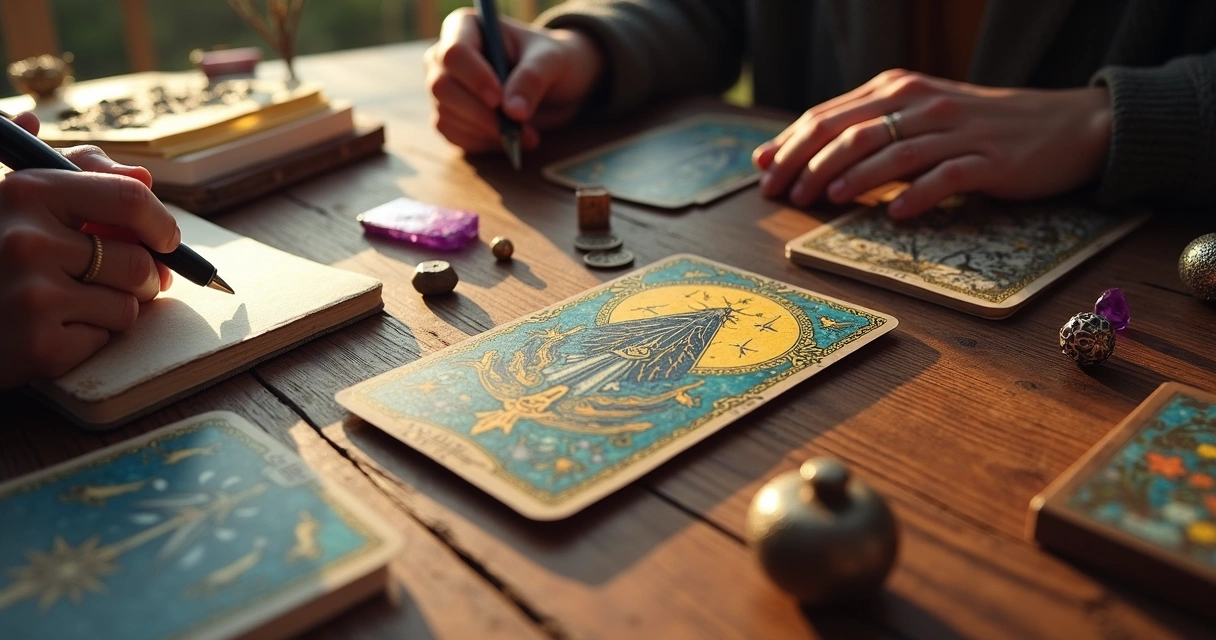 The upright Seven of Swords in real readings
Most often, we encounter the upright Seven of Swords in spreads where someone is navigating tricky situations—whether in the workplace, personal relationships, or inner dilemmas. In our experience recording readings at MysticLog, clients may sense that “something’s off” before this card arrives. Its upright presence can mean:
- A situation involving secrecy or hidden motives.
- Someone sidestepping direct confrontation, or being elusive for self-protection.
- Advice to use strategy and caution, instead of blunt honesty.
- Warning that honesty or integrity may be at risk—yours or another’s.
The upright Seven of Swords reminds us to consider what’s being left unsaid and why. For tarot professionals, this is a cue to listen closely to a querent’s words, and also their hesitations.
Examples in love, work, and spiritual matters
- Love: There may be secrets, hidden feelings, or lack of transparency. One partner could be quietly checking out, or not saying all they feel.
- Work: Office politics, competitive projects, or someone working “under the radar” for their own gain. Sometimes it’s about looking out for oneself in a difficult environment.
- Spiritual: Avoidance of deeper reflection, self-sabotage, or masking true intentions out of fear. It may indicate rationalizing choices that don’t align with one’s truth.
We recall a reading for a querent torn between honesty at work and a need to protect their career. The card prompted a candid talk about authentic communication versus well-meaning secrecy, revealing that “strategy” needn’t mean dishonesty, but does require courage and awareness. This reflection can be captured and tracked in detail using tools like MysticLog’s reading record features for future reference, ensuring that subtle patterns get noticed over time.
The reversed Seven of Swords: Unmasking and release
When this card appears upside down, it’s rarely business as usual. The upright themes are turned inward or are resolving themselves in unexpected ways. In our readings, the reversed card speaks to:
- Exposing dishonesty—secrets coming to light, an admission of guilt.
- An end to deception, sometimes with relief, sometimes with regret.
- A call to return to honesty after a period of denial.
- Failing at a covert plan; getting caught or realizing a scheme isn’t working.
The reversed Seven of Swords encourages us to let go of behaviors or thoughts that no longer serve us. Sometimes, it’s a high-stakes moment: the truth comes out, lesson learned, and integrity re-established. In other cases, it’s a gentle nudge to get honest with oneself so healing can begin.
Daily life and reversed meanings
- Love: Confessions or secrets emerge, giving relationships a chance to reset.
- Work: Office rumors reach a breaking point, or someone apologizes for past behavior. Sometimes, it’s admitting to a failed shortcut and starting again with a better approach.
- Spiritual: Moving past self-delusion, facing fears, and realigning with truth or higher values.
 Strategy or betrayal? The line between wisdom and misuse
The deeper lesson of this card often lies in motivation. Is the figure on the card stealing to survive, or out of malice? Is the strategy justified, or does it harm others? In our practice, we’ve seen that real-life context is everything.
This tarot sword cautions that cleverness becomes deception if manipulated for selfish ends. Yet, wisdom calls for flexible thinking and sometimes, discretion. For clients, clarity comes by asking:
- Am I avoiding honesty with myself or others?
- Is someone acting solely for their own benefit?
- Do my actions match my words, or am I hoping no one notices?
- Is strategy protective, or does it cross into unethical ground?
We find that a healthy conversation about these questions often settles the energy around the card. Using MysticLog’s AI assistant, readers can brainstorm ethical solutions or alternative communication styles, providing truly supportive guidance for querents in difficult spots.
Common misconceptions about the Seven of Swords
We have noticed some misunderstandings about this card’s presence:
- It does not always predict betrayal or infidelity.
- Its presence may not indicate outright danger—sometimes it’s just a need for discretion or clever planning.
- In spiritual readings, it is not a guarantee the querent is “lying to themselves,” but an invitation to review what’s hidden from conscious awareness.
The card can also signal the need for calculated risk-taking, standing up for oneself quietly, or outwitting negative forces. For tarot students, remembering these nuances prevents unnecessary fear and keeps readings realistic. This spirit is echoed in our Guide to Tarot Spreads, which shows how context always shapes interpretation.
How psychic professionals can use the Seven of Swords as a guide
In professional tarot sessions, the Seven of Swords is often a prompt for deep listening and nuanced counsel. Here’s what we recommend at MysticLog:
- Encourage honest discussion without judgment—sometimes clients need a safe space to admit difficult truths.
- Document readings to spot patterns of avoidance or secrecy over time. (Our guide on archiving readings is a helpful resource for this practice.)
- Ask open questions: What fears might be leading you to secrecy? How could honesty heal this scenario?
- Focus on self-awareness—help clients reflect on intentions and choose integrity, even if it feels hard.
Insight grows from honest reflection.
We find that consulting intuition—your own and the client’s—opens the way for a reading that moves beyond suspicion. Psychic tools such as guided meditation, or using our Mystic AI Assistant for symbol suggestions, can also help draw out deeper understanding when readings seem muddy.
Real-world connections: The Seven of Swords in daily life
This card’s influence stretches far from the tarot table. At work, it might mean quietly looking for new job opportunities. In a friendship, it could point to an avoidance of difficult conversations. Within, it may call us to face truths we pretend not to see.
Whenever this card comes up, our experience shows that it is an invitation for all involved—readers and querents—to pause and reconsider:
- Are we working behind the scenes for the good, or risking trust for quick results?
- How can we surface what’s hidden without causing harm?
- Is it time to clarify intentions or set firmer boundaries?
We have found that regular reflection on integrity, self-awareness, and communication brings great value to all tarot and oracle work. Practical frameworks can be found in resources such as our archetype guide and in posts about related cards such as the Five of Wands and Seven of Wands.
The role of intuition and digital tools in tarot truth-seeking
In our digital era, tools like MysticLog empower tarot readers to log consultations and monitor patterns, helping to surface themes of hidden motive, avoidance, or breakthroughs in honesty. Meanwhile, our AI assistant can prompt symbol connections or guide with gentle questioning, preventing readings from getting stuck in accusation or fear. With this support, integrity and compassion remain central, even when the cards point to uncomfortable truths.
Conclusion: The deeper gift of the Seven of Swords
While the Seven of Swords may feel unsettling at first glance, we have witnessed its potential to spark clarity, honest discussion, and courageous strategy. As readers, it calls on us to be both wise and kind—helping querents see where secrecy weakens trust, but also respecting the need for privacy, skill, and self-protection. Each appearance of this card is a chance to return to integrity, deepen self-awareness, and choose clear, direct communication.
For those ready to add depth and structure to their readings—and to reflect on the subtleties of every card—MysticLog offers intuitive tools and ongoing support. Try MysticLog to organize your readings, uncover hidden patterns, and grow on your tarot journey, one honest step at a time.
Frequently asked questions
What does the Seven of Swords mean?
The Seven of Swords often points to situations involving hidden motives, secrecy, or strategy. It asks us to look for what might be missing, unsaid, or cloaked in half-truth. In both upright and reversed positions, the card sheds light on how people manage conflict—either by careful planning or by avoiding direct communication.
How does the Seven of Swords show deception?
This card’s imagery—a figure sneaking away with swords—symbolizes clever moves, evasion, or misdirection. In a reading, it can mean someone is withholding information, bending the truth, or trying to gain advantage behind the scenes. It may also signal a warning to pay attention to the motivations and methods involved, rather than outright actions alone.
Is the Seven of Swords always negative?
No, the Seven of Swords is not always purely negative. While it often suggests challenges like dishonesty or avoidance, it can also shine a light on necessary strategy, creative problem-solving, or the careful navigation of sensitive issues. The ultimate meaning depends on the context and the question asked.
How to interpret Seven of Swords in love?
In love readings, this card may indicate secrecy between partners, emotional distance, or unspoken feelings. It could point to trust issues or a desire to avoid confrontation. Sometimes, it calls on the couple to clarify intentions and commit to open dialogue, using tact and understanding to rebuild trust if necessary.
What does reversed Seven of Swords indicate?
Reversed, this card often marks a turning point: secrets come out, dishonest actions are known, and the chance for truth or healing arrives. It can mean an end to self-deception, a willingness to admit mistakes, or the exposure of something previously hidden. For many, it’s a chance to let go of old strategies that no longer work, and to embrace integrity and openness once again.