

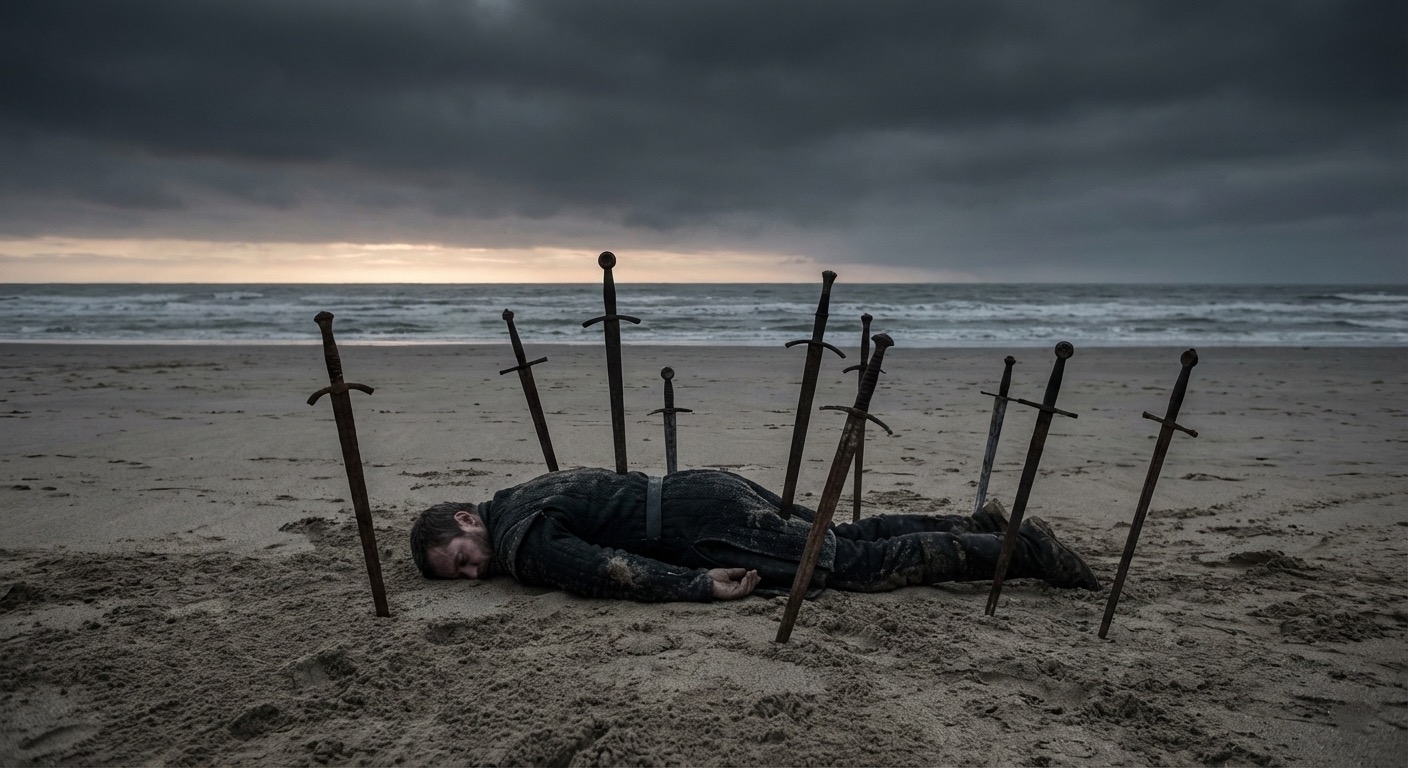
The Ten of Swords in Tarot is one of those cards that brings a hush to the table. When it appears in a spread, a querent’s breath might catch. The card looks dramatic—a figure lying on the ground, pierced by ten swords, dark skies above. But the message it carries isn’t just about loss or defeat. As we have seen over and over again in our work at MysticLog, the essence of the Ten of Swords is transformation through endings. There is pain here, yes, but also the seed of healing and the promise of renewal. We witness these cycles daily, as Tarot readers and seekers alike reach out for understanding and closure.
We are going to walk together through the meaning of the Ten of Swords, examining its upright and reversed positions, exploring how it arises in different areas of life, and sharing practical steps for moving from heartbreak to hope. As we travel this path, we’ll touch on the spiritual insights that make this card so powerful for those devoted to growth, whether you’re giving readings, learning Tarot, or processing personal challenges.
The visual language of the Ten of Swords
The imagery of the Ten of Swords is rich and evocative. In the classic Rider-Waite-Smith deck, we see a person lying face down, ten swords impaled in their back. Dark clouds fill the sky, yet there is a faint golden light on the horizon—morning is coming. This card stops us. It speaks of a conclusion so sharp, so absolute, that there is nowhere else to go but forward.
The number ten stands for the end of a cycle. Swords, in Tarot, signify thoughts, conflicts, truth, and communication. When all the swords are laid down, judgment is made, and struggle ceases. This is the point of no return. Still, sunlight stirs on the edge of the card, telling us that endings contain the roots of new beginnings. It is this very duality that we, at MysticLog, see echoed in the journeys of those who seek spiritual guidance.
Understanding the upright Ten of Swords
In the upright position, the Ten of Swords means finality. We often interpret it as representing a difficult ending—one that can feel unexpected, overwhelming, or even devastating.
The upright Ten of Swords is the breaking point, when resistance is no longer possible and a chapter closes for good.
This card frequently surfaces around themes of:
- Betrayal or being let down by someone you trusted
- Exhaustion from ongoing conflicts, particularly of the mind or words
- The collapse of plans, dreams, or relationships
- Moments where we have to accept defeat or loss to move on
- The emotional weight of closure, which may come with sadness, anger, or relief
Yet, as stark as this card seems, it is never only about pain—there is potential in the release it brings. When the worst has happened, there is a strange comfort: it cannot get any worse. The only direction left is up, as new light dawns.
“The night is darkest just before the dawn.”
Upright meaning in personal life
Personally, the Ten of Swords might show up after a breakup, the end of a job, a falling out with a friend, or a long struggle with difficult thoughts. It can mean the end of a way of seeing ourselves—a release of old fears, toxic habits, or identities that no longer serve. It is an invitation to acknowledge the truth when it cannot be avoided, and, once the shock has passed, to grieve and then begin again.
Upright meaning in professional or social situations
In career or group dynamics, this card might represent a painful layoff, a project failing, or a betrayal that shakes your trust. For those who read with MysticLog, we have found that querents often seek deeper clarity when this card surfaces in work spreads. It is a sign that a period of difficulty is about to close, making room for something new, even if the void left behind seems vast at first.
Upright meaning for mental and emotional health
Perhaps most importantly, the Ten of Swords marks the bottom of a downward spiral. Thoughts of hopelessness or despair may be present, but the appearance of this card is a gentle reminder: feeling “done” can be the seed of letting go. It is just as much a release as a wound. By honoring the pain and not denying it, we can foster emotional honesty and resilience.
The reversed Ten of Swords: light through the cracks
When the Ten of Swords appears reversed, its energy shifts. The worst has passed. The swords begin to fall away. Darkness gives way to possibility.
The reversed Ten of Swords represents recovery after hardship, learning from pain, and slowly regaining hope.
We often see the reversed card in readings for those who are emerging from a period of intense struggle.
- It may signal healing from an old wound, whether physical, emotional, or mental
- The process of forgiving oneself or others becomes easier
- Patterns of self-sabotage are left behind
- There is an opening for new perspectives, opportunities, or relationships
 We believe that the reversal does not erase the pain but shows growth through it. The swords no longer hold power over the querent—their lessons are learned, and their grip loosens. Small rays of hope filter through, hinting at the rebirth that always follows endings.
Guidance for readings: helping querents face endings
When the Ten of Swords arises during a Tarot session, our experience at MysticLog has shown that the reader becomes something of a midwife for transitions. How do we help someone process such intense closure and find the resilience to move ahead? It starts with deep listening.
Below are practical suggestions that can be applied during readings:
- Pause and acknowledge the loss. Give the querent space to name and feel what has ended. Do not rush to solutions.
- Normalize feelings of sadness, anger, or shock. Let them know these reactions are part of closure, not a sign of weakness.
- Gently remind them of the natural cycles of life—every ending is a prelude to a new chapter.
- Encourage reflection on what can be learned from the experience, no matter how painful.
- Support the querent as they imagine small steps forward, even if it means just resting and restoring for a while.
- Use storytelling and gentle metaphor (without being too casual), which can help to process emotions safely.
- Consider pairing the Ten of Swords with other cards that speak of recovery, like the Star or Judgement. This gives perspective.
- If they keep journals or digital records, reviewing past readings may illuminate repeating patterns and moments of recovery—here, MysticLog’s tools can be valuable.
We have found that even when the Ten of Swords signals an unavoidable loss, it also marks an opportunity for self-care and resilience. Sometimes, pointing querents to related material—for example, on processing heartbreak with the Three of Swords or seeking renewal with Judgement—can open up conversations about growth.
The Ten of Swords in love and relationships
Few cards carry the weight of the Ten of Swords in matters of the heart. Its appearance in love readings often signals the end of a relationship, a painful breakup, or the collapse of trust. It may also mean realizing that one’s hopes in a romantic connection are no longer sustainable. If reversed, it can indicate healing from past heartbreak, finally letting go, or reawakening to self-worth.
“An ending in love is not the end of love.”
The Ten of Swords asks: What needs to be released so you can love again, more freely and truly? Whether for querents facing separation, betrayal, or simply the acceptance that a relationship must change, the message is the same—allow space for grief, and renewal will come.
Transformation, rebirth, and spiritual growth
The Ten of Swords is never only about loss; it is a mirror for spiritual transformation. As we have observed in our community at MysticLog, it marks the turning point where surrender brings kinder beginnings. The presence of swords emphasizes clarity of mind—often, the thoughts that once tormented us are laid to rest.
After destruction, fertile ground appears. Out of the ashes, resilience grows. This card encourages querents and practitioners alike to embrace change as a vehicle for rising anew. It is the recovery of inner resources—hope, faith, and meaning—that signals true healing.
Some ways to support spiritual growth with this card:
- Invite meditation on past cycles and what can be learned from endings.
- Encourage journaling or sacred ritual to process closure and set intentions for the next chapter.
- Utilize MysticLog’s AI assistant to reflect on symbolic meanings or process complex emotions in a supportive space.
- Guide querents to look for early signs of new beginnings—small blessings or opportunities tucked inside daily life.
- Celebrate the courage required to face the truth and the miracle of starting over.
Sometimes, supporting spiritual transitions is about reminding the querent—and ourselves—that light truly follows darkness, even when it is difficult to see. The Ten of Swords, in this context, becomes a card of hope in disguise.
Honoring closure: advice for Tarot readers and professionals
For Tarot professionals and students, the Ten of Swords offers lessons in sensitive support. It is easy to wince at the sight of this card, yet avoiding its message serves no one. In our experience at MysticLog, the following approach nurtures both readers and clients:
- Hold space for grief and sadness; do not minimize the pain.
- Balance empathy with clear boundaries—while comforting, do not give false hope about rekindling broken situations where it is not possible.
- Guide querents to honor what has been lost and to dream gently about new beginnings.
- Reinforce the reality that every closed door redirects energy to a new path.
- Refer to proven techniques for reflection and self-care, such as journaling, meditation, or recorded readings.
- Help clients connect patterns in past readings. A feature offered by MysticLog, this continuity helps frame healing as a journey.
If you want to deepen your insight into Tarot as a tool for reflection, we suggest reading our article about Judgement and its role in evaluating the past with compassion, as well as our other tips on self-reflection through Tarot. Growth is a process, and every ending becomes a teacher.
Conclusion: moving from darkness to dawn
The Ten of Swords is, undoubtedly, a card that asks much of us. Its image is stark, but we have seen, both in readings and in life, how its message is twofold. Yes, it brings news of things done, of loss and letting go. But in the same moment, it offers a gentle promise: out of endings, hope is born. With the support of tools like MysticLog and the courage to sit with discomfort, we and our querents can walk the path of healing together.
If you are seeking a clearer way to track, reflect, and grow from the changes that Tarot reveals, MysticLog is here to guide your practice and help you find meaning after even the hardest readings. New chapters are always waiting. Begin yours with us.
Frequently asked questions
What does the Ten of Swords mean?
The Ten of Swords represents the end of a cycle, often marked by loss, betrayal, or overwhelming challenges. It signals finality but also the opportunity for renewal and self-discovery once the dust settles.
Is the Ten of Swords a bad card?
While many find the Ten of Swords confronting, we do not see it as inherently “bad.” It shows an ending that clears the way for healing and new beginnings, even if the transition is painful. Its presence can empower clients to let go and move forward with honesty.
How can Ten of Swords help healing?
The Ten of Swords encourages the acceptance of loss and the release of old wounds. By reaching a moment of closure, it creates the space required for healing, reflection, and personal growth. The card also reminds us that recovery, though gradual, is always possible with support and self-care.
What does Ten of Swords symbolize in love?
In love readings, the Ten of Swords often symbolizes a breakup, heartbreak, or the ending of an emotional chapter. While it may be painful, it makes room for healing, learning, and the potential for healthier relationships in the future.
How to interpret Ten of Swords in readings?
We interpret the Ten of Swords by acknowledging pain, accepting loss, and offering hope. It’s important to focus on closure and renewal, highlight the emotional journey, and provide gentle guidance for embracing new beginnings. Always support clients as they move through challenging transitions.