

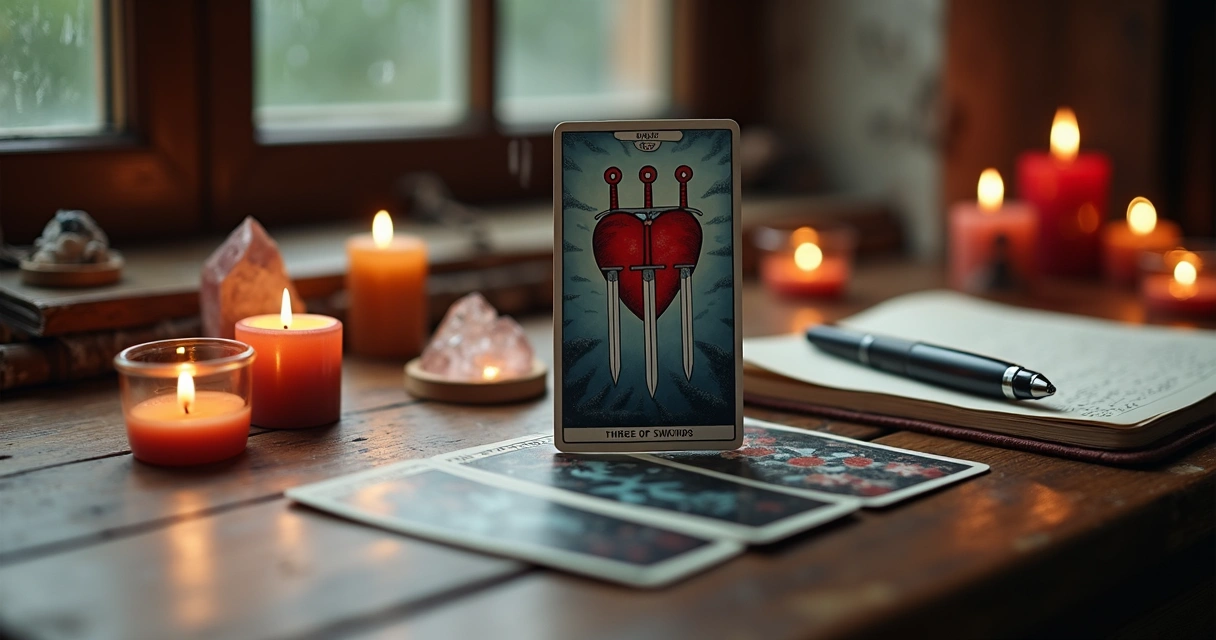
The Three of Swords in the Tarot deck has a reputation for being one of the most intense and emotionally charged cards. When we first encounter it, we are immediately struck by the intensity in its imagery—a heart pierced by three swords, often beneath stormy clouds and pouring rain. This card does not whisper its message. It speaks with honest clarity about pain, heartbreak, sorrow, and loss. Yet, within all this, we find a unique doorway to growth, forgiveness, and genuine healing.
We understand how easy it is to shy away from the discomfort this card stirs up, whether in our personal practice or when supporting others as readers. Yet we believe embracing the Three of Swords is a step that can lead to profound transformation and deeper self-awareness, not just for ourselves but for our clients as well.
Understanding the Three of Swords imagery
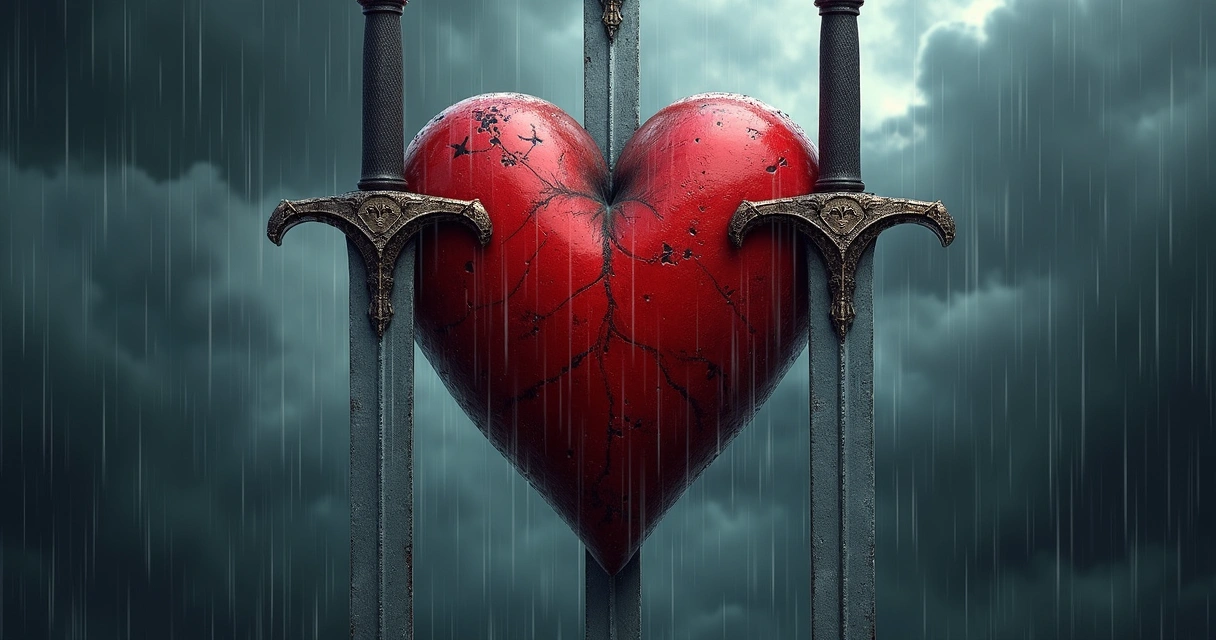
The classic illustration on the Three of Swords is simple but deeply symbolic. We usually see a vivid red heart, pierced directly by three sharp blades. The sky in the background is dark, filled with heavy rainclouds, and rain falls in vertical streaks.
- The red heart: This represents our emotional center, carrying love, vulnerability, passion, and hope.
- The three swords: They signify mental anguish—words, events, or memories that have deeply hurt us, often relating to our thoughts more than physical wounds.
- The stormy background: Rain clouds and storms show the turmoil that comes with loss or disappointment. Yet, we know from every storm comes the promise of clearing skies.
It is no accident that this card sits in the suit of Swords, which in tarot relates to the mind, intellect, and communication. The pain this card brings is rarely physical. It is the anguish of the heart and mind combined—a misunderstanding, betrayal, or realization that cuts deeply.
The upright Three of Swords: Facing pain with honesty
When we draw the Three of Swords upright, the message is often unmistakable. There is heartbreak, separation, disappointment, or emotional upheaval. It is a card that describes wounds left open and raw.
“Pain is not the end of the story.”
Most people want to look away from this moment, but what makes this card powerful is that it asks us to face our sorrow directly so that true healing is possible. In our experience, this honesty is the first step toward growth. By acknowledging what is broken, we lay a foundation for future joy that is authentic and grounded.
Some situations where the upright Three of Swords appears include:
- The end of a relationship or friendship
- Betrayal by someone trusted
- Harsh words or criticism that left a mark
- Letting go of dreams after disappointment
- Family rifts or separations
Yet even in these moments, we always ask our clients and ourselves: What can this pain teach us about our needs, limits, and hopes?
The reversed Three of Swords: Light after the storm
When the Three of Swords shows up reversed, there is a shift in the energy. The wounds may still be present, but the process of mending has already begun. The rain is clearing; the sky is brightening.
“Healing finds its way into even the deepest wounds.”
The reversed card can suggest forgiveness, letting go of resentment, or seeking support. It may appear when a client is trying to move beyond old hurts or when someone is close to releasing the weight of painful memories.
- Reconciliation after conflict
- Seeking therapy or support to address grief
- Learning the difference between healthy vulnerability and harmful self-sacrifice
- Forgiving self or others
- Discovering strength in unexpected places
But we do caution, as sometimes this reversal can show repression rather than healing. Are we truly letting go, or just pushing the pain aside for now?
Three of Swords in love, work, and daily life
The influence of the Three of Swords stretches into every area of our lives. While it is most often connected to loss or betrayal in relationships, it can signal tough choices, disappointments, and turning points in other domains, too.
In love and relationships
A breakup, infidelity, arguments ending in silence, unspoken pain—these are the moments when we see the Three of Swords appear in readings about the heart. For querents facing heartbreak, we always encourage gentle honesty with themselves and their partners. It is natural to want closure, but sometimes the deeper path is accepting what cannot be fixed and allowing space for grief.
- Acknowledging when something precious has ended
- Letting yourself feel the pain without guilt or self-blame
- Understanding boundaries between forgiveness and self-protection
One effective practice is journaling feelings or speaking with a trusted friend or professional. MysticLog makes it simple to record such private insights and track the healing process, whether it’s for a querent or your own journey as a student learning the Tarot. You can always revisit your thoughts and see the progress made, no matter how slow or subtle it may seem.
In work and career
Pain in the work context comes in many forms: rejection, job loss, harsh workplace dynamics, or unmet goals. The Three of Swords indicates the need to reflect on disappointments without letting them poison future opportunities. We remind ourselves and clients that even in professional settings, emotional wounds matter.
- Allow time to process setbacks, rather than rushing straight into action
- Have honest conversations about mismatches or unspoken frustrations
- Use challenges as reasons to reassess your values and desires
When you keep notes in MysticLog, you can easily track shifts in attitude over time. This awareness is a critical step in moving forward and finding new paths after a disappointment.
In finances and material concerns
Financial loss or instability is a special kind of pain. Investments gone wrong, debts, or the loss of material security can cut as deeply as romantic heartbreak. The Three of Swords asks: What is the story you tell yourself about your worth?
- Be transparent about financial fears or mistakes
- Ask for help when needed
- Separate your self-worth from your bank statement
Even if the emotional sting is sharp, there is wisdom gained. Keeping regular logs or notes on financial readings, patterns, and emotional triggers can be invaluable; MysticLog provides a structured, private space for this ongoing reflection.
In health and wellness
Physical illness or emotional stress often surfaces through the Three of Swords. This card may warn of the toll that grief, anxiety, or stress is having on our bodies. On the healing journey, we must remind ourselves and others: slow down, seek support, learn to listen to the stories your body tells through pain.
- Accept that healing is a process, not a single moment
- Acknowledge when emotional pain manifests physically
- Reach out for guidance or therapy when needed
We have found that using a tool like MysticLog helps notice patterns in mind, heart, and body. Over time, the entries build a map of experiences, highlighting improvement and lessons that might be missed otherwise.
 Prompts for healing, growth, and renewal
The Three of Swords may be a card of heartbreak, but we see it as a card of honest reflection and eventual renewal. Healing does not happen all at once. It comes in gentle waves. Here are some reflection prompts many readers have found useful, both for themselves and for their clients:
- What loss am I grieving right now, and what do I miss the most?
- Is there a pattern of pain that repeats in my life? What is its lesson?
- Who or what do I need to forgive in order to feel lighter?
- What can I do to honor my pain without letting it define me?
- When have I grown stronger through struggle in the past?
Sometimes, writing answers to these questions brings up more emotions than expected. This is why, as practitioners, we encourage the use of MysticLog or any trusted journal—having a safe, organized place to witness your growth makes all the difference. Entries can be revisited to show just how far the journey has brought you.
Cultivating resilience and self-awareness
Healing from heartbreak is rarely straightforward. It is messy, cyclical, and often slower than we wish. Still, every time the Three of Swords appears, we are reminded that acknowledging pain honestly is powerful. By doing so, we grow in ways that are gentle, brave, and lasting.
We find practical support in a few approaches:
- Regular reflection—daily or weekly logging of emotions and events
- Seeking patterns in our thoughts and feelings over time
- Experimenting with self-care, rest, and creativity as resources for moving through grief
- Discussing insights or repeating themes with trusted friends, guides, or mentors
 As we see in other tarot cards—like the Three of Wands, which you can learn more about in our article on growth and new horizons, or the guidance offered around self-reflection at tarot for personal growth—even challenging cards carry seeds of hope. Each difficult moment, when given attention, leads to deeper wisdom.
Integrating the Three of Swords into your practice
For tarot readers, both professional and learning, the Three of Swords often triggers the question: How do we support others through pain while staying compassionate? We have found a few steady guidelines:
- Hold space for emotions: Give yourself or your client time to sit quietly with any feeling that comes up.
- Avoid rushing solutions: Sometimes there is nothing to fix yet. Presence is the biggest gift.
- Track personal and client journeys: Use MysticLog to record each reading, recurring themes, and steps taken toward healing. Looking back shows that pain is never static.
- Seek healthy closure: Invite forgiveness, where truly possible, or the gentle acceptance that some things must simply be released.
If you practice with Lenormand or Runes, tracking the moments when heartbreak or loss appears—in any symbolic form—adds layers to your understanding of emotional cycles and patterns. Inspiration for this comes not just from the imagery on the Three of Swords, but also from the lessons in cards like the Five of Wands (conflict and growth) and the Four of Wands (celebration after struggle).
Why tracking readings matters—personally and professionally
When moving through pain, the smallest changes are easy to miss. It’s natural to forget just how strong we have become or to overlook steps that brought us here. This is why keeping records of our readings—whether for ourselves or for querents—carries such value.
Using a secure digital journal like MysticLog, you can:
- Quickly revisit past interpretations and patterns
- Spot emotional or situational cycles over time
- Strengthen client relationships with meaningful follow-ups
- Grow in your own practice with the help of prompts and AI guidance
Reflection, documentation, and gentle support for oneself and others create a space where pain becomes a seed of wisdom. As we find with the Three of Cups, connection after struggle can be a balm for the heart.
Conclusion: Embracing the Three of Swords for new beginnings
The Three of Swords is not a card anyone hopes for, but it is a card we can meet with courage and curiosity. Every heartbreak written in the cards is a chapter that prepares us for deeper joy and lasting growth. By using tools like MysticLog, tracking emotions, honoring what is lost, and welcoming support, we transform sorrow into wisdom.
If you are ready to bring deeper organization, new insight, and true healing into your tarot practice, we invite you to learn more about MysticLog, your companion as you help yourself and others grow past even the hardest moments.
Frequently asked questions
What does the Three of Swords mean?
The Three of Swords often signals heartbreak, pain, or emotional loss. It appears during times of disappointment, separation, or conflict—usually pointing to wounds of the heart or mind. While its message is difficult, it calls us to face difficulties directly so true healing can begin.
How does the Three of Swords help healing?
By highlighting pain or loss, this card encourages us to acknowledge feelings instead of denying or repressing them. Honest reflection and self-compassion are the stepping stones to moving through heartache toward genuine healing. Using tools like MysticLog allows you to track progress and insights for continued growth.
Is the Three of Swords always negative?
While the Three of Swords brings up challenging emotions, it is not only negative. This card is a teacher of resilience and self-awareness. It marks the turning point where pain, when faced openly, can become the source of wisdom, forgiveness, and new beginnings.
How can I interpret Three of Swords reversed?
In a reversed position, the Three of Swords may signal the beginning of healing, forgiveness, or moving beyond past regrets. Sometimes, it asks us to check whether we are truly healing or just suppressing pain. This is an invitation to process emotions deeply instead of ignoring them.
What lessons does the Three of Swords teach?
It teaches us that pain, though difficult, can become a catalyst for growth. The card reminds us that healing usually requires courage, honesty, and sometimes, the support of others. Tracking these lessons over time with MysticLog allows us to see how far we have come, even when the journey is slow or difficult.