


We have seen it many times. A skilled Tarot reader can know the cards deeply, care for clients sincerely, and still feel mentally scattered at the start of the day. The issue is not lack of talent. It is lack of rhythm.
Creative focus does not always appear on command. It often grows from small repeated actions that tell the mind, the body, and the reading space, “We are here now.” For Tarot professionals, those actions become rituals. Not rigid rules. Not performance. Just steady anchors.
Daily rituals help Tarot readers move from mental noise into clear presence.
We think this matters even more when you work with many querents each week. A professional reading practice asks for intuition, listening, memory, and structure at the same time. That is why platforms like MysticLog fit so naturally into the work. They support the practical side, so the reader can protect more of their creative attention for the reading itself.
In our experience, the most helpful rituals are simple enough to repeat and meaningful enough to keep. Below, we share five rituals Tarot professionals often use to set creative focus each day.
1. Opening the day with a single-card check-in
Many professionals begin with one card, not for prediction, but for orientation. This is a quiet way to ask, “What quality do we need to bring into today’s readings?” The answer may point to patience, precision, honesty, or restraint.
This works because it narrows attention. Instead of carrying ten thoughts into the day, we carry one theme. That theme can shape how we speak, how we listen, and even how we pace appointments.
One card. One tone.
A simple single-card ritual often looks like this:
- Shuffle in silence for one or two minutes.
- Ask a short question about the day’s focus.
- Draw one card and write down the first clear impression.
- Note how that message may affect client communication.
What we like here is the limit. A small ritual is easier to trust. We are not trying to extract a full reading before breakfast. We are setting direction.
A focus card is less about forecasting and more about choosing a working mindset.
Readers who want more depth can pair this with reflective writing. We have found that a journaling habit sharpens pattern recognition over time, especially when the same card themes return in different forms. If that practice speaks to you, our thoughts on Tarot journaling for insightful readings can help you shape it into a daily habit.
There is also support for the emotional side of creative work. Findings from a Penn State study on everyday creativity suggest that people who feel happy and active are more likely to engage in creative activities during the day. A calm, encouraging card check-in can help create that inner climate before client work begins.
2. Clearing the reading space with intent
Some readers light a candle. Some wipe the table. Some arrange a cloth, place a crystal, open a window, or sit in silence for three breaths. The form changes, but the purpose stays the same. We clear the space so the mind can follow.
This ritual matters because visual disorder can become mental disorder. When tools are scattered, notes are missing, and yesterday’s energy still feels present, attention splits. A reading space should not be perfect, but it should feel ready.
A prepared space reduces friction and helps intuition settle faster.
For professionals, this ritual also includes the digital space. We think this part is often overlooked. If client histories, follow-up notes, and spread records are hard to find, the mind starts working on retrieval instead of interpretation. That is one reason many readers build a structured workflow with MysticLog. When session details are stored in one place, the day begins with less searching and more presence.
We also notice that space-clearing rituals become stronger when they use repeated signals. For example:
- The same cloth placed on the table each morning.
- The same short prayer or intention spoken before the first reading.
- The same order for setting out cards, notebook, water, and timer.
- The same review of the day’s client list before opening the deck.
These details may look small from the outside. They are not small in practice. Repetition teaches the nervous system when focused work begins.
A broader spiritual routine can support this process too. We have shared a few gentle ideas in our article on daily mystic rituals for spiritual practice, which many readers adapt to their own style and belief system.
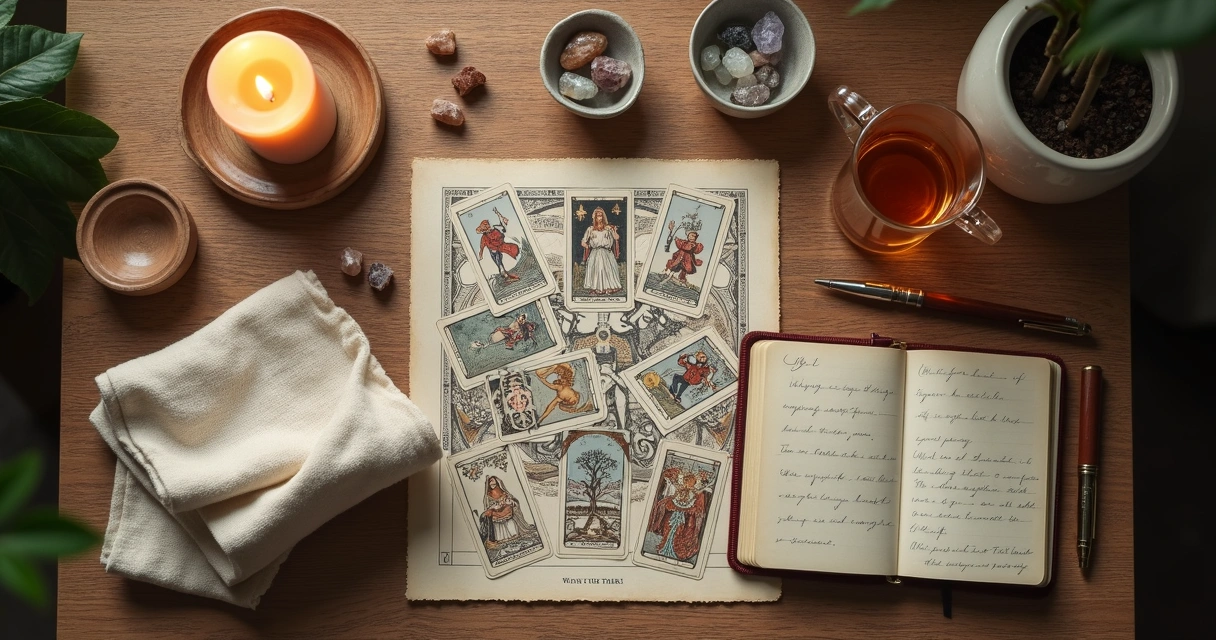 3. Writing a clear intention before seeing clients
Intentions are not goals in the business sense. They are working promises. We might write, “We will stay honest and gentle today,” or, “We will not rush difficult messages.” This turns abstract values into usable guidance.
Some readers keep intentions broad. Others write one line for the whole day and one line for each appointment. Both can work well, as long as the wording is clear and real.
We have seen professionals use intentions in three main ways:
- To guide tone, such as choosing compassion over speed.
- To protect boundaries, such as refusing to overread vague fears.
- To support style, such as keeping messages grounded and direct.
Creative focus improves when the reader knows how they want to show up, not just what they want to do.
This ritual becomes even more useful on busy days. When appointments stack up, creative energy can flatten. A written intention helps us return to center between sessions instead of carrying emotional residue forward.
There is also an interesting point from research from Stanford Graduate School of Business on repeated practice. Daily practice appears to improve convergent creativity, which is the kind used to find fitting, focused solutions. For Tarot professionals, that can mean better synthesis, cleaner interpretation, and more disciplined storytelling in readings. Routine alone may not create endless novelty, but it can sharpen useful judgment.
That is why intention writing works so well. It gives practice a frame. It keeps routine from becoming empty repetition.
4. Doing a short intuition warm-up
Before a client session, many experienced readers do not jump straight into a spread. They warm up. Just as a musician plays scales, a reader may perform a fast symbolic exercise to wake up intuitive recall.
We have seen warm-ups take many forms. The best ones are brief, repeatable, and tied to symbols.
Some examples include:
- Pulling three cards and naming the story in under one minute.
- Looking at one card and listing five symbols without checking a book.
- Recalling a past spread from memory and noting what still stands out.
- Writing one sentence about the mood of a card pair.
This ritual trains responsiveness. It helps us shift from passive knowledge to active reading. We are not trying to be perfect. We are training our inner language to come forward sooner.
An intuition warm-up helps the reader access symbols quickly without forcing the process.
We often hear readers say they feel more connected after even five minutes of this kind of practice. That makes sense. Creative work tends to begin in motion, not in waiting. Yet daily artistic engagement is less common than many people think. According to a University of Florida study on arts participation, only about 1 in 20 Americans take part in arts or cultural activities on any given day. A small warm-up ritual helps Tarot professionals stay in regular contact with their craft rather than only performing it when a client arrives.
If you want to deepen this area, we have also written about ways to enhance intuition in Tarot readings. Many of those habits blend naturally with a morning warm-up.
 5. Closing the loop with a brief end-of-day record
Creative focus is easier to rebuild tomorrow when today has a clean ending. This is why many Tarot professionals end the day with a short record. Not a full diary every time. Just enough to preserve the thread.
We think this ritual is one of the most practical of all because it serves both intuition and client care. When a querent returns weeks later, a brief note about themes, card positions, emotional tone, and follow-up points can make the next session far more grounded.
A good end-of-day record may include:
- The main theme that appeared across readings.
- Any card that showed up more than once.
- One lesson about pacing, wording, or boundaries.
- Follow-up needs for specific clients.
This ritual also gives the mind closure. We do not need to keep every session half-open in memory through the evening. We place it somewhere safe. In a notebook, a private file, or a client platform built for spiritual professionals. This is another point where MysticLog supports the real rhythm of practice. Storing session histories, notes, and images in one secure place makes reflection easier and return sessions richer.
Recording the day helps tomorrow’s creativity by preserving today’s insight.
Readers interested in this reflective side of Tarot may also enjoy our article on Tarot for self-reflection and growth, as well as our Portuguese post on improving intuition in Tarot readings. Both support the same idea. Growth comes from practice that is noticed, not just repeated.
Conclusion
When we look at working Tarot professionals, we rarely find that creative focus comes from one dramatic habit. It usually comes from five or six small ones done with care. A single-card check-in. A cleared space. A written intention. A short warm-up. A clean record at the end of the day.
These rituals do not make readings mechanical. They do the opposite. They free up attention, calm internal noise, and create better conditions for insight. That is what many experienced readers are really after. Not more activity, but more presence.
If you want to bring that same sense of order and depth into your practice, we invite you to get to know MysticLog and see how it can support your daily rituals, client records, and long-term reading work with greater clarity.
Frequently asked questions
What is a tarot ritual for focus?
A Tarot ritual for focus is a short repeated action that helps us become mentally present before reading. It may include drawing one card, writing an intention, clearing the table, or taking a few quiet breaths. The goal is to create steady attention before interpretation begins.
How do tarot pros set creative intentions?
Many Tarot professionals write one simple sentence before starting the day or before each client session. The sentence often names the quality they want to bring, such as patience, honesty, or calm speech. This keeps their style and decision-making aligned during readings.
Are daily rituals important for tarot reading?
Yes, daily rituals can help a reader enter a focused state more easily and stay consistent across sessions. They also support memory, boundaries, and emotional balance. Rituals give structure to intuitive work without reducing its depth.
Which ritual is best for beginners?
For beginners, we usually suggest a single-card check-in plus one sentence in a journal. It is simple, low pressure, and easy to repeat. This gives enough structure to build confidence without making the practice feel heavy or formal.
Can I create my own tarot ritual?
Yes, and many readers should. The best ritual is one that feels natural and can be repeated with ease. You might combine silence, one card, a brief note, and a tidy reading space. A personal ritual works best when it is simple, meaningful, and easy to keep.