


The best online tarot reading service is the one that fits your question, preferred level of interaction, and expectations for privacy and guidance. Compare self-guided tools, live readers, and reader marketplaces by how they explain their process, handle sensitive information, and let you assess the reader before paying.
Key points for choosing an online tarot service
- Choose a live reader for dialogue and follow-up questions, or an automated tool for a low-pressure card draw.
- Look for clear session details, transparent fees, and realistic claims about what a reading can offer.
- Check how the service handles your personal information and whether you can contact the reader before booking.
- Bring an open-ended question and treat the cards as a tool for reflection, not a guaranteed prediction.
Choose the format that matches the guidance you want
Start by deciding whether you want to interpret cards on your own or speak with a person. Free automated readings can be useful for exploring a spread or reflecting on a question. They usually provide a preset interpretation, so they may not respond to your personal context as a human reader can.
A live one-to-one reading offers conversation, clarification, and the chance to discuss how an interpretation connects to your circumstances. Reader marketplaces can make it easier to compare profiles, while independent readers may offer a more personal booking process. For examples of these different experiences, explore self-guided tarot tools and interactive online reading spaces. These are examples, not endorsements or a definitive ranking.
| Format | Good fit when you want | Check before you begin |
|---|---|---|
| Automated or AI-assisted | A quick card draw or a prompt for personal reflection | How the interpretation is generated and whether follow-up answers are automated |
| Live reader | A conversation tailored to your question | Session length, communication method, and reader’s approach |
| Reader marketplace | Several profiles and booking options in one place | Fees, cancellation terms, reviews, and how disputes are handled |
There is no universally “most accurate” reader or website. A better measure is whether the session is clear, respectful, relevant to your question, and useful to you afterward.
Assess the reader’s approach before booking
A reader’s description should help you understand what a session will actually be like. Look for the deck or method they use, the topics they work with, the session format, and what you will receive. A detailed profile is more useful than a string of grand promises or vague claims of certainty.
Reviews can provide clues about communication and professionalism, but they cannot prove that predictions are guaranteed. Look for specific comments about whether the reader listened, explained their interpretation, and respected the client’s choices. If possible, ask a short question about the process before paying, such as whether you can ask follow-ups during the session.
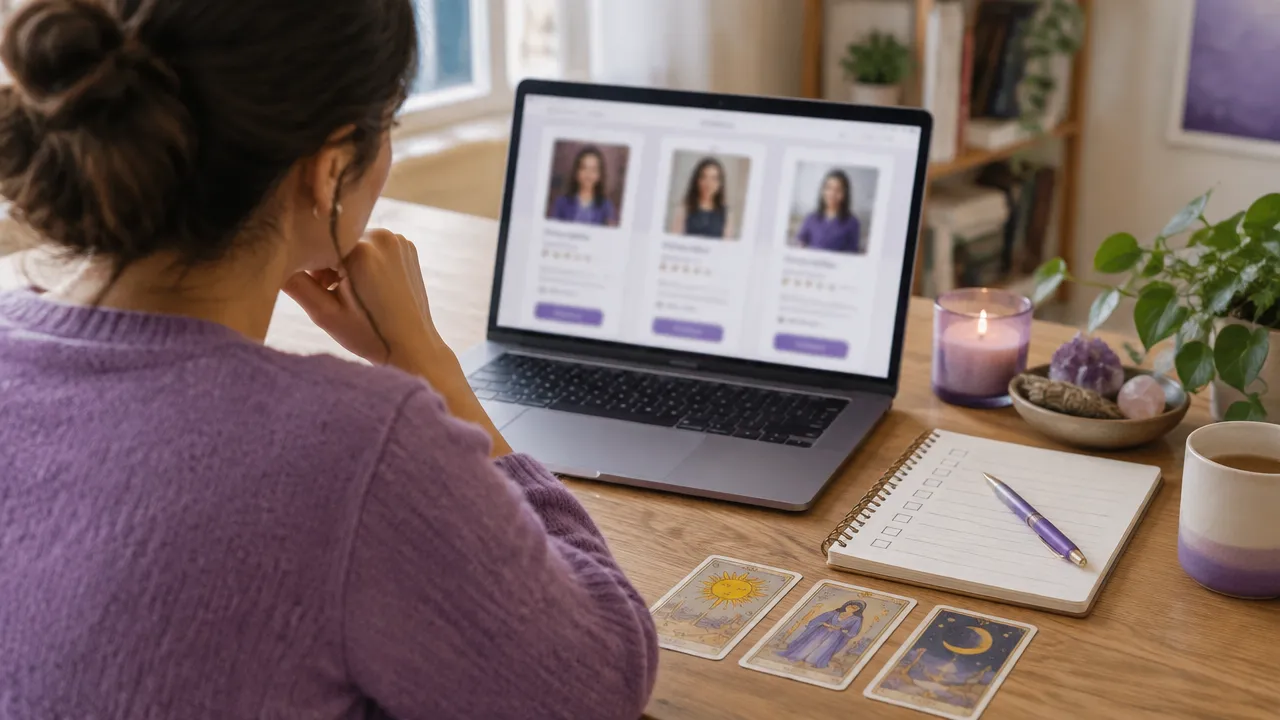
Notice how the reader describes uncertainty. A thoughtful practitioner can explain symbolic possibilities without insisting that one interpretation is the only answer. If you want the reader to explain how they arrived at an interpretation, ask how they connect card meanings, positions, and the context of your question.
Look for ethical boundaries and realistic claims
Choose a service that presents tarot as guidance or reflection rather than a substitute for professional medical, legal, or financial advice. Be cautious if a reader guarantees a specific outcome, pressures you to book repeated sessions, or claims that an extra payment is necessary to remove a curse or prevent harm.
A professional reader should make room for your judgment. You can ask about their boundaries, how they handle distressing topics, and whether they will decline questions outside their scope. You should also feel free to stop a session or decline a suggestion without being frightened or shamed.
Automated and AI-based readings need a separate check: find out whether you are interacting with software, a human, or both. AI can produce fluent interpretations, but fluency alone does not establish accuracy. Treat its output as one possible perspective, and keep the final meaning and decisions in your own hands.
Compare total cost, privacy, and booking terms
Before booking, confirm the total price, session length, payment method, cancellation policy, and whether follow-up messages cost extra. On marketplaces, check whether the quoted amount covers the full session or only a limited chat or call. Avoid paying more than you planned because a timer, add-on, or urgent upsell creates pressure.
Consider what information the service asks you to share. A reading may not require your full legal name, birth date, address, or detailed information about another person. Review the service’s privacy explanation, especially if you plan to discuss intimate relationships, health, or finances. Share only what is necessary for the reading you want.
For a first appointment, choose a format with clear terms and a manageable commitment. A short introductory session can help you decide whether the reader’s communication style suits you before you book a longer consultation.
Prepare a question that leaves room for insight
Open-ended questions usually give a reading more room to explore choices and patterns than a strict yes-or-no demand. Instead of asking whether a person will return, you might ask what you should consider about reconnecting. For a relationship reading, a simple two-card spread can compare your needs with the dynamic you want to understand, without claiming to speak for someone else.
Write down one main question and a little context before the session. If you are reading for yourself, taking a moment to settle and record your first impressions can help you distinguish your own associations from a guide’s interpretation. If you are learning tarot, practicing beginner-friendly spreads and gradually strengthening your interpretation skills can make it easier to assess a reader’s explanations, too.
Afterward, note what felt useful, what remains unclear, and any action you want to consider. A reading should support thoughtful choices, not make them for you.
Professional readers can make online sessions more consistent
For readers who offer online sessions, a reliable service is also about the work behind the call: clear booking information, thoughtful follow-up, and a secure way to keep client notes. Someone exploring a professional tarot practice can compare formats and boundaries before building a regular schedule; long-term work also requires realistic planning around workload and income rather than relying on promises of instant success.
MysticLog helps professional readers organize client histories, card spreads, interpretations, and follow-up details in one workspace. Keeping structured records can make a returning client’s next session more personal, while leaving the interpretation and professional judgment with the reader.