


To find a trusted tarot reader near you today, compare a few local options, check how clearly they explain their services, and ask practical questions before booking. A good fit should leave you feeling informed and respected, not pressured to believe a prediction or buy more sessions.
Key points for choosing a local tarot reader
- Look for clear service descriptions, pricing, session length, and cancellation terms.
- Use reviews as one clue, not proof of a reader’s skill or integrity.
- Ask what a session can cover and how the reader handles uncertainty.
- Be cautious of fear-based claims, guaranteed outcomes, or pressure to spend more.
- Choose the format and reader whose approach makes you feel comfortable.
Where can you find a tarot reader nearby today?
Start with map listings, local business directories, metaphysical shops, and recommendations from people whose judgment you trust. Search by your town or neighborhood, then check each reader’s own service page or profile for current availability and booking details.
Some readers work from private studios, wellness centers, or bookstores; others meet clients at agreed public locations. Confirm the venue and format before you go. If you need an appointment today, contact the reader directly rather than assuming a listing is up to date.
In-person is not the only practical choice. A video or phone session may offer more appointment times, especially if local options are limited. If you are considering a remote session, compare the reader’s process and communication style just as carefully as you would for an in-person visit.
How can you tell whether a reader is trustworthy?
A trustworthy reader makes the basics easy to understand: what kind of reading they offer, how long it lasts, what it costs, and what happens if you need to cancel. Their description should set realistic expectations instead of promising certainty about relationships, health, money, or another person’s private thoughts.
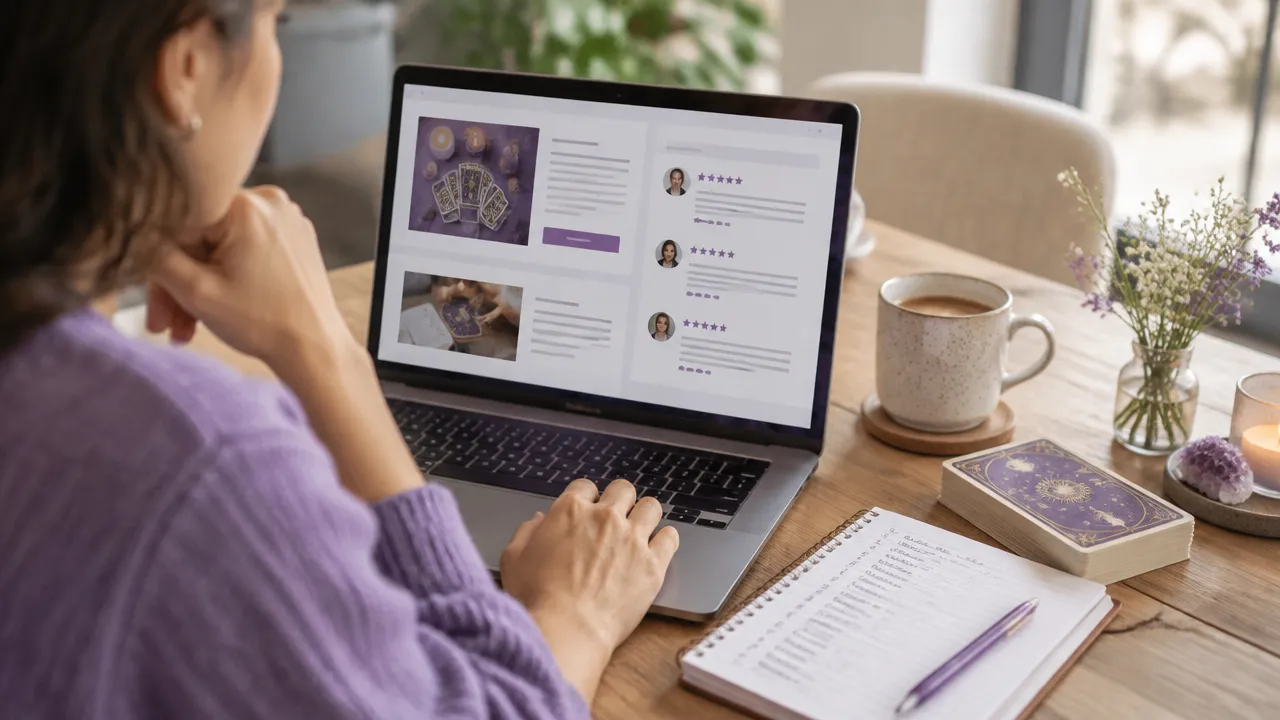
Read reviews for specific details about the experience. Comments that describe the reader’s communication, punctuality, or whether the session matched its advertised format are more useful than vague praise alone. Look for patterns across multiple reviews, and remember that a high rating cannot guarantee that someone is right for you.
Check whether the reader explains confidentiality and recordkeeping. Some professionals keep notes to make returning sessions more coherent. A client management system such as MysticLog can help a reader organize consultation histories, but you can still ask what information they save, how it is stored, and whether you can request that it be removed.
What should you ask before booking?
A few direct questions can clarify whether the reader’s approach suits your needs. You do not need to share sensitive details before you decide to book.
- What does this session include, and how much time is reserved for questions?
- What is the full fee, and are there any additional charges?
- Do you offer in-person, phone, or video appointments?
- How do you approach topics where the cards do not give a clear answer?
- What is your cancellation policy, and how do you handle client notes?
A professional should be able to answer calmly and without making you feel foolish for asking. If your question involves a high-stakes decision, ask how the reader frames their role. Tarot can offer reflection and perspective, but it should not replace qualified medical, legal, financial, or mental health advice.
What are the red flags to watch for?
Walk away if a reader uses fear or urgency to make you pay for more help. Claims that you are cursed, that disaster is certain unless you buy a cleansing, or that only repeated paid sessions can protect you are reasons to pause rather than hand over money.
Also be wary of guaranteed predictions, pressure to disclose financial or identity information, and requests to keep the service secret from people you trust. A reading should not make you feel trapped, dependent, or unable to make your own choices. If the tone changes after you ask about fees or boundaries, take that seriously.
Online ratings and personal recommendations can help you compare options, but neither removes the need to use your judgment. Trust the combination of clear terms, respectful communication, and a session structure that feels appropriate to you.
How do you choose the right reader for your question?
Choose someone whose stated focus matches what you want to explore. A reader who specializes in reflective life questions may not be the best fit if you want a structured relationship spread, and a reader focused on predictive readings may not suit you if you prefer open-ended reflection.
If you are asking about a relationship, check whether the reader can work with a focused spread, such as a simple two-card comparison, without presenting it as a guaranteed verdict about another person. If you have read tarot for yourself before, bring the question or card pattern you want to discuss, while staying open to a different interpretation.
Understanding what a tarot reading can and cannot tell you, and how a reader explains symbolism in context, makes it easier to recognize a useful session. Those same habits of clear communication and ethical boundaries can support readers who are building a sustainable professional practice.
How can you prepare for a useful session?
Bring one or two open questions rather than trying to cover every part of your life at once. “What should I consider as I decide between these options?” gives room for reflection; a demand for a guaranteed yes or no may not match the reader’s approach.
Before the appointment, confirm the start time, location or meeting link, session length, and payment terms. During the reading, take notes if useful and ask the reader to explain an interpretation that feels unclear. A professional should welcome clarification without insisting that you accept every interpretation.
Afterward, give yourself time to consider what felt meaningful. A session can offer a perspective, but your decisions remain yours. If you plan a follow-up, book because it serves a clear purpose, not because you were told that something bad will happen otherwise.