


Astrology client management is the practical work of keeping client details, consultation notes, bookings, and follow-ups organized in a way that supports thoughtful service. For astrologers handling natal chart readings, relationship compatibility sessions, and returning clients, a consistent system makes it easier to prepare without relying on memory or scattered files. MysticLog brings client profiles, consultation history, bookings, reminders, and practice insights together in one workspace.
Key takeaways for a more organized astrology practice
- Keep relevant client details and session notes in one accessible record.
- Use the same consultation-note structure after every appointment.
- Make booking and reminders clear so clients know what to expect.
- Use past-session context to personalize follow-up, not to make assumptions.
- Choose tools that support your workflow while keeping professional judgment in your hands.
Why do astrologers need a consistent client workflow?
A repeatable workflow helps astrologers move between client sessions without losing important context. One client may be exploring a natal chart, another may be discussing compatibility, and a returning client may want to reflect on a theme from an earlier reading. If details live in separate notebooks, inboxes, and calendars, preparing for each conversation takes extra effort.
Start by deciding what belongs in a client record, where consultation notes should go, and how you will handle bookings and follow-ups. Keep the process proportionate to your practice: a solo astrologer with a few weekly sessions needs a clear system, not a complicated administrative routine. This approach to organizing client records can help you think through the basics across consultation-based practices.
The goal is continuity, not collecting details for their own sake. A well-kept record should help you prepare, understand what the client asked for, and remember any next step you agreed on.
What information should an astrologer keep in a client profile?
A useful profile contains the details needed to provide the service and continue the professional relationship. Create a consistent structure, then record only information that is relevant to the client’s consultations and your way of working.
- Contact and booking details: preferred contact method and appointment history.
- Consultation context: session type, stated goals, and topics the client wants to explore.
- Astrology information: birth details or chart materials the client has shared and you need for the work.
- Continuity notes: key observations, questions to revisit, and agreed follow-up.
Ask clients to provide birth details through a clear process, and explain how you use information they share. Avoid recording unrelated personal details. The FTC’s small-business security guidance is a useful starting point for reviewing basic practices around protecting business information.
A simple profile can also include a reminder to confirm birth time or birthplace when those details matter to the consultation. Do not treat uncertain birth information as precise. For more context on chart components, link your preparation process to this guide to natal chart insights.
How can astrologers keep consultation notes useful?
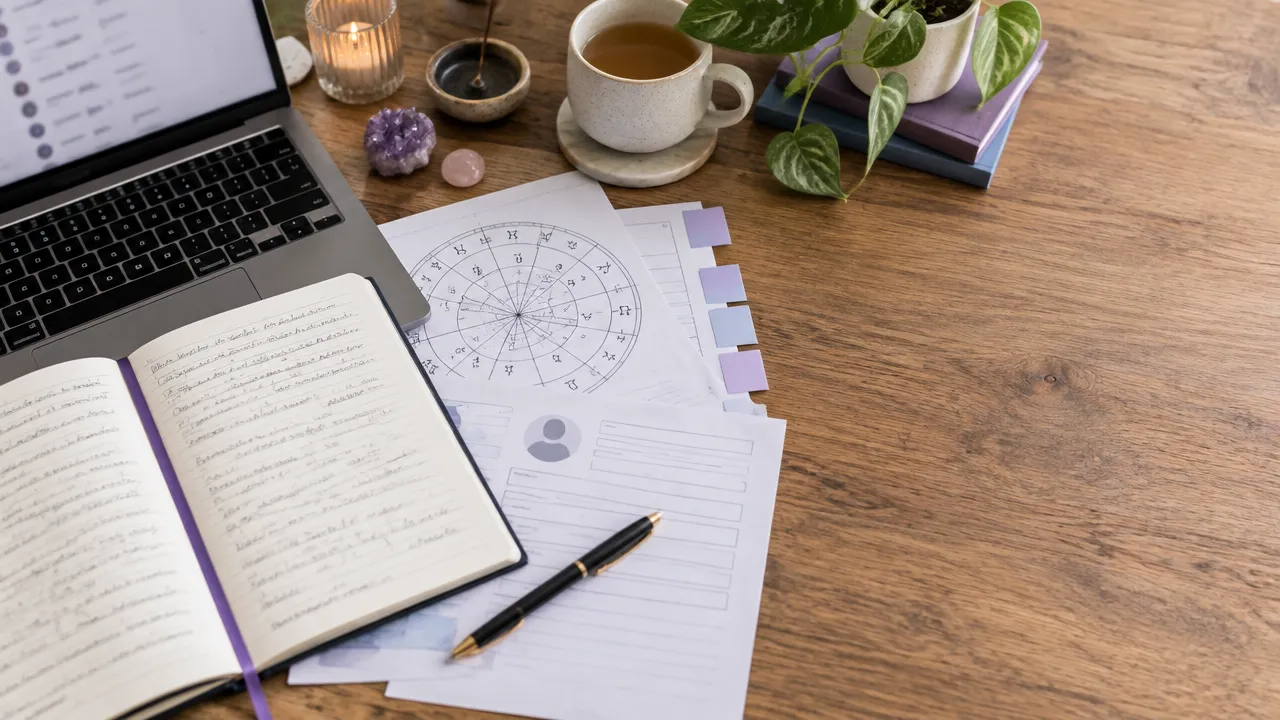
Useful notes are brief, structured, and easy to interpret later. They capture the client’s question, the session’s main themes, and what you agreed to do next, rather than attempting to preserve every sentence.
Use the same headings after each appointment. For example, record the session date and type, the client’s stated focus, relevant chart factors discussed, your interpretation, and any follow-up the client requested. Distinguish your observations from the client’s own words, and avoid presenting an astrological interpretation as a guaranteed outcome.
For a returning client, begin the next session by checking whether your earlier notes still reflect their current priorities. People’s questions change, and a record should support a fresh conversation rather than lock someone into an old description. Keep sensitive details to what you need, and make your note-taking approach clear to clients.
MysticLog lets practitioners keep consultation histories, notes, images, and documents with client records, making it easier to revisit earlier work. A parallel process for other reading practices is described in this guide to recording a first consultation.
How can booking and reminders reduce admin?
A clear booking process gives clients a straightforward way to request a session and helps you protect time for preparation. Share a personalized booking link where clients already find you, such as your website or social profiles, and keep the availability shown there current.
Before confirming an appointment, make the session format, duration, fee, and any preparation requested easy to understand. If clients should send birth details or a specific question in advance, explain what is needed and how to provide it. A consistent booking flow can reduce repeated clarification messages and help the client arrive prepared.
MysticLog provides a booking link and integrated calendar, with email and WhatsApp reminders to help keep clients informed about upcoming consultations. Astrologers who want to refine the operational side of scheduling can adapt ideas from this consultation booking workflow.

How should astrologers follow up with past clients?
Follow-up works best when it is relevant, respectful, and connected to what the client requested. You might send a short post-session note with an agreed resource, or invite a client to book another appointment if they expressed interest in continuing the conversation.
Set a simple reminder to review past client records, but do not assume that silence means someone wants to hear from you. Keep outreach brief, give clients an easy way to decline further messages, and follow the communication preferences they have shared. The purpose is to make a helpful next step available, not to pressure someone into a return booking.
MysticLog can help bring clients who have not been in touch for a while to your attention, so you can decide whether a thoughtful check-in is appropriate. A structured follow-up process for practitioners can help make those decisions more consistent.
How does MysticLog support an astrologer’s practice?
MysticLog is designed to bring everyday practice administration into one place. Astrologers can maintain client profiles, document consultation history, manage appointment requests through a booking link and calendar, and use email or WhatsApp reminders to help clients keep track of upcoming sessions.
Its AI assistant, Mysty, can summarize previous client consultations and help surface recurring themes before a new session. That can make preparation more efficient, but the astrologer remains responsible for interpreting charts, checking context, and deciding what is appropriate to share. AI can support your process; it should not replace your expertise or professional boundaries.
Practice dashboards can offer a view of client and consultation activity, while reminders about inactive clients can support considered re-engagement. For a broader comparison of practice software approaches, see this discussion of specialized and generic practice tools. MysticLog offers a 15-day free trial with no credit card required, so astrologers can explore how its workflow fits their needs.
Build a workflow that supports better consultations
Good client organization is not about adding more administration. It is about making essential details easier to find, preparing for sessions with care, and following through on what you and the client agreed.
- Set up a consistent profile structure and collect only relevant information.
- Use a short note template after every consultation.
- Keep availability, booking instructions, and reminders current.
- Review client history before a return session, then confirm what matters now.
- Use follow-up tools thoughtfully and keep interpretation under your control.
Whether you are building a new astrology practice or managing a growing list of returning clients, a centralized workspace can reduce the effort spent switching between tools. The best setup is the one that helps you offer a prepared, personal consultation while preserving clear boundaries.
Frequently asked questions
What information should an astrologer keep in a client record?
Astrologers can manage client information in one consistent record that includes contact details, relevant birth data, consultation goals, session notes, and agreed follow-up. Keep entries factual, useful, and easy to scan. A centralized practice management workspace can connect those details with the client’s consultation history.
Can astrologers use a CRM to manage clients?
Yes. A practice management platform can help organize client profiles, consultation notes, appointment requests, and follow-up in one workspace. Choose a workflow that fits your services, and confirm how the platform handles access and data storage before entering sensitive client information.
How should astrologers organize consultation notes?
Record the session date, consultation type, the client’s main questions, the themes discussed, and any agreed next steps. Separate the client’s own statements from your astrological interpretation. This makes notes easier to revisit without turning them into a transcript or overstating what a chart can establish.
How can astrologers simplify appointment scheduling?
A booking link lets clients request a time based on the availability you share, while a connected calendar helps you track appointments. Automated reminders can reduce the need for manual messages. Review your availability and appointment details regularly so clients receive accurate information before each session.
How can astrologers follow up with past clients?
Use a clear, consent-aware follow-up process. For example, send a brief check-in after a consultation or invite a client to book again when they have requested ongoing support. Keep the message relevant to their stated needs, and avoid treating a long gap between sessions as permission to contact them repeatedly.