

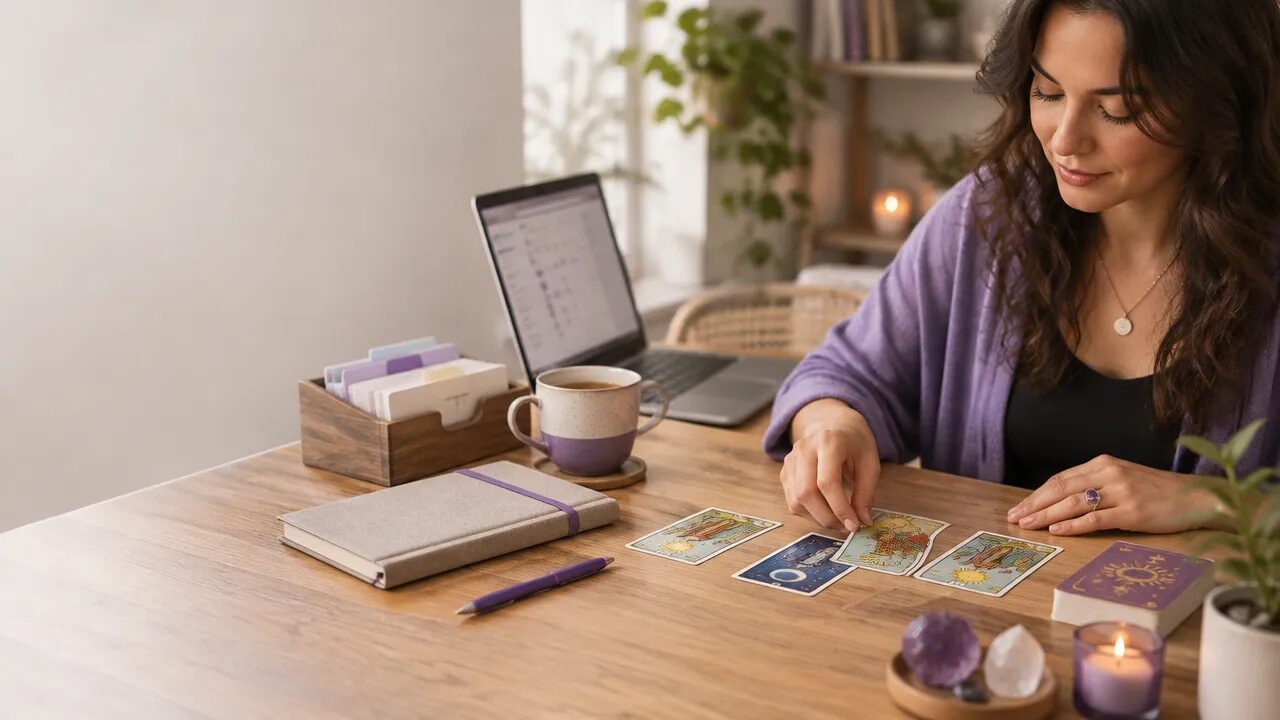
Tarot client management means keeping client details, bookings, and reading notes organized in one dependable workflow. For independent Tarot readers, that structure makes it easier to prepare for returning clients, document each spread, and spend less time searching through notebooks or messages. MysticLog brings client profiles, consultation history, scheduling, and AI-assisted summaries together in one workspace.
Key takeaways for an organized Tarot practice
- Use one central record for each client and one consistent format for every reading.
- Capture the question, spread, cards, interpretation, and any agreed follow-up, not every personal detail shared in conversation.
- Keep booking, session notes, and reminders connected where possible to reduce repeated admin.
- Use AI summaries to refresh your memory, then verify them against the original notes.
- Set clear boundaries for privacy, record access, and how long you keep information.
Why do Tarot readers need a repeatable client workflow?
A repeatable workflow helps you give returning clients continuity without relying on memory. As appointments accumulate, details can end up scattered across a calendar, direct messages, email threads, and handwritten notes. A consistent system lets you quickly see what was discussed, what spread you used, and what the client wants to revisit.
This is not about turning a personal reading into a sales script. It is about keeping professional records that support thoughtful preparation and clear boundaries. A client profile can hold basic contact and preference details, while each consultation record captures the information specific to that session.
Start with the simplest structure you can maintain. Readers who want to keep Tarot client profiles simple can avoid collecting fields that do not support scheduling, the reading itself, or an agreed follow-up.
What should you include in a Tarot client record?
A useful client record separates stable client details from the notes for each consultation. This makes it easier to find a past session without turning one profile into a long, difficult-to-scan journal.
Keep the client profile brief
- Name or preferred form of address, plus the contact method needed for appointments.
- Scheduling preferences, such as time zone or preferred session format.
- Relevant communication preferences, such as whether reminders are welcome.
- A short note about the client’s stated goals, only when it helps you provide the service.
Give every consultation its own entry
For each reading, record the date, the client’s focus, the spread, the cards drawn, and whether any cards appeared reversed. Add your interpretation and the main themes discussed. If useful, attach an image of the layout or a document the client has chosen to share.
Keep interpretation distinct from direct client statements. That small habit helps you remember what the cards suggested versus what the client told you. A consistent format for documenting complex Tarot spreads can also make notes easier to review when a session includes clarifiers or several related questions.

How can you document a reading without writing a transcript?
Record the information that will help you understand the session later, not a word-for-word account of the conversation. Concise notes are easier to maintain and can help preserve the client’s privacy.
A practical session template might include:
- Focus: the question or area the client chose to explore.
- Method: the spread, deck if relevant, and any clarifying cards.
- Cards: card names, positions, and orientations.
- Reading notes: interpretation, recurring themes, and points the client wanted to remember.
- Next step: any agreed follow-up, resource, or topic to revisit.
For example, instead of writing a long account of a career reading, note that the client asked about a possible role change, that you used a three-card spread, and that the discussion focused on uncertainty, skills, and a practical next step. Avoid presenting a prediction as a guaranteed outcome. Clear notes support continuity while leaving room for the client’s situation to change.
How can booking and follow-up fit the same workflow?
Connect appointments to the client history whenever possible. When a booking request, calendar entry, reminder, and consultation note live in separate tools, even a simple appointment can create extra copying and searching.
A smoother routine is to let clients request a time through a booking link, review the appointment in a central calendar, and keep the session record attached to the correct profile. Reminders can reduce the need for manual confirmation messages, while a short post-session task list can help you handle any promised follow-up.
MysticLog provides a personalized booking link, an integrated calendar, and email and WhatsApp reminders. Readers comparing their options can use a clear Tarot booking workflow as a starting point, whether they use a dedicated platform or a combination of tools.
Keep follow-up appropriate and client-led. A reminder about a requested check-in is different from repeatedly contacting someone who has not asked to hear from you. Recording preferences helps you respect that distinction.
How does MysticLog help organize Tarot reading history?
MysticLog gives Tarot professionals a place to manage client profiles and keep a history of consultations, including notes, interpretations, images, and documents. This can make it easier to prepare for a returning client without searching across unrelated notebooks or message threads.
After a session, add the reading details to the client’s history while the spread and conversation are still clear in your mind. When the client returns, review the previous entry first, then add the new reading as a separate consultation. Keeping each session distinct preserves context and helps you notice what has changed without treating an older interpretation as a fixed answer.
The platform also brings scheduling, reminders, and business dashboards into the same practice-management environment. Those features can help independent readers spend less time on administration and keep their appointment process easier to follow.

How can Mysty help you prepare for a returning client?
Mysty, MysticLog’s AI-powered assistant, can summarize a client’s previous readings and consultations to help you recall important details before a new session. A summary may bring earlier questions, recurring themes, and observations into view without requiring you to reread every note.
Use that summary as a starting point, not a substitute for your own review. Check it against the original consultation history, correct anything incomplete, and decide which details are relevant to the appointment in front of you. AI can help organize information, but your professional judgment and interpretation remain yours.
A useful preparation routine is to review the summary, open the original notes for context, and write down one or two neutral points to clarify with the client. That keeps the conversation grounded in what the client wants to explore now, rather than assuming their past concerns still define the present session. For more on working with AI in readings, see what to consider about AI accuracy.
How should you handle privacy and sensitive notes?
Collect only the details needed to provide the reading and manage the professional relationship. Tarot sessions can involve personal topics, so your recordkeeping should be deliberate: explain what you keep, avoid unnecessary sensitive details, and limit access to client records.
Use clear, neutral language in notes. Separate your interpretation from a client’s own words, and do not record speculative labels or judgments as facts. Decide how long you need to retain records and how you will remove information that is no longer useful, while observing any requirements that apply to your location and practice.
Also consider where images and documents are stored, who can access them, and whether you have permission to retain materials shared by a client. A simple privacy routine makes your records more respectful and easier to manage as your practice grows.
When is a dedicated management platform worth using?
A dedicated platform may be useful when your current method makes you repeat work or miss context. A notebook or spreadsheet can be enough at first, but it may become cumbersome when you need to connect many client histories with bookings, reminders, and session attachments.
Before choosing a system, ask whether it supports the parts of your workflow you actually use: client profiles, consultation notes, images or documents, appointment scheduling, and follow-up reminders. Consider how quickly you can retrieve a past reading and whether the system helps you maintain consistent records without adding unnecessary data entry.
MysticLog is designed for spiritual and wellness professionals, including Tarot readers, who want client management and practice tools in one place. Its role is to support your organization, not dictate how you read cards or replace the relationship you build with each client.
Frequently asked questions
How can Tarot readers keep track of their clients?
Tarot readers can keep client records in a dedicated practice management system, a spreadsheet, or a structured notebook. Choose one central place and use it consistently for contact details, appointment history, reading notes, and follow-up preferences. A dedicated system can also connect those records with scheduling and reminders.
What should a Tarot reader record after a session?
Record the date, the client’s focus or question, the spread used, the cards and orientations, and the main interpretation or themes discussed. Add any agreed next steps or follow-up preferences. Keep notes factual, concise, and useful for future sessions rather than recording sensitive details that are not needed.
Is a spreadsheet enough to manage Tarot clients?
A spreadsheet can work for a small practice with simple needs, especially if you keep it organized and secure. As bookings, repeat clients, and session records grow, a dedicated platform may make it easier to connect profiles, consultation history, appointments, reminders, and follow-up tasks in one workflow.
How can Tarot readers protect client privacy?
Collect only information that helps you provide the service, explain how you use and store it, and limit access to client records. Avoid putting private notes in shared or unsecured files, and follow applicable privacy and data protection requirements. Clear retention and deletion practices also help keep records purposeful.
Can AI summarize previous Tarot readings?
An AI assistant can summarize existing consultation notes to help a reader recall past themes before a returning client’s appointment. Treat the summary as a preparation aid, not a definitive interpretation. Review it against the original record, protect client information, and make all professional judgments yourself.