


When a tarot practice starts to grow, booking requests rarely stay simple for long. At first, it may feel easy to answer a few messages, check a calendar by memory, and confirm a session. Then the volume changes. A querent asks for a follow-up. Another wants an evening slot. Someone else forgets to send context. Soon, the reading itself is no longer the only work being done.
We have seen this pattern many times. A skilled reader becomes busy, but the booking process stays informal. That gap creates stress, missed details, and scattered client communication.
Good readings start before the cards are drawn.
A tarot booking workflow is the step-by-step process used to receive, review, confirm, and record session requests.
When that workflow is clear, readers protect their time and create a better experience for clients. They also make space for better notes, stronger boundaries, and more thoughtful follow-up. That is one reason platforms like MysticLog matter. They support the business side of spiritual work without pushing the intuitive side aside.
Why booking requests become hard to manage
Many tarot readers do not struggle because they lack care. They struggle because requests arrive in too many forms. A person sends a message through social media. Another writes by email. A past client asks for the same type of reading as last time, but with a different topic. A new client wants to know pricing, timing, and whether a photo is needed.
Each request may seem small. Together, they create friction.
We think the real issue is not the number of bookings alone. It is the number of decisions tied to each one. A reader must check availability, match the right service, gather context, confirm payment terms, and log the session details somewhere safe. If that happens manually every time, delays become normal.
This is not unique to tarot. In service businesses, daily operations often take over growth efforts. In fact, small booking-based businesses often spend more time on day-to-day operations than on attracting and growing bookings. That pattern feels familiar in spiritual practice too, especially for solo readers.
What a clean tarot booking workflow looks like
A strong booking flow is simple for the client and structured for the reader. It should feel personal, but it should not depend on memory alone.
In our experience, the workflow usually works best when it follows a fixed path:
- The client sends a request through a defined channel.
- The reader reviews the request and reading type.
- The client receives clear availability and session terms.
- The booking is confirmed and recorded.
- Session notes and client history are linked afterward.
The goal is not to make the process cold. The goal is to make it consistent.
That consistency helps both sides. The querent knows what to expect. The reader does not have to rebuild the process from scratch every day.
Start with one intake path
One of the fastest ways to reduce booking friction is to narrow where requests begin. If bookings come from five different places, details get lost. We have seen readers spend more time searching old messages than preparing for the reading itself.
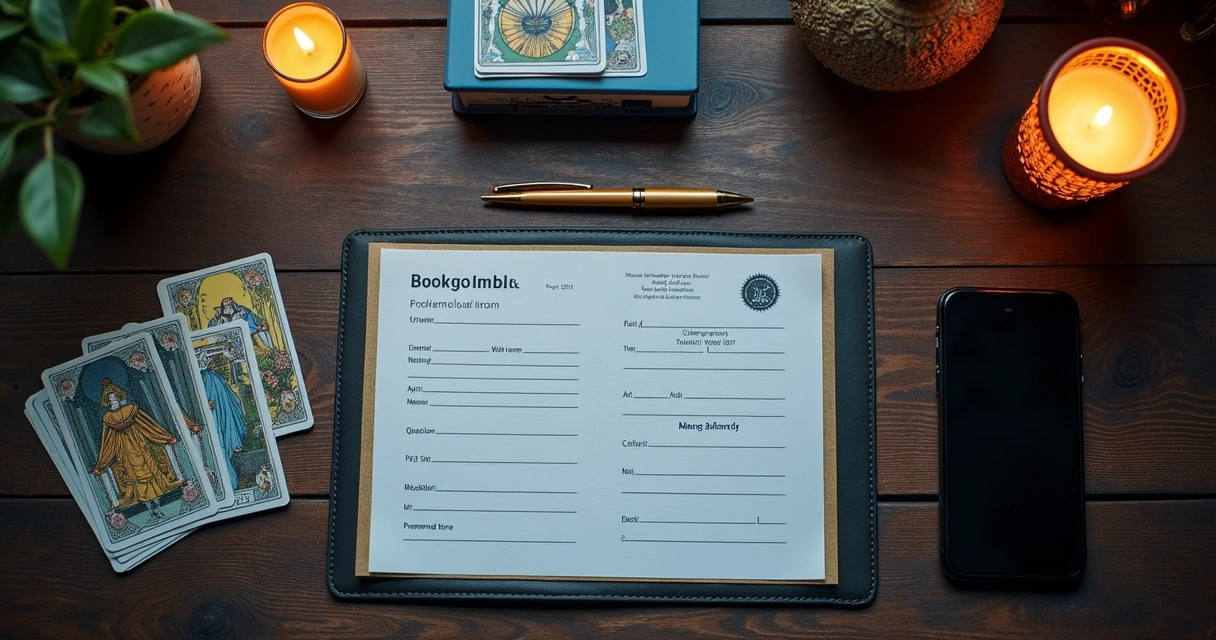
That is why we suggest one main intake path, even if clients first discover the reader elsewhere. A simple form, a booking page, or a standard request process keeps key details in one place.
The intake step should collect enough information to help the reader decide what happens next. It does not need to feel long or clinical. It only needs to be useful.
Good intake usually includes:
- The client’s name and contact details
- The type of reading requested
- Preferred date or time range
- The main topic or question
- Whether the client is new or returning
For readers who want stronger client records, keeping this intake attached to the querent profile matters a lot. MysticLog was built with that kind of continuity in mind. Instead of letting each booking exist as a separate conversation, it supports one connected client history.
We have also written about organizing client records for mystical consultations, because booking gets easier when each new request connects to a structured file.
 Set rules before the schedule fills up
Many booking problems are really boundary problems in disguise. If clients do not know response times, session length, rescheduling terms, or preparation steps, they ask one by one. That creates more back-and-forth than most readers expect.
Clear booking rules reduce confusion before it begins.
We suggest writing a short booking policy in plain language. Not a long legal page. Just a direct summary of how the process works. This can include:
- Available reading formats
- Session duration
- Payment timing
- Rescheduling notice
- Topics you do or do not cover
There is a quiet relief in this. The reader stops repeating the same answers, and the client feels guided rather than corrected later.
We often hear that readers worry structure may feel too rigid. In practice, the opposite happens. A stable process creates more room for warmth because fewer awkward admin messages interrupt the connection.
Match each request to the right service
Not every booking request should be treated the same way. A quick three-card reading is not the same as a deep relationship spread, a yearly forecast, or a returning client seeking pattern review across several sessions.
When readers define services clearly, they can sort requests faster and avoid unclear expectations. This is where a service menu helps. It gives shape to what is being booked, how long it takes, and what kind of prep is needed.
We also think it helps to mark which bookings need extra context. For example:
- New client readings may need more intake details
- Astrology-linked sessions may require birth data in advance
- Follow-up readings may need prior notes reviewed first
A clear service structure helps readers accept the right booking, not just the next booking.
This is also where an intelligent assistant can support the admin side of practice. We have discussed how an AI tarot assistant can support professional work by helping readers recall prior context and organize session information without replacing interpretation.
Keep direct relationships at the center
Booking is not only about filling a slot. It is about building a relationship that can continue over time. Returning clients often book more easily when they feel known, not processed.
That is one reason direct client relationships matter so much. In booking-based businesses, direct bookings have been shown to bring higher average value than other booking channels. While tarot is a different field, the lesson still fits. When a reader owns the client relationship, communication gets clearer and long-term trust grows.
We think readers should treat every booking request as part of a wider client journey. The session is one moment. The relationship is longer.
Trust grows in the details.
That means keeping records of previous spreads, topics, recurring concerns, and follow-up timing. A returning querent should not feel like a stranger each time they book.
Use records to reduce repeated admin
One hidden cost of poor booking workflows is repeated labor. The same client sends the same birth details again. The same pricing explanation is written again. The same note about preferred reading style gets lost and asked for again.
This drains energy.
When booking data, session notes, and client history sit together, readers can move faster with more confidence. This is one of the strongest reasons to use a practice-specific system instead of generic tools. We have shared more on what tends to work better for tarot professionals than broad generic systems.
In MysticLog, the value is not only storing names and dates. It is connecting each request to a living querent record. That can include past readings, symbols that appeared before, personal notes, attachments, and timing patterns.
Booking gets easier when the reader no longer has to reconstruct client history from scattered places.
Review the workflow with real numbers
Even intuitive businesses benefit from clear business visibility. We say this with care, because many readers feel resistance here at first. Numbers can seem dry. But they often reveal simple fixes.
If a reader checks how many requests convert into confirmed sessions, how often reschedules happen, or which reading types lead to repeat bookings, better decisions follow. Not because the practice becomes mechanical, but because patterns become visible.
This can be tracked through a simple dashboard view. We have covered what tarot professionals should know about CRM dashboards for exactly this reason. A dashboard can show where time is going and where the workflow is slowing down.
 We also recommend watching client growth over time, not only the next week’s calendar. If someone books every three months for reflection, that matters. If another client returns after major life changes, that pattern matters too. We have written about tracking querent progress step by step as a tarot professional because repeat insight often begins with good records.
Build a workflow that still feels human
There is a fear some readers carry quietly. If bookings become too structured, the work may lose its soul. We do not think that has to happen.
A human workflow is not a messy workflow. It is a clear one with space for care.
You can send a warm confirmation message and still use a standard process. You can review prior notes and still trust intuition in the moment. You can use support tools and still remain the reader whose judgment guides the session.
The best booking workflow protects the reader’s energy so that presence remains available for the reading itself.
That balance matters. The admin side should support spiritual practice, not crowd it out.
Conclusion
Streamlining booking requests is not about making tarot work feel corporate. It is about reducing avoidable friction so readers can focus on what clients truly seek: clarity, reflection, and grounded guidance. A better workflow starts with one intake path, clear booking rules, defined services, connected client records, and a habit of reviewing patterns over time.
We believe readers do their best work when the business side stops pulling attention in ten directions at once. MysticLog was created for that exact point in a professional practice, where talent is already there, but structure needs to catch up. If you want a calmer way to manage bookings, client history, and follow-up in one place, get to know MysticLog and see how it can support your reading practice.
Frequently asked questions
What is a tarot booking workflow?
A tarot booking workflow is the sequence a reader follows from the first client request to the confirmed session and saved record afterward. It usually includes intake, schedule review, confirmation, payment steps, and linking the booking to client notes. A good workflow makes each booking easier to handle without losing the personal touch.
How can I streamline tarot bookings?
You can streamline tarot bookings by using one main request channel, defining your services clearly, setting booking policies in advance, and keeping client details in one organized system. This cuts down on repeated messages and helps you respond faster with fewer errors.
What tools help manage booking requests?
Useful tools include scheduling systems, client record platforms, note storage, intake forms, and reporting dashboards. For tarot professionals, practice-specific tools such as MysticLog can be especially helpful because they connect bookings with reading history, querent notes, and follow-up context.
How much does tarot booking software cost?
The cost of tarot booking software varies based on features, storage, calendar support, and client management depth. Some readers start with simple low-cost tools, while others choose a more complete platform as their practice grows. The real cost should be weighed against time lost to manual admin and missed client details.
Is it worth it to automate bookings?
Yes, in many cases it is worth automating part of the booking process, especially if you handle frequent requests or repeat clients. Automation can help with confirmations, reminders, intake collection, and record keeping. Automation works best when it handles routine steps and leaves interpretation, care, and judgment in the reader’s hands.