


When a tarot practice grows, time starts to feel different. A single reading is never just the reading itself. There is the welcome, the question, the shuffle, the spread, the interpretation, the follow-up note, and sometimes the quiet pause after a deep message lands. We have seen many readers reach a point where skill is not the problem. Time is.
Time blocks help tarot readers protect both spiritual focus and business structure.
Without a clear rhythm, sessions run long, notes get delayed, and the next querent enters a space that still carries the weight of the last one. That is hard on the reader and unfair to the client. Good time blocking creates breathing room. It also makes the work feel more grounded.
At MysticLog, we think this matters because spiritual work deserves a professional container. A beautiful reading can lose impact if the day around it feels rushed or scattered. So in this article, we will share six simple strategies to manage time blocks for tarot sessions in a way that feels calm, human, and realistic.
Why time blocks matter in tarot work
Many readers begin with a flexible style. That often works at first. Then the calendar fills. A session that was meant to last 45 minutes becomes 70. Notes are left for later. Later becomes tomorrow. After a few weeks, details fade.
Structure protects intuition.
We have found that time blocks are not about making readings cold. They are about giving each session a shape. When readers know where their time goes, they can stay present without watching the clock every minute.
A good block can include several parts:
- The reading itself
- A short preparation window
- Time for notes and client records
- A reset period before the next querent
This is one reason many professionals start looking for better systems as their client list grows. If you want a broader view of how scheduling fits into business structure, our guide on how to manage a tarot business gives a useful starting point.
Strategy 1: Build sessions around real reading patterns
The first mistake many readers make is setting session lengths based on hope instead of evidence. We may say a reading takes 30 minutes because that sounds neat. But if the average client needs 10 minutes to explain the issue and 10 more to ask closing questions, that estimate was never true.
Your time block should match how your sessions actually unfold, not how you wish they would unfold.
We suggest reviewing your last ten or twenty readings and looking for patterns. Notice:
- How long introductions usually take
- Which spread types lead to longer discussion
- Whether returning clients move faster than new ones
- How much time you need to write useful notes
This can feel surprisingly revealing. A reader may think the cards take most of the session, only to realize the longest part is clarifying the client’s question. Another may see that relationship readings almost always go beyond the planned time.
If your records are scattered across notebooks and messages, that review becomes harder. That is exactly why organized client history matters. Our article on how to manage a querent and track tarot readings effectively speaks directly to this part of the work.
Strategy 2: Create three fixed session formats
Too many options create confusion. Too much flexibility creates drift. We prefer a simple menu of session types, each with a clear time block.
For many readers, three formats are enough:
- Short session, such as 30 minutes, for one focused topic
- Standard session, such as 45 or 60 minutes, for a full spread
- Extended session, such as 75 or 90 minutes, for layered questions or combined tools
This does two things. First, it helps clients choose the right service. Second, it helps readers plan the day with fewer surprises. If every booking is custom, the schedule becomes harder to protect.
Simple session formats make booking easier and reduce overtime.
We also like matching session type to question depth. A quick career check-in does not need the same block as a year-ahead reading with tarot and astrology notes. When readers define this in advance, they avoid trying to fit a large emotional process into a small calendar slot.
Pricing often ties into this choice as well. If you are reviewing your offers, our practical guide on how much to charge for cartomancy readings can help you think about session length and value together.
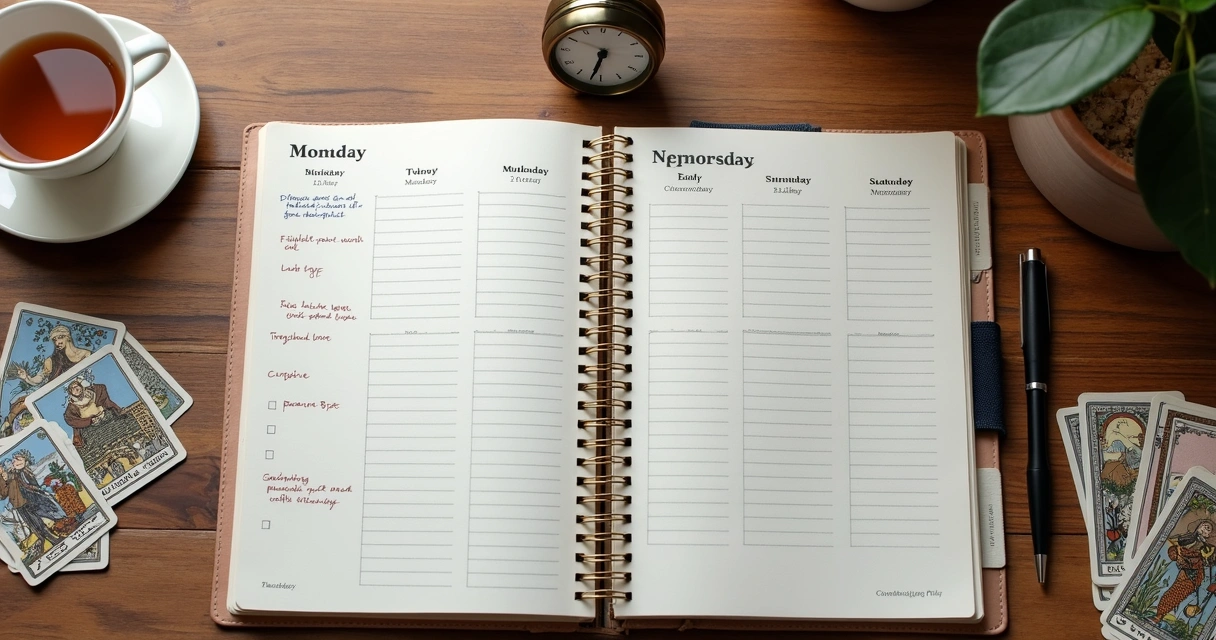 Strategy 3: Add buffer time after every reading
This is the strategy people skip first and miss most later.
A tarot session does not end when the client leaves the call or closes the door. There is still work to do. We may need to write the spread used, save a photo, note follow-up topics, or mark a future check-in date. We may also need a minute to clear our head.
Do not book edge to edge.
We recommend adding a buffer of 10 to 15 minutes after each session. For intense readings, 20 minutes may be better. This buffer is not wasted time. It is part of the service.
That space can be used to:
- Write the key message while it is still fresh
- Save card images or attached documents
- Update the querent’s history
- Take a short pause before the next reading
Buffer time is what keeps one session from spilling into the next.
In our experience, this is where digital organization really helps. In MysticLog, readers can keep session records, notes, and previous reading history together, which makes the post-session window more focused and less frantic.
Strategy 4: Set a clear opening and closing ritual
Some overruns happen because the middle of the reading is too long. Many happen because the beginning and ending have no boundaries.
A clear opening ritual sets direction fast. It might include a short greeting, a quick review of the client’s question, and a one-sentence explanation of what the session will cover. This keeps the reading warm but centered.
The closing ritual matters just as much. Without it, clients may open a brand-new topic in the final minutes. We have all seen it happen. The reading feels done, then comes, “One last thing.” Sometimes that one last thing could take another half hour.
Try a closing structure like this:
- Summarize the main message in one or two points
- Ask if the client needs one final clarification
- State that the session is ending in the next minute or two
- Explain any next steps or follow-up options
A gentle ending is better than an abrupt ending, but it still needs a boundary.
Readers who want better records around this process may also enjoy our piece on organizing client files in mystical consultations. Strong client notes often begin with strong session openings and endings.
Strategy 5: Group similar readings on the same day
Not all readings ask for the same kind of energy. A short pull for returning clients has a different pace from a first-time session with a long personal story. If we mix every format in a random order, the day can feel heavy and uneven.
Grouping similar sessions helps smooth the flow. For example, one day may be better for shorter check-ins, while another day fits deeper guidance sessions. Some readers also keep separate blocks for in-person work, video calls, and written readings.
This kind of planning can reduce the subtle drain that comes from constant switching. It also helps with practical tasks, because the note style, spread choice, and emotional pace stay more consistent for a few hours.
We often suggest grouping by:
- Session length
- Reading format
- Client type, such as new or returning
- Topic depth, such as quick guidance or long-form reflection
When readers compare spiritual practice tools with general business tools, this is one area where specialized systems feel more natural. Our article on CRMs for tarot readers versus generic solutions discusses why work patterns like these deserve a setup that fits the field.
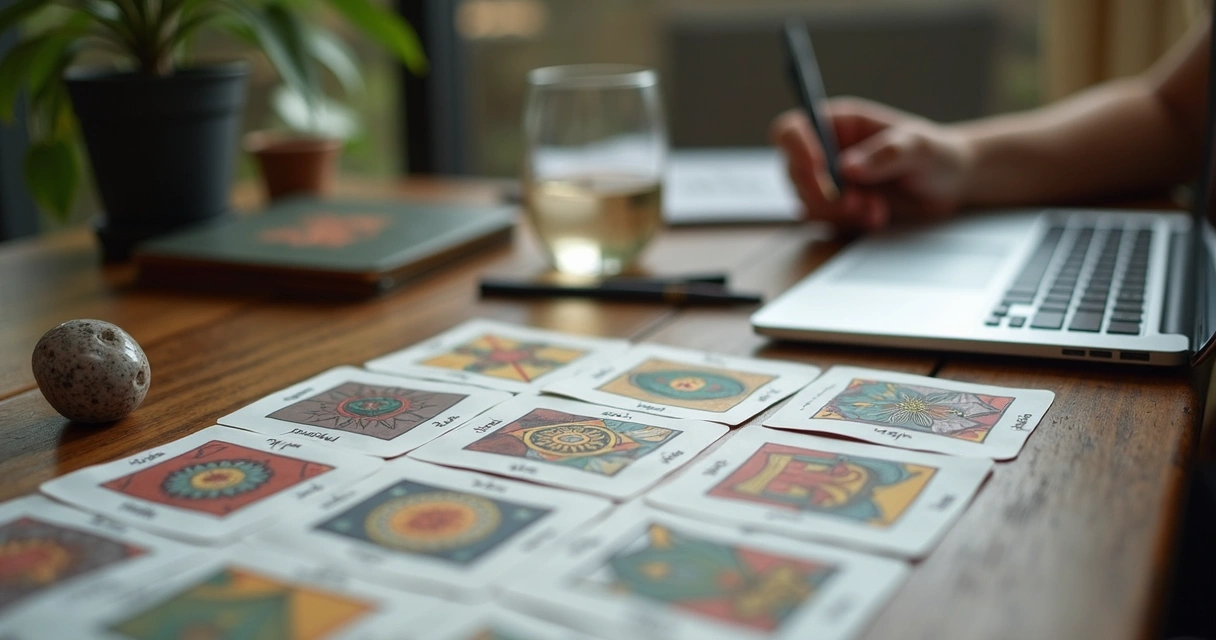 Strategy 6: Review your schedule every week
A time block is not a fixed rule forever. It should be tested in real life. That is why weekly review matters.
At the end of each week, we suggest asking a few plain questions. Which sessions ran over? Which ones felt rushed? Where did dead time appear? Did certain spreads need longer blocks? Did one day feel too crowded?
Weekly review turns time blocking from a guess into a working system.
You do not need a long audit. Fifteen minutes is enough if your records are easy to read. Look for small shifts, not a full redesign every week. A 60-minute slot may need 75. A late evening block may no longer suit your energy. A follow-up format may deserve its own separate offer.
This is where consistent record keeping can quietly change the business. MysticLog was built for readers who want to revisit past sessions, spot patterns, and manage many querents without losing the thread. The better the records, the easier the weekly review becomes.
Conclusion
Managing time blocks for tarot sessions is not about making spiritual work rigid. It is about giving each reading the room it needs without letting the whole day fall out of shape. When we base our schedule on real patterns, create clear session formats, leave buffer time, set opening and closing rituals, group similar work, and review the week with honesty, the calendar starts to support the reading instead of fighting it.
That change is often felt quickly. Sessions become calmer. Notes become easier to keep. Returning querents receive better continuity. And we protect our own focus too.
If you want a more organized way to manage session records, client history, and follow-up details as your practice grows, we invite you to get to know MysticLog and see how it can support your professional tarot work.
Frequently asked questions
What is a tarot session time block?
A tarot session time block is a set period reserved for one reading and its related tasks. It usually includes the reading itself, a short preparation window, and time afterward for notes or reset. A time block gives one session a clear beginning, middle, and end.
How to set time blocks for sessions?
We suggest starting with your real session history. Check how long your readings usually take, then build fixed formats such as 30, 45, or 60 minutes, plus a buffer after each one. Keep the structure simple so clients can book the right type of session without confusion.
What are the benefits of time blocking?
Time blocking helps readers stay present, reduce overtime, protect breaks, and keep better client records. It also makes scheduling feel more stable across a busy week. The main benefit is that it protects both the quality of the reading and the shape of the workday.
How long should a tarot session last?
That depends on the service. Many focused readings fit well in 30 minutes, while fuller sessions often need 45 to 60 minutes. Deeper work may take 75 to 90 minutes. The best length is the one that matches the spread, the client’s needs, and your note-taking process.
How to avoid running overtime in sessions?
Set a clear session format, explain the scope at the start, leave buffer time after the reading, and use a gentle closing ritual near the end. Avoid trying to answer a new major question in the final minutes. Most overtime happens when boundaries are not defined early enough.