


Rune reading client management works best when every consultation leaves a clear, useful record. For rune readers working with Elder Futhark or other systems, that means documenting the client’s question, the cast, the interpretation, and the context that will matter if they return. MysticLog helps bring those notes, client histories, and appointments together in one professional workspace.
Key takeaways for managing rune reading clients
- Keep a dated record for each consultation, not just a list of runes drawn.
- Record the rune system, casting method, layout, question, interpretation, and agreed next steps.
- Separate what the client shared from your observations and interpretive reflections.
- Review earlier sessions before a returning client’s appointment, but let the client’s current question lead.
- Use MysticLog to organize client profiles, notes, booking, reminders, and consultation history in one place.
Why do rune readers benefit from structured client records?
Structured records help you give returning clients continuity without expecting yourself to remember every detail. A previous consultation may include a specific question, a particular casting method, or an insight the client wanted to revisit. A dated, organized note makes those details available when they are relevant.
Good records also help distinguish one reading from another. Instead of seeing only a client’s name and a list of symbols, you can see what they asked, how you approached the cast, and what was discussed afterward. For a refresher on the reading process, explore this beginner’s guide to rune reading.
A repeatable format does not need to make readings feel mechanical. It simply creates a reliable place to capture the elements you want to remember. You can keep the interpretation personal while making the administrative side easier to search and maintain.
What should a rune reader document after each cast?
A useful consultation record captures both the structure of the reading and the human context around it. Write enough to understand the session later, without turning the note into a transcript or recording details that are not needed for your work.
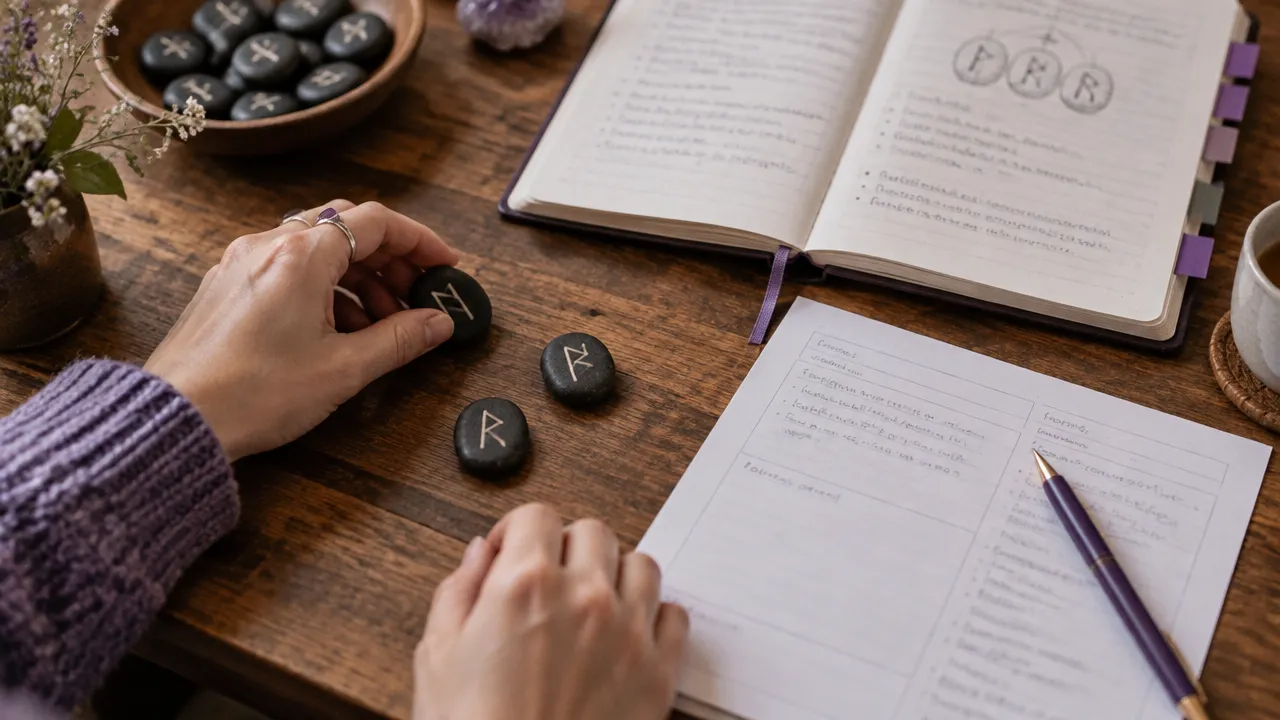
- Session basics: date, session type, and whether it was online or in person.
- Client’s question: capture the wording accurately, or summarize it without changing its meaning.
- Method: note the rune system, casting approach, layout, and any conventions you used.
- Cast details: list the runes and positions, plus orientation when it is relevant to your practice.
- Interpretation: record the main themes, connections, and reflections you offered.
- Client response: note what resonated, what they wanted to explore, and any agreed follow-up.
A practical rune reading journal structure can help you settle on consistent headings. You can adapt those headings to your own practice rather than treating any template as a fixed interpretation system.
How can you keep records clear across rune systems?
Label the method used in each session so you do not accidentally apply one set of conventions to another. A reader who works with Elder Futhark and additional rune-based approaches can note the system, source or framework they draw on, and any method-specific details alongside the cast.
This is especially useful when a client returns months later. A symbol list alone may not remind you how you handled positions, reversals, or the relationship between runes in that particular spread. Briefly noting your approach makes the record easier to interpret without assuming every reading follows the same rules.
Keep symbolic observations separate from the client’s reported circumstances. For example, label what appeared in the cast, what you interpreted from it, and what the client said in response. A guide to rune casting and interpretation can support a reader who wants to review foundational concepts while developing a consistent note-taking method.
How do you organize recurring rune reading clients?
Give each client a single profile and add a separate dated record for every appointment. This keeps contact information and preferences distinct from the details of individual readings, while making the client’s consultation history easier to review.
Use neutral, searchable labels such as “career question,” “three-rune cast,” or “follow-up requested.” Avoid vague titles like “important reading,” which may not help you find the right session later. If a client prefers a particular session format or communication channel, record that preference in the profile rather than repeating it in every note.
When a returning client books, review the most relevant previous entries instead of trying to reread the entire history. A structured approach to organizing consultation records can help keep that process manageable as your practice grows. For readers who want to track individual readings more closely, this guide to querent management offers a related perspective.
How should you prepare for a returning client’s session?
Use the earlier record as context, then invite the client to explain what matters now. Their circumstances or priorities may have changed since the last session, so treat past notes as a starting point rather than a script for the new reading.
- Review the last relevant consultation and note the client’s original question.
- Recall the method, interpretation, and follow-up the client requested.
- Ask what has changed and what they would like to focus on today.
- Record the new cast as a separate session, linking its context to the client’s history.
Mysty, MysticLog’s AI-powered assistant, can summarize previous consultations and surface recurring themes or details to review before a new session. Use its summary as a preparation aid, check it against the original notes, and make your own professional judgment. The assistant supports your expertise; it does not replace your interpretation or the conversation with your client.
How does MysticLog support a rune reading practice?
MysticLog brings client records and practice management tools into one workspace. Rune readers can maintain client profiles and consultation histories, then store notes, interpretations, images, and documents related to their sessions.
The platform also includes an online booking link and an integrated calendar, so clients can request appointments based on your availability. Email and WhatsApp reminders help keep clients informed about upcoming consultations. Dashboards provide a view of client and consultation activity, while re-engagement opportunities can help you notice clients who have not been in touch for a while.
A simple workflow might look like this: a client requests a session through your booking link, you review their profile before the appointment, and afterward you save the cast and interpretation in their consultation history. Before a later appointment, you can revisit the earlier note or use Mysty to help summarize it. Your records stay connected to the client relationship, not scattered across separate notebooks and calendar entries.
How can you make client notes respectful and useful?
Write notes for professional continuity, not as judgments about the client. Keep the language factual and focused on the consultation: what they asked, what you explored, what you offered, and what they chose to follow up on.
Record only information that serves a clear purpose in your practice. If a client shares something personal, consider whether it is necessary to retain it and whether a brief, neutral summary would be enough. Avoid presenting an interpretation as a guaranteed outcome, and make it clear in your notes when something was a possibility discussed rather than a confirmed fact.
Build a routine for reviewing and organizing records so old notes do not become a confusing archive. Consistent headings, careful wording, and a clear distinction between client context and your interpretation help you prepare thoughtfully while respecting the person behind the reading.
Frequently asked questions
What should a rune reader record after a session?
Record the client’s question in their own words, the rune system and casting method, layout and orientation, runes drawn, your interpretation, and any agreed next steps. Separate observed details from interpretation, and note what the client found useful. This gives you enough context to revisit the reading without relying on memory.
How can I organize rune reading notes for returning clients?
Use one client profile for contact details and preferences, then keep a dated entry for each consultation. Give every note a clear structure, such as question, cast, interpretation, and follow-up. Consistent labels make it easier to find previous sessions and distinguish one reading from another.
Can I keep records for different rune systems?
Yes. You can document different rune systems by recording the system, casting method, and interpretive approach used for each session. Avoid relying on a symbol name alone: include the context that shaped your reading. That way, notes remain meaningful even when you work with more than one tradition or method.
How can MysticLog help rune readers manage appointments and client records?
MysticLog gives rune readers a place to manage client profiles, consultation histories, notes, images, and documents. You can also organize appointments in its calendar, share a booking link, and use email and WhatsApp reminders. Mysty can help summarize earlier consultations, while you remain responsible for your interpretations.