

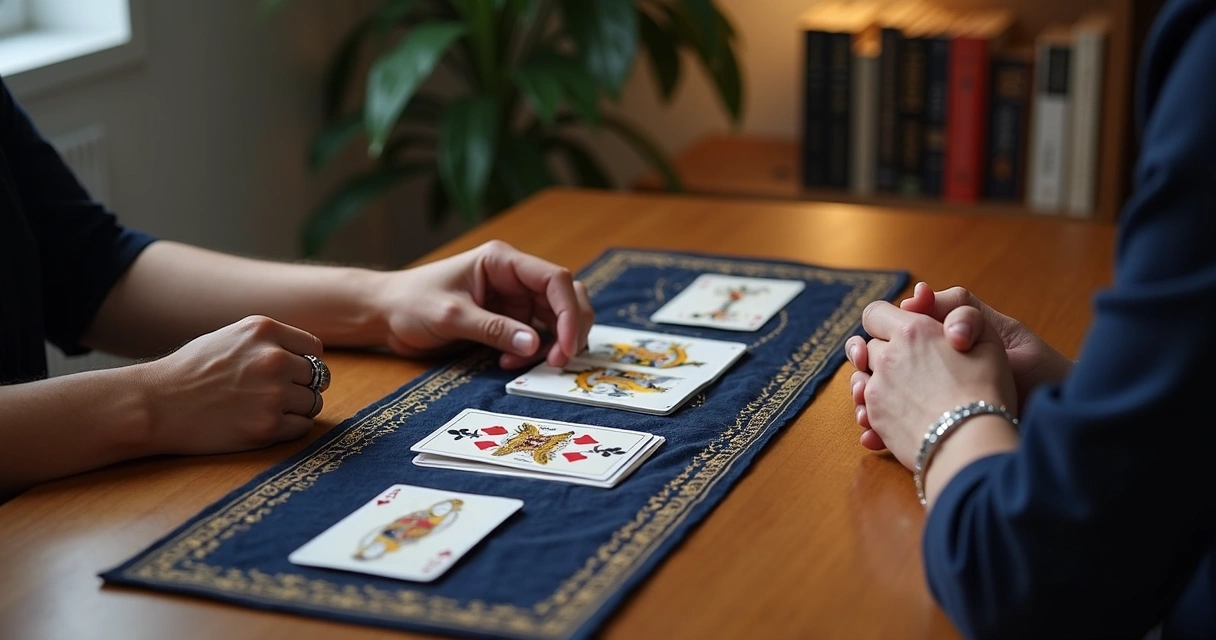
In professional cartomancy, words matter. The cards matter too. But in our experience, what happens between those spoken lines often shapes the session just as much. A client sits down, shuffles slowly, avoids eye contact, then gives a polite answer that does not match the tension in their shoulders. We notice it. We adjust. That quiet adjustment can change the whole tone of the reading.
Nonverbal cues help cartomancers understand how a client is receiving a reading, even when the client says very little.
For readers who work with many querents over time, nonverbal communication is not a side detail. It is part of professional practice. Facial expression, posture, hand movement, breathing pace, gaze, silence, and tone all give context to the spread on the table. They do not replace skill or intuition, but they help us read the room with more care.
We see this often in long-term client work. A returning querent may say, “I am fine,” while their body clearly shows strain. In that moment, a skilled reader does not force a dramatic claim. We simply slow down, choose gentler phrasing, and ask better questions. Platforms like MysticLog support this kind of professional continuity because keeping session notes helps us remember not only card outcomes, but also the communication style that helped each client feel safe and understood.
Why nonverbal communication matters in cartomancy
Cartomancy is an interpersonal practice. Even in very structured readings, there is an exchange happening between reader and client. Research on human interaction has long shown that nonverbal communication plays a large role in how people understand one another, as discussed in research on the role of nonverbal communication in interpersonal interactions. We should be careful not to reduce communication to a single formula, but the larger point remains clear. People respond to much more than words.
This applies strongly to spiritual consultations. Clients often arrive with stress, hope, grief, fear, or confusion. They may not state those feelings directly. Yet those feelings appear in the body before they appear in speech. A pause before naming the question. A quick nod that seems too quick. A smile that fades at once.
The body often speaks first.
In a cartomancy session, nonverbal cues give emotional context to the cards.
That context helps us avoid mechanical readings. It reminds us that a card spread is not just a symbol system in isolation. It is being received by a real person with a present emotional state, personal history, and immediate concern.
What kinds of nonverbal cues show up in sessions
Not every cue means the same thing for every person. That is one reason professionals should stay humble. Still, some patterns appear often enough to watch with care.
We usually notice several categories of nonverbal behavior during readings:
- Facial expressions, such as tightening around the eyes or mouth
- Posture changes, like leaning in with interest or pulling back with discomfort
- Hand behavior, including fidgeting, gripping cards, or covering the chest
- Eye contact patterns, whether steady, brief, avoidant, or searching
- Breathing and pace, which may become shallow or uneven during sensitive moments
- Tone of voice, especially when words sound calm but the voice shakes
These signs do not exist to help us “catch” a client or prove anything. They help us respond with tact. If someone stiffens when a relationship card appears, we may ask if they want to stay on that subject or shift focus. If a client relaxes when career cards appear, we may know where they feel more ready to engage.
Readers who are building their technical skill can also benefit from structured study. For those who want to strengthen fundamentals, our guide on reading the 52-card deck in a simple and professional way offers a practical base that pairs well with client communication work.
How nonverbal cues affect trust
Trust is quiet. We earn it through consistency, presence, and respect. In our view, nonverbal communication is one of the fastest ways to build trust, or weaken it.
A reader who keeps a calm posture, listens fully, and maintains a grounded tone often helps the client settle. By contrast, rushed movements, distracted glances, or dramatic reactions can make the client guarded. Even if the interpretation is strong, the atmosphere may feel unstable.
Clients often judge safety before they judge accuracy.
This idea is supported beyond spiritual work. A systematic review on nonverbal communication and patient outcomes found that nonverbal behavior in professional interactions is meaningfully tied to how people feel and respond. Cartomancy is not healthcare, of course, but both involve sensitive conversations where trust shapes the exchange.
We have seen this in practice many times. A client comes in tense. The first few minutes are sparse. Then the reader softens their tone, mirrors a steady pace, and gives space after each card. The client exhales. Their story starts to unfold. Nothing theatrical happened. Yet the entire reading became more honest.
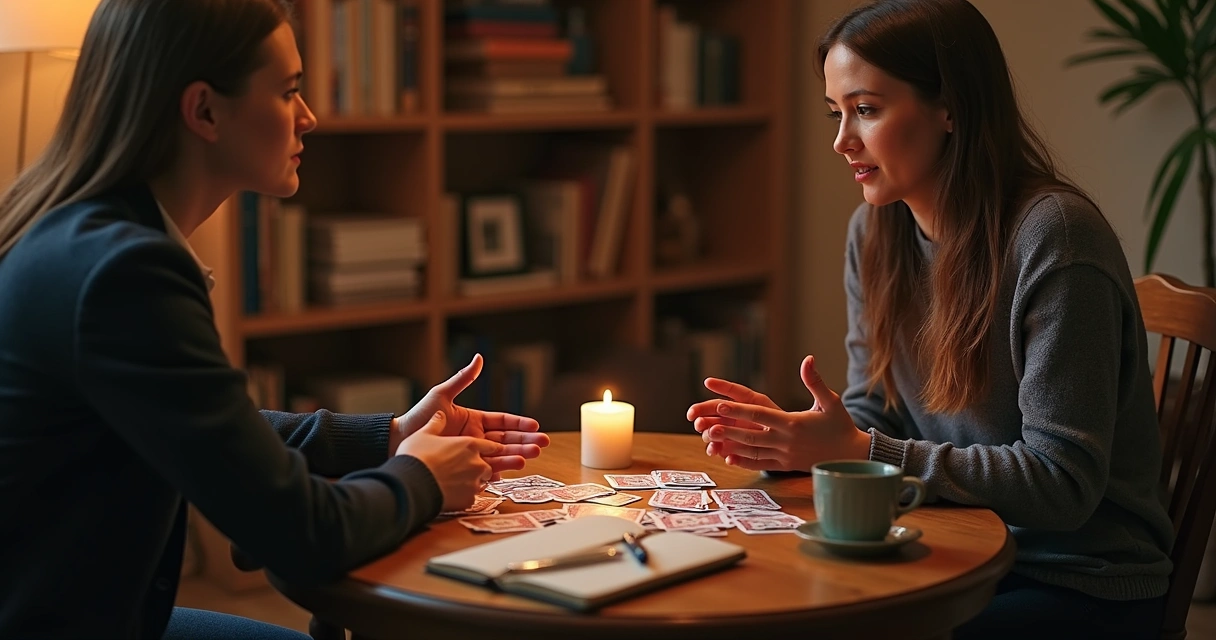 How to read cues without making wrong assumptions
Here is where professionalism really shows. Noticing a cue is useful. Deciding too fast what it means is risky.
One client crosses their arms because they feel defensive. Another does it because the room is cold. One person avoids eye contact because they are hiding something. Another does it because they are shy, tired, or neurodivergent. If we treat every gesture as proof, we stop listening.
We prefer a simple approach:
- Notice the cue without naming it as fact.
- Check whether it repeats or changes during the reading.
- Compare it with the client’s words and the card theme.
- Ask gentle clarifying questions when needed.
Nonverbal observation works best when it stays curious, not judgmental.
That approach protects both reader and querent. It keeps us from overreaching. It also makes the session feel respectful instead of invasive.
For professionals who want to refine how they speak with different clients, we recommend our article on communication styles in divination practice. Even if that piece is in Portuguese, the topic itself speaks to a universal need in client work.
Nonverbal signals from the reader also shape the session
It is easy to focus only on the client’s body language. But our own nonverbal behavior matters just as much. Often, more.
If we react sharply to a difficult card, clients may become alarmed. If we speak with too much certainty while leaning forward intensely, we may pressure them. If we look distracted while they share something personal, they may shut down.
Professional presence in cartomancy includes a few simple habits:
- Keeping gestures measured and calm
- Allowing silence without rushing to fill it
- Using facial expressions that show care, not performance
- Maintaining a tone that is clear and grounded
- Matching the pace of the session to the client’s state
There is a practical side to this. When readers manage many appointments, they need systems that preserve continuity from one meeting to the next. MysticLog helps by giving professionals a place to record session details, note client preferences, and revisit past readings before follow-up work. That kind of memory support can improve how we show up nonverbally because we are not trying to remember everything on the spot.
Why session records make nonverbal patterns easier to spot
A single reading gives us a snapshot. A history of readings gives us pattern awareness.
When we document sessions well, we begin to notice things that would otherwise fade. Maybe a querent always grows quiet when family topics appear. Maybe they respond well to direct language in career readings but need a softer pace in emotional ones. Maybe they tend to minimize stress verbally while showing strain physically.
Good records turn scattered impressions into usable professional insight.
This is one reason client management matters so much in spiritual businesses. Our article on managing a cartomancy reading business with more structure speaks to this wider professional need. Clear records support better service, better follow-up, and more stable client relationships.
For readers interested in AI-supported workflows, we also discuss practical support in our piece about managing cartomancy clients with Mystic AI tools. The role of AI in this context is not to replace intuition. It is to help us keep track of details, patterns, and prior session context.
 Nonverbal communication in online readings
Online cartomancy sessions change the field, but they do not remove nonverbal communication. They simply narrow it.
In video calls, we may lose some posture and movement cues, yet we still have facial expression, pauses, gaze direction, speaking rhythm, and vocal tone. In voice-only sessions, tone becomes even more central. A client may say they understand, but their silence afterward may tell us they need a slower explanation.
A study on patients’ preferences for nonverbal behaviors in consultations shows that people respond strongly to how professionals present themselves, not just to what they say. That principle carries into digital spiritual work as well.
We suggest a few adjustments for online readings:
- Pause more often to check understanding
- Keep your face well lit so expressions are visible
- Use a steady camera angle and avoid restless movement
- Name transitions clearly when changing topics or cards
- Take written notes after the session while details are still fresh
If you also work in Portuguese or serve bilingual clients, our resource on how to read the 52-card deck in Portuguese may support your study and service style across audiences.
Conclusion
Professional cartomancy is never only about the cards on the table. It is also about the human exchange around them. Nonverbal cues help us sense readiness, discomfort, trust, and emotional weight. They guide pacing. They shape phrasing. They remind us when to ask, when to pause, and when to listen more closely.
Used with care, these signals can make readings more respectful and more personal. Used carelessly, they can lead to projection and error. That is why the best approach is observant, calm, and grounded in record-keeping. When we pair strong card knowledge with thoughtful communication, we create better sessions and stronger long-term client care. If you want a better way to track readings, client history, and the patterns that make each session more meaningful, we invite you to get to know MysticLog and see how it supports a more organized professional practice.
Frequently asked questions
What are nonverbal cues in cartomancy?
Nonverbal cues in cartomancy are signals like posture, facial expression, tone of voice, eye contact, silence, and hand movement that add context to the reading.
We see them from both sides of the table. The client shows how they react to the cards, and the reader shows whether the space feels calm, safe, and attentive.
How do nonverbal cues affect readings?
They affect readings by shaping trust, pacing, emotional clarity, and how the message is received.
When we notice tension, confusion, or relief in a client’s body language, we can adjust our communication. That often leads to a more accurate and respectful session.
Can nonverbal signals change card outcomes?
No, nonverbal signals do not change the cards themselves, but they can change how we frame and discuss their meaning.
The spread remains the spread. What changes is our delivery, our follow-up questions, and our sense of what the client is ready to hear at that moment.
Is it important to notice client’s body language?
Yes, noticing body language helps us read with more care, as long as we do not jump to conclusions.
We should treat body language as one source of context, not as proof. It helps us ask better questions and avoid forcing an interpretation that does not fit the client’s state.
How can I improve nonverbal communication skills?
You can improve by observing more slowly, taking session notes, asking clarifying questions, and reviewing your own presence during readings.
We suggest practicing after each session. Write down what you noticed, what seemed to help the client open up, and where your own tone or posture may have affected the exchange. Over time, with support from organized tools such as MysticLog, those observations become part of a stronger professional method.