

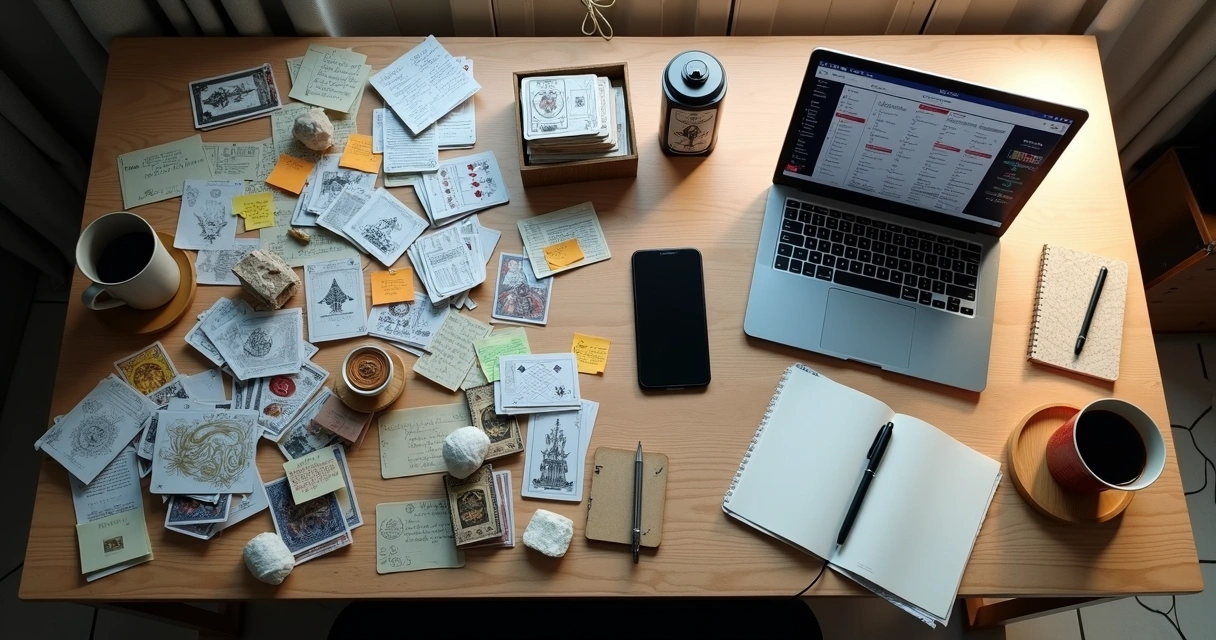
We have seen this happen many times in spiritual practice. A reader starts with a notebook, then adds voice notes, then saves a few photos in the phone, then keeps client names in a chat app, and before long the full history of a querent is spread across five places. It still works, until it does not.
A cluttered client history makes repeat readings harder, slower, and less personal.
For cartomancers, records are not just admin. They hold symbols, timing patterns, recurring questions, emotional themes, and the details that help us give better follow-up sessions. When those records get messy, the quality of the client experience can drop. We may forget a past spread position, miss a promise we made to revisit a topic, or spend too much time searching while the client waits.
In our experience, decluttering does not mean deleting your practice history. It means shaping it into something clear, searchable, and safe. That is one reason platforms like MysticLog exist. They help readers keep card spreads, notes, images, and querent timelines in one place, so the history supports the reading instead of slowing it down.
Below, we will walk through seven signs that your cartomancy client history likely needs attention, and what each sign may be telling you.
1. You spend too long looking for old notes
There is a simple test. A repeat client books a session and asks, “Can we continue from last time?” If your first reaction is stress, that says a lot.
When old notes are hard to find, the issue is often not lack of effort. It is poor structure. Maybe files are named in different ways. Maybe one session is saved by date, another by topic, and a third by client nickname. Even if all the information exists, it becomes hard to retrieve when needed.
Search time steals reading time.
This matters more than many readers think. In a six-month study on electronic knowledge systems, professionals using a well-structured digital system were able to access information quickly, and many found it faster than paper methods. The setting was healthcare, not cartomancy, but the lesson is familiar. When records are easier to reach, the session flows better.
If this sign feels familiar, your decluttering may need to include:
- One naming format for client files
- One place for session notes and attachments
- Tags for reading type, topic, and follow-up date
We often suggest starting with retrieval first. If you cannot find it in under a minute, the structure needs work.
2. Repeat querents get mixed up
This one can feel uncomfortable. Two clients ask about love in the same month. Both had court cards dominate the spread. Both mentioned an on-and-off partner. Then, in your notes, details begin to blur.
If client stories start blending together, your records are too loose.
Mix-ups do not always come from poor memory. They often come from thin records, duplicate names, or separate storage places with no clear identity system. We have seen readers keep one client under a legal name, another under a social media handle, and another under only a first name. It is easy to see how confusion starts.
That is why a clean client history should include stable identifiers and a full timeline per querent. If this has happened in your practice, our guide on avoiding mixed-up repeat querent histories can help you spot where confusion enters your workflow.
Personal trust is fragile. A client may forgive a small delay. They are less likely to feel comfortable if we confuse their story with someone else’s.
3. Your notes are full of repeated or vague details
Not all clutter looks messy at first glance. Sometimes it looks like too many notes that say too little.
We mean lines like “same issue as before,” “strong energy,” or “talked about career again.” Those notes may make sense for a day or two, but after three months they stop being useful. They force you to remember context that should already be in the record.
Other times, the problem is repetition. The same background story gets copied into every session entry, so the record grows longer and harder to scan. The useful detail gets buried under familiar detail.
This is where a cleaner note structure helps. We usually recommend separating:
- Permanent client background
- Session-specific questions
- Cards drawn and spread layout
- Interpretation and next steps
That way, long-term facts stay in one place, and the reading entry focuses on what changed. If you want a practical model for this, we shared more in our article about organizing client records in mystical consultations.
 4. You keep the same information in too many places
We understand why this happens. A reading starts on video, then a note is written by hand, a payment detail sits in email, and card photos stay in the phone gallery. Each step feels harmless. Together, they form a scattered history.
When one client record lives in many places, mistakes become more likely.
You may update one note but not the others. You may save a spread image but forget to attach the interpretation. You may know the client has returned three times, but your records suggest only two sessions because one entry sits elsewhere.
This sign usually appears when a practice grows. What worked for ten clients starts breaking at fifty. At that point, the goal is not more effort. It is less fragmentation.
For readers who want a cleaner setup, our piece on how to organize client files in mystical consultations offers a useful starting point, even if your current system is partly paper and partly digital.
MysticLog was built around this exact problem. Instead of scattering querent history across notebooks, folders, and apps, readers can keep session notes, images, and client timelines together in one working space.
5. You feel overloaded before the reading even starts
There is another side to clutter. It is not only about missing information. It is also about too much information with no shape.
If opening a client file makes you feel mentally crowded, the record may be carrying more than it should. Long text walls, duplicate summaries, unrelated screenshots, and unfiltered message copies can turn a useful history into noise.
That kind of overload affects judgment. It can make it harder to notice themes or prepare clearly for the next consultation. Research on patient education has shown that information overload can reduce engagement with self-management materials. Again, the field is different, but the pattern holds. Too much unstructured input can make useful action less likely.
More notes do not always mean more clarity.
A decluttered history should help you answer a few quick questions before a reading:
- What was the last main concern?
- Which cards or symbols repeated?
- What did we agree to revisit?
If your record cannot answer those fast, it may be carrying too much weight.
6. Follow-ups feel generic instead of personal
One of the best parts of long-term cartomancy work is continuity. A client returns, and we can see the path. We recall what was feared, what shifted, and what pattern came back. That continuity gives depth to the session.
When client histories are cluttered, follow-ups often lose that depth. We may fall back on broad questions because the details are buried. We may miss a recurring timing pattern. We may forget which spread was used or what practical guidance was offered.
Decluttering helps turn old records into better future readings.
We have also found that a clean history works well with support tools. In MysticLog, for example, the AI Mystical Assistant can help surface patterns and past session context, but only if the record itself is organized enough to be useful. The assistant is there to support the reader, not replace intuition. If the underlying history is chaotic, even smart support becomes less helpful.
If this is an area you want to strengthen, our article on managing cartomancy clients with Mystic AI tools shows how better records and supportive AI can work together in a respectful way.
7. You worry about losing records or missing backups
Sometimes clutter is not visible until something goes wrong. A device fails. A notebook goes missing. A photo folder gets deleted by accident. Then we realize the client history was never truly under control.
This sign matters because cartomancy records often contain sensitive personal material. Questions about relationships, grief, money, health worries, and private choices deserve care. If your files are scattered, your backup habits are usually scattered too.
A cleaner system should make it easy to know:
- Where each client record lives
- What has been backed up
- Which version is the latest
- Who can access the information
We believe peace of mind is part of good recordkeeping. A spiritual practice can feel personal and intuitive, but the records behind it still need order and care. Our guide on securely storing and backing up digital divination records is a good next step if this sign speaks to you.
 How to start decluttering without disrupting your practice
If you recognized several signs, do not try to fix everything in one evening. We think a lighter, staged approach works better.
Start with your active repeat clients first. Clean those histories before touching your archive. Then create one standard format for future sessions so new clutter does not return next week.
A simple order can help:
- Gather each client’s records into one place.
- Remove duplicate files and unclear labels.
- Create a clear session template.
- Add tags for topic, method, and follow-up.
- Set a backup routine you will actually keep.
Some readers enjoy this process once they begin. Others do not. That is fine. The goal is not to become obsessed with filing. The goal is to make the history usable, safe, and easier to revisit.
Conclusion
When a cartomancy client history needs decluttering, the signs are usually plain. We spend too long searching. We confuse repeat querents. Our notes become vague, duplicated, or crowded. Follow-ups lose personal detail. Backup habits become uncertain. None of that means we are poor readers. It usually means our practice has grown beyond the system that once felt good enough.
Clear records support clearer readings.
We built MysticLog for professionals who want their client history to work with their intuition, not against it. If you are ready to bring your notes, spreads, follow-ups, and querent timelines into a more ordered space, this is a good time to get to know MysticLog and see how it can support your practice.
Frequently asked questions
What is cartomancy client history decluttering?
Cartomancy client history decluttering is the process of cleaning up and organizing your client records so they are easier to read, search, update, and protect. This can include removing duplicate notes, grouping files by querent, standardizing session formats, and storing spreads, images, and interpretations in one clear structure.
How do I know if I need decluttering?
You likely need decluttering if you feel stress when trying to prepare for a repeat session, cannot find old notes quickly, or notice that your client details are spread across too many places. If your records slow you down or create doubt, they probably need attention.
What are the signs client history is cluttered?
Common signs include slow note retrieval, repeated or vague session entries, mixed-up querent histories, too many storage locations, mental overload when opening a file, generic follow-ups, and weak backup habits. These signs often appear gradually as your practice grows.
How often should I clear client histories?
We suggest reviewing active client histories on a regular schedule, such as once a month or once each quarter, depending on your reading volume. It also helps to do a quick cleanup after each session by saving notes, tagging the topic, and filing images right away.
Is it worth it to declutter client records?
Yes. Decluttering client records can help you prepare faster, give more personal follow-up readings, reduce mistakes, and feel more confident about record safety. A clean history supports better continuity, which is especially helpful for cartomancers working with repeat querents over time.