

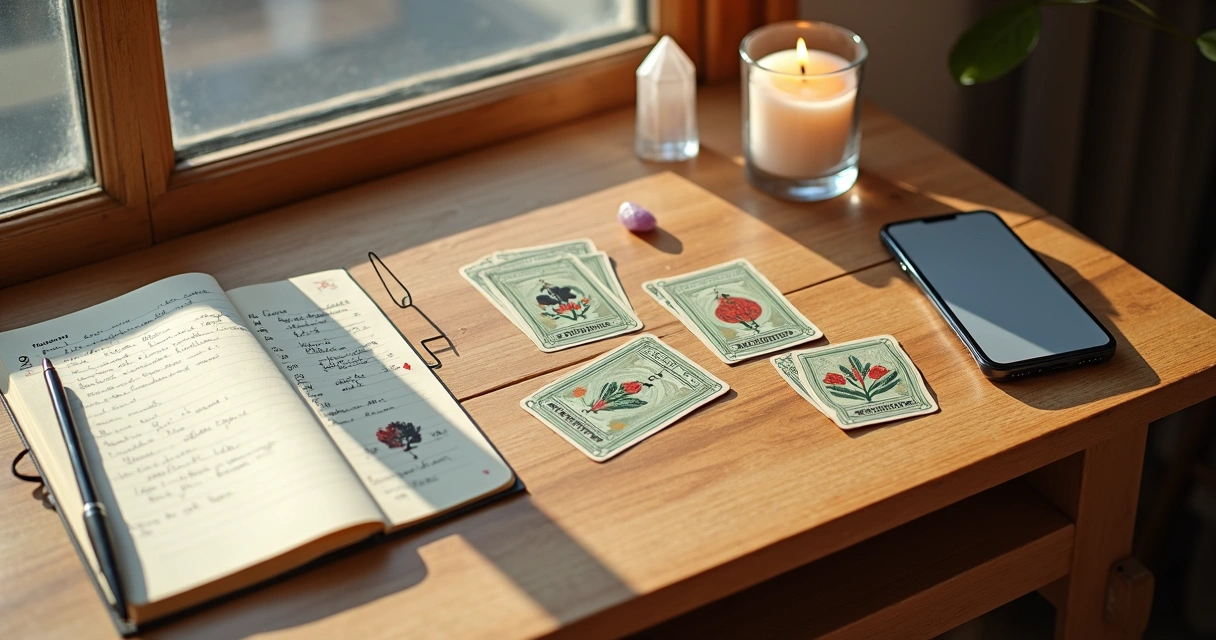
Lenormand Oracle: A Practical Guide for Modern Readers
People everywhere are searching for clarity, direction, and self-knowledge. Many have heard of Tarot, but fewer are aware of the simple charm and practical power of the Lenormand oracle. We at MysticLog Readers have watched more and more readers and seekers turn to these fascinating cards for straightforward answers and lasting insight.
In this guide, we share what makes the Lenormand system unique, how you can start reading with skill, and why this classic oracle is just as relevant now as it was two centuries ago. Whether you are just curious, a new student, or a spiritual professional who wants to deepen your offerings, our intention is to help you get the most out of every 36-card reading session.
Introduction to the Lenormand oracle system
The Lenormand oracle is a 36-card deck developed in the early 19th century, named after the famous Parisian card reader Marie Anne Lenormand. Unlike Tarot decks with 78 cards and ornate symbolism, Lenormand cards are direct, everyday images—a bouquet, a house, a letter, and so on. Each card has a fixed meaning, simple illustrations, and is used in specific spreads that focus on clear, practical answers to questions about daily life.
The Lenormand is not just a fortune-telling tool; it’s a practical system for understanding life’s options and outcomes.
While some may think of it as merely another deck among many, its results are often surprising in their straightforward clarity. Compared to Tarot or general oracle cards, Lenormand is less about psychological depth or exploring your inner world—it’s more about “What is likely to happen?” and “How can I prepare?” With Lenormand, the message tends to land quickly.
The origins and evolution of Lenormand cards
Marie Anne Lenormand was legendary in her own lifetime, reading for royalty, generals, and writers throughout Napoleonic France. After her death, a deck carrying her name spread rapidly across Europe, settling into a structure of 36 illustrated cards. Over generations, these cards were cherished for their “no-nonsense” answers and their clear links to daily reality.
Most Lenormand decks today still use the same images and numbering as the earliest versions. This lets readers learn a stable set of meanings that rarely change from deck to deck. The language is universal, the pictures are direct, and the possibilities for questions are endless.
Direct answers, for real questions.
If you would like to see more on the history and practice of oracle decks alongside Lenormand, we have written about intuitive reading styles at our guide to oracle decks for intuitive readers.
How Lenormand differs from Tarot and other oracles
Tarot readers will notice big differences the moment they pick up Lenormand. While Tarot decks have Major and Minor Arcana, Lenormand decks use a fixed roster of 36 simple images. You won’t find Court Cards or elements—only objects, animals, and daily symbols. Each card has set meanings, so the system is much more structured and less open to reinventing images.
Oracle cards, by contrast, can be any deck with unique artwork, variable interpretations, and changing card numbers. Lenormand is defined by tradition—each card stands for the same concept, no matter the deck design or language.
Lenormand readings are highly direct—a card combination means something specific, not something you make up on the fly.
- Tarot often explores inner conflicts, feelings, or spiritual themes.
- Lenormand answers practical questions—“Will my job interview go well?”, “What is blocking my relationship?”
- General oracle cards provide inspiration, affirmation, or general advice, but with less structure.
Once you understand these differences, you’ll know when to reach for each deck—and why so many modern readers add Lenormand to their toolkit. Our deeper beginner’s guide to Tarot is also a helpful reference, available in our article Tarot 101: practical guide for beginners.
The structure of the Lenormand deck
The 36-card system is at the heart of Lenormand’s predictability and power. Each card has a simple picture—mostly things you see every day, such as a Tree, Ship, Clover, Letter, or Child. The deck is numbered from 1 (Rider) to 36 (Cross). Many decks also include a small playing card symbol on each, but these are secondary for most modern readers.
Every Lenormand card’s meaning is fixed and widely agreed upon—there is little room for free interpretation until you begin combining them.
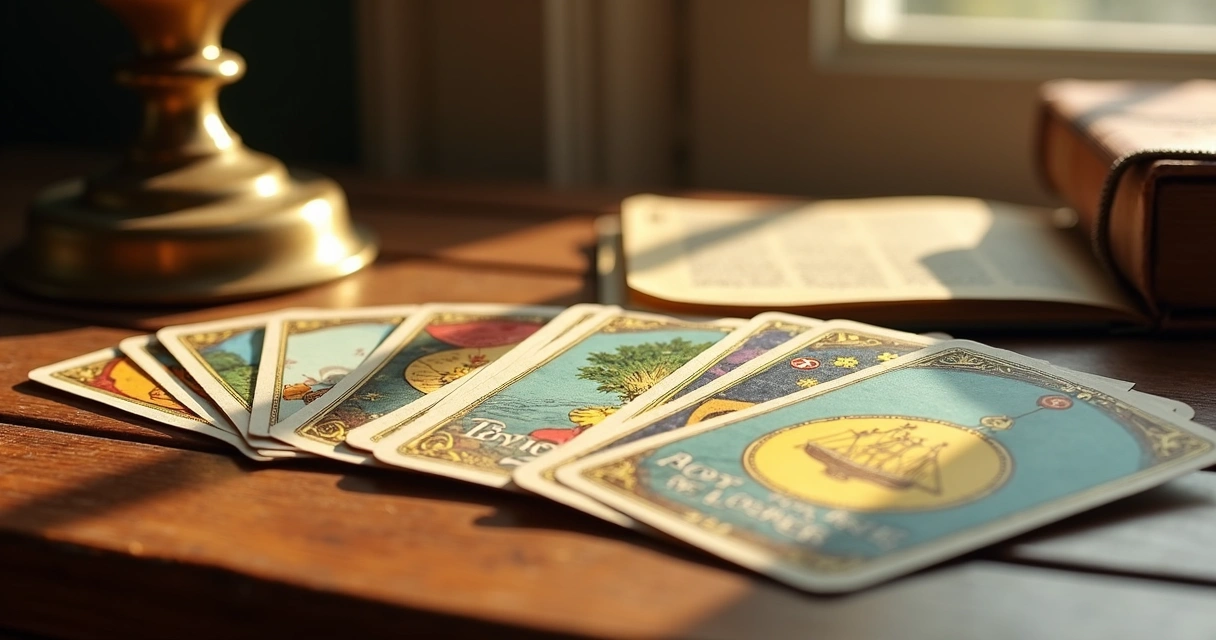 Here are some examples of classic Lenormand cards and what they mean:
- Rider (1): News, delivery, arrival of something new.
- Clover (2): Luck, surprise, short opportunity.
- Ship (3): Travel, commerce, distance, adventure.
- House (4): Home, family, stability, real estate.
- Tree (5): Health, growth, personal development.
- Clouds (6): Confusion, uncertainty, something unclear.
- Letter (27): Communication, message, document.
- Key (33): Solution, success, revelation.
- Cross (36): Burden, challenge, suffering, fate.
You can find a complete, practical card-by-card guide in our deep-dive article at Lenormand cards: guide to meanings, spreads, and practice.
The signature spreads of Lenormand
If you have tried Tarot, you might expect to use layouts like the Celtic Cross or Three-Card Spread. With Lenormand, spreads are more pattern-based. The cards “talk to each other” through their positions and combinations. That’s how nuance and detail arise.
Lenormand spreads are practical, easy to learn, and designed for daily guidance—no experience required.
Three-card line
For quick questions, the three-card spread is a favorite. Shuffle and lay out three cards in a row, reading them as a sentence. For example:
Clover – Letter – Key
This might mean: “A lucky message brings opportunity.” The first card sets the theme, the middle card is the action or event, and the final card is the outcome.
Five-card line
For questions needing more context, we use a five-card line. The middle card is the focus; the cards before and after show the lead-up and results.
House – Tree – Clouds – Letter – Ship
This could be read as: “Your family’s health is uncertain, but news arrives from far away.”
The Grand Tableau
The Grand Tableau (“The Big Picture”) is the signature full-deck spread. Lay out all 36 cards in four rows of eight, plus a smaller bottom row. This pattern shows every area of life—work, love, health, finances—and the relationships between people, events, and timelines.
We find the Grand Tableau is both art and science—experienced readers track patterns, directions, and card links. For those just starting, three or five-card lines are easier to grasp, then you can build into full-tableau readings with practice.
For a step-by-step guide with visuals, check out our practical guide to modern Lenormand readings on the MysticLog blog.
How to ask practical questions with Lenormand
The secret to effective Lenormand readings is asking practical, specific questions. Instead of “What does my future hold?” try “What is the likely outcome of my current job search?” or “What is blocking harmony in my relationship?” The cards answer best when your question is clear.
Lenormand is about real situations and real answers—your question shapes the value of the reading.
- Ask about timing (“Will the project be finished this month?”)
- Ask about people (“Is this new person trustworthy?”)
- Ask about solutions (“How can I resolve this conflict?”)
- Ask about choices (“What result will come if I move to a new city?”)
We recommend using a journal or the digital resources on MysticLog to record your question, the exact cards drawn, and your interpretation. When looking back, you will often see how accurate—and helpful—the responses can be.
Interpreting Lenormand combinations and patterns
Unlike Tarot, Lenormand cards are interpreted in pairs, lines, and blocks. The magic comes from how cards combine. Each pair forms a distinct phrase. For example:
- Clouds + Sun: “Uncertainty clears”
- Ring + Scythe: “Commitment ends”
- Anchor + Ship: “Steady travel; steady progress”
Understanding Lenormand means knowing both each card’s core symbolism and how meanings shift when cards are combined.
To get good, practice reading cards as a sequence, like words in a sentence:
Book – Letter – Child: “Secret news about a new start.”
Notice how the sentence comes together because the cards form logical connections. Sometimes, the pattern repeats: House + Tree might show up in love readings (growth at home), career topics (a business expanding), or health (family vitality). Context is everything.
Mirroring, knighting, and houses in Grand Tableaus
In large spreads, experienced readers look for certain patterns:
- Mirroring: Look at cards that “mirror” each other across the rows; these often highlight main themes.
- Knighting: Jump in L-shapes (like a chess knight) for influences, outside help, or obstacles.
- House positions: In the Grand Tableau, each position has its own meaning. For example, the card on the “Heart” house shows love matters.
The more patterns you spot in a spread, the more detailed and accurate your reading becomes.
Balancing fixed meanings and intuition
A big attraction of the Lenormand system is its stable, nearly universal card meanings. This allows for learning consistency and accuracy, especially useful for professionals who want to offer reliable consultations.
At the same time, intuition is still valuable. Many readers find that, after learning the traditional meanings and card combinations, new insights and “hints” begin to pop up—subtle nudges that add depth. We recommend building your base meaning first, then gently allowing your intuitive voice to add color.
Learn the structure, then trust your inner sense.
Having a personal system for notes—whether in a notebook, app, or the MysticLog Readers’ digital log—lets you cross-check interpretations and see your growth as your readings evolve.
Everyday uses and self-development with Lenormand
The Lenormand system is not just for fortune-telling. We’ve seen people use it for daily self-check-ins, creativity, and decision support. Journaling with Lenormand provides a path for conscious self-reflection—sometimes it even reveals blockages or options you haven’t considered.
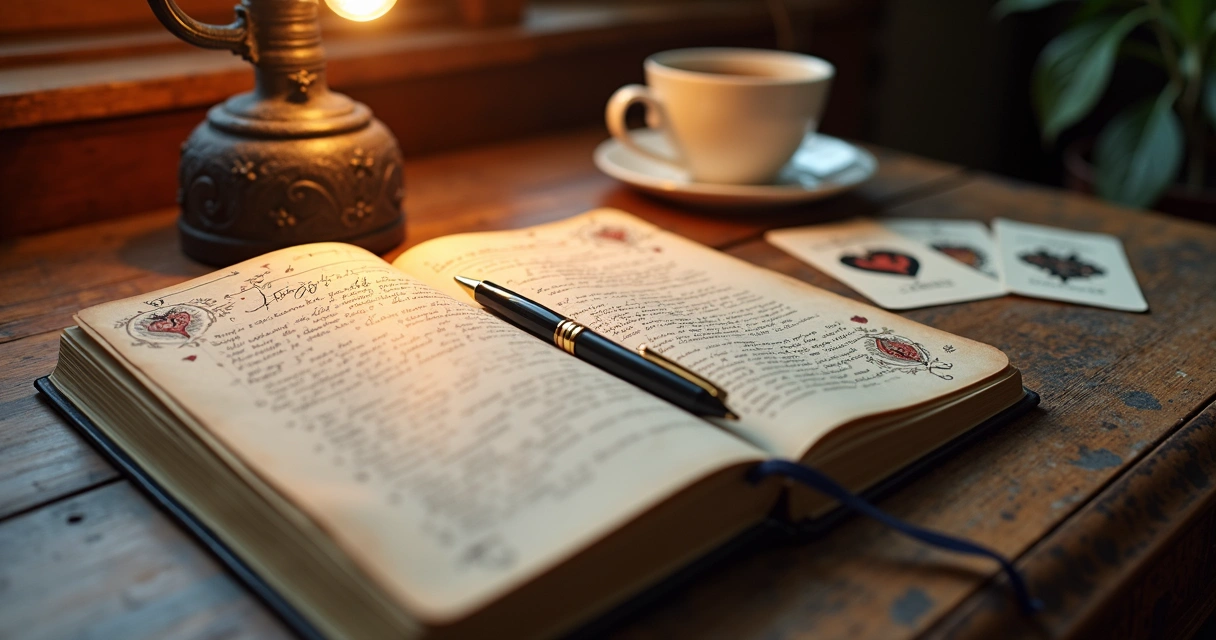 Here are some ways we use Lenormand:
- Daily draw: Pick one card each morning for guidance, note outcomes at night.
- Weekly focus: Use three or five-card lines to clarify the week’s theme.
- Decision support: When considering a move, a new job, or a big choice, let the cards lay out clear options and possible obstacles.
- Growth tracking: Compare notes over time—are similar cards showing up? What patterns repeat before breakthroughs?
You can organize your readings digitally, making it easy to revisit past sessions and see your progress at a glance. With features like message logs, specialty tags, and visual galleries, tools such as the MysticLog directory give both readers and querents a powerful way to keep track of insights and consultations.
Effective journaling and tracking with modern tools
We strongly recommend keeping a record of all your readings. Digital tools, like what we offer at MysticLog Readers, are especially good for organizing readings, tagging topics, tracking client questions, and even reviewing accuracy over time.
Journaling is the single best way to build skill and confidence in your Lenormand practice.
Here’s a simple process we teach:
- Write your question before you shuffle.
- Lay out your cards—record them in order.
- Interpret: What do the cards mean literally? What do they say when combined?
- Summarize your answer; note any gut feelings or strong hunches.
- Check back after time has passed—was the card “right,” or did you learn something new?
Over the months, you’ll see accuracy improve, doubts decrease, and insights grow deeper. If you consult for others, this practice keeps your sessions consistent and easy to summarize.
Going deeper: Advanced tips for Lenormand students and professionals
When you’re ready to go beyond basics, we suggest several ways to push your skill further:
- Explore GT (Grand Tableau) layouts for relationships, long-term timing, or business questions.
- Practice mirroring, knighting, houses, and diagonal reading styles.
- Study traditional meanings, but try “theme pairing”—choosing two cards and brainstorming every meaning they could have in different contexts.
- Join Lenormand study groups, or use MysticLog’s community features to discuss tricky cards with fellow professionals.
- Offer free sample readings or low-cost sessions—see how others interpret the same spread.
- Experiment with customized spreads based on the querent’s unique question or context.
Combining technical knowledge with intuition, plus organized record-keeping, is what separates confident professionals from confused beginners.
If you are working toward professional readings for the public, clarity and reliability will help you stand out in MysticLog’s directory—clients want answers that are accurate, easy to understand, and delivered in a supportive style.
Best practices and troubleshooting for new Lenormand readers
Everyone makes mistakes at the beginning. We have noticed some common issues and wanted to share fixes based on experience:
- Memorizing keywords only: Over time, practice reading lines of two or three cards as if forming a short sentence—the real meaning is in the blend, not the single word.
- Ignoring the question: If your answer doesn’t match what was asked, try rephrasing the question with more specifics. Vague questions get vague answers.
- Getting stuck on negatives: Lenormand is very literal, but every “bad” card can offer an action step; don’t let them scare you away.
- Worrying about “wrong” interpretations: The core meanings are stable, but as you develop confidence, you’ll spot nuances that fit your situation—and that is how reading skills mature.
If you have doubts, return to the base meanings, check your journal, or post your reading inside the MysticLog Readers community for insights. Most of all, keep reading regularly. Clarity and trust in your voice come with practice.
Modern Lenormand in professional spiritual guidance
The Lenormand oracle has found a home in modern professional circles, with many spiritual counselors, intuitive readers, and even therapists adding these cards to their toolkit. With MysticLog Readers, professionals can share their specialization in Lenormand, describe their reading styles, and reach clients who prefer practical, quick answers.
 Clients on MysticLog can search for advisors by specialty, style, or language—and even compare profiles to find the right match for their question. Professionals keep full control of their services, fee structure, and how they connect with clients.
For those seeking to deepen their practice or go public as readers, Lenormand offers a route to serving people who want answers that are direct, actionable, and rooted in tradition.
For a wider perspective on how intuitive reading can shape self-growth, we also recommend our resource on using Tarot for self-discovery and personal transformation.
Conclusion: Your Lenormand journey with MysticLog
We believe the Lenormand oracle holds lasting power for discovery, clarity, and connection with both ourselves and others. Its simple system, fixed meanings, and focus on practical questions make it an outstanding tool for anyone who wants to read for themselves or offer readings to clients.
If you are looking to find or become a trusted Lenormand reader, MysticLog Readers is your place to connect, share, and grow on your intuitive journey.
Curious to take your Lenormand practice to the next level or to share your gifts with others? We invite you to join our free global directory, meet professionals, and learn in a supportive community committed to clarity, growth, and authenticity.
Frequently asked questions
What is a Lenormand oracle deck?
A Lenormand oracle deck is a set of 36 illustrated cards, each with a unique, fixed meaning based on simple images from daily life such as birds, flowers, ships, and keys. They are used for practical and direct fortune-telling, rather than open-ended or psychological explorations. Each card’s symbolism is stable across most decks, so readers can build skill and accuracy over time.
How do you read Lenormand cards?
The main technique is to combine cards in short sequences, usually lines of two, three, or five cards, and interpret their meanings as a sentence or phrase. For the Grand Tableau, the entire deck is laid out and patterns, positions, and card relationships are analyzed. Practicing daily with smaller spreads, journaling the results, and building fluency in combinations helps most readers become more proficient. For extra guidance, our detailed article on practical Lenormand card reading covers the steps.
What are the basic Lenormand meanings?
Each card has a classic meaning. For example, Rider is news, Clover is luck, Ship is travel, House is home, and Cross is burden or test. The system relies on memorizing these “core” keywords and then combining cards to create a full answer to your question. A complete guide is available in our post on Lenormand meanings and spreads.
Where can I buy Lenormand oracle cards?
Lenormand decks are widely available at bookstores, spiritual shops, and online retailers. Look for versions that clearly number the cards from 1 to 36 with traditional illustrations. The best deck is one whose images are clear and easy for you to connect with.
Is Lenormand reading easy to learn?
Lenormand reading is considered beginner-friendly because the card meanings are fixed and the spreads are simple to use, but becoming fluent in combinations does require practice. Start small, record your readings, and refer to trusted guides to build your confidence and accuracy over time.