

We meet many skilled cartomancers who can read subtle patterns, hold space with care, and guide clients through hard questions. Yet when we look at their records, we often see the same weak spots. Not because they lack skill. Because recordkeeping feels easy to postpone.
A reading ends. Another client is waiting. A photo is saved somewhere. A note goes into a phone app. A date lives in a calendar. Three months later, the client returns, and the reader spends ten minutes trying to rebuild the last session from fragments.
Good memory is not a system.
Recordkeeping for cartomancy is the practice of storing session details in a way that lets us find, trust, and use them later.
We have seen this issue across Tarot, Lenormand, oracle, and playing card traditions. The more experienced the reader, the easier it is to think, “I will remember this one.” In our experience, that is one of the first mistakes. Professional intuition is real, but it works better when supported by clear records.
That is one reason tools like MysticLog matter. They give spiritual professionals one place to keep querent history, spread details, follow-up notes, and attached images, instead of letting each reading scatter across notebooks and devices.
Why experienced readers still slip
Pros usually do not fail because they do not care. They fail because they are busy, confident, and used to working from memory. In other fields, admin mistakes also rise when teams give less time to back-office work. In fact, a study from the University of Notre Dame found that organizations with fewer resources devoted to administration saw much higher error rates. The setting is different, but the lesson feels familiar. When recordkeeping gets treated as secondary work, errors grow.
We think cartomancy professionals face a similar pattern. Reading is the visible work. Logging is the hidden work. So the hidden work gets pushed aside.
Here are the mistakes we see most often.
Using vague titles and short notes
“Love reading.” “Career follow-up.” “Big emotions.” These labels seem fine in the moment. They are not fine six months later.
A record is only useful if it helps us identify the exact session without guessing.
We need enough detail to answer simple questions fast:
- Who was the querent?
- What was the main question?
- What spread or method did we use?
- What cards appeared in key positions?
- What advice or forecast did we give?
Without that structure, every returning client creates friction. We may recall the tone of the session but miss the details that matter. If you want a deeper breakdown of common note-taking problems, our article on how to keep accurate notes for complex Tarot spreads gives a practical model that also fits cartomancy.
We suggest naming each reading with a simple pattern such as: client name, date, topic, method. Small change. Big relief later.
Failing to record the actual question
This one is more serious than it looks. Many readers note the cards but not the client’s wording. Then, later, they cannot tell whether the spread addressed timing, motives, outcomes, or advice.
In cartomancy, wording shapes the frame. “Will he return?” is not the same as “What do I need to know about this connection?” If we skip the exact question, we also weaken our ability to review whether the interpretation was sound.
The client’s question is part of the reading data, not just background conversation.
We have seen readers regret this. A client comes back upset, confused, or simply curious. The reader opens the old note and sees only card names. No question. No phrasing. No context. At that point, even a strong record of the spread can feel incomplete.
 Mixing client facts with interpretation
Another common mistake is blending objective details and intuitive impressions into one block of text. That makes later review harder than it needs to be.
We prefer to separate records into at least three parts:
- Client facts, such as date, topic, relationship status if relevant, and prior session links.
- Reading data, such as deck, spread, cards drawn, reversals if used, and images.
- Interpretive notes, such as themes, advice, cautions, and follow-up points.
When all three are mixed together, errors creep in. A detail we “felt” starts to look like a fact the client stated. That is risky in any client-based practice. In healthcare reporting, small labeling mistakes can trigger larger problems. One study of 37,532 laboratory event reports found that most reported laboratory errors happened before analysis, with specimen mislabeling making up a notable share. We are not comparing card reading to laboratory work, but the pattern is useful. Errors often begin at the point of capture.
For cartomancers, “capture” means the first note. If that first note is messy, the whole record stays messy.
Keeping records in too many places
We still see professionals who split their practice across paper notebooks, chat apps, gallery folders, cloud drives, voice notes, and spreadsheets. Each tool may work on its own. Together, they create gaps.
Scattered records create blind spots.
One client profile should not require a search across five apps. When it does, follow-up becomes slow and trust in the record drops.
If this sounds familiar, our guide on organizing client records in mystical consultations can help you build a cleaner structure. This is also where MysticLog fits naturally into a professional practice. It brings readings, client history, images, and notes into one secure workspace, which reduces the chance of losing context between sessions.
The fewer places we store core reading data, the easier it is to keep records clean.
Ignoring follow-up outcomes
Many readers log the reading itself but never record what happened after. That is a missed chance to grow.
When a client returns, we should be able to note:
- Which parts of the reading felt accurate to them.
- Which themes changed over time.
- Which predictions landed, partly landed, or did not land.
- What action the client took after the session.
Some readers avoid this because they fear being “wrong” on paper. We understand that feeling. Still, a record that never meets reality cannot teach us much. Honest follow-up sharpens judgment. It also helps us speak with more care in future sessions.
We have found that readers who track outcomes often become more precise in both language and scope. They learn where they tend to overstate, where timing gets fuzzy, and which spread formats give the clearest results.
Forgetting privacy and backup
Spiritual work is personal work. Readings may contain names, health concerns, money stress, relationship details, and private fears. Yet some professionals still store records casually, with no backup plan and weak access control.
Private reading notes should be treated like sensitive client records, not casual personal reminders.
At minimum, we should think about:
- Password protection for devices and accounts.
- Regular backups in case a phone or laptop fails.
- Clear separation between public content and client files.
- A plan for how long records will be kept.
We have written more on this in our article about how to securely store and back up digital divination records. Readers often think backup is something they will set up later. Then a device breaks. Then panic starts. It is a hard lesson.
Not building a repeatable intake process
Some recordkeeping problems begin before the cards are even shuffled. If each client arrives through a different path, with different levels of information, your notes will stay uneven.
We think a simple intake pattern helps. Not stiff. Just consistent.
For example, before each session, we may want to log:
- Client name and contact method.
- Session date and format, such as in-person or online.
- Main topic and exact question.
- Any prior reading tied to the same issue.
- Consent to store session notes and images, when needed.
This keeps the first layer of the record clean. If you also work with AI support tools in your practice, our piece on managing cartomancy clients with Mystic AI tools shows how structured client data can support better recall and more tailored follow-up without replacing the reader’s own judgment.
Writing too much, too late
This mistake surprises people. We often talk about missing notes, but overloaded notes are also a problem.
When we wait hours to document a reading, we may write long paragraphs to compensate for fading memory. The result is often dense, repetitive, and hard to scan. A shorter note written right after the session usually serves us better than a dramatic recap written at night.
We prefer a simple approach:
- Log key facts before the session.
- Capture the spread and card positions during the reading.
- Add brief interpretation notes right after.
- Attach images or files the same day.
This order keeps records clear without turning every session into an admin burden. We discussed a related pattern in our article on common mistakes when recording oracle readings and how to avoid them. Even if that piece is in Portuguese, the lesson is universal. Fast capture beats delayed reconstruction.
 Letting old records go unused
There is one more mistake that often hides in plain sight. Some readers keep records, but never use them before the next session. That turns the archive into storage, not support.
The value of a reading record appears when we revisit it before the client returns.
A quick review can remind us of recurring symbols, previous advice, emotional tone, and unresolved threads. It helps us meet the client where they are instead of starting from zero. Clients notice that. They feel seen. And the session gains continuity.
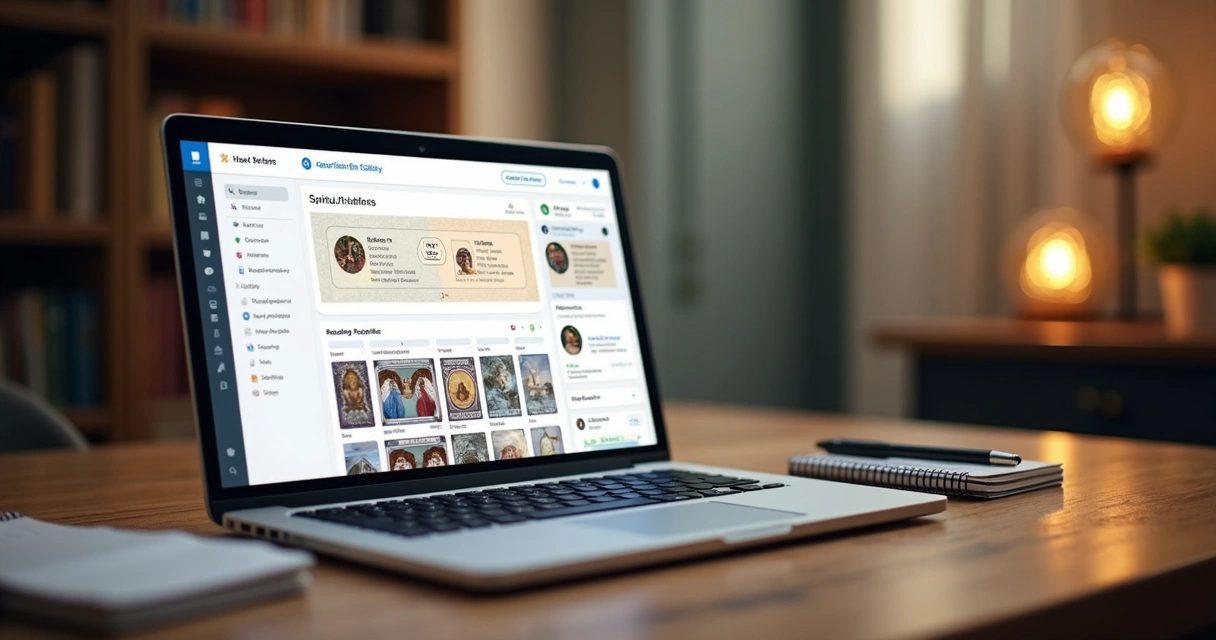
In our experience, this is where a well-built platform changes the rhythm of practice. With MysticLog, a professional can open one client profile and see the whole path, past readings, notes, images, and session history, which makes the next consultation feel informed rather than rushed.
Conclusion
Recordkeeping mistakes in cartomancy are rarely dramatic. They are small lapses that pile up. A missing date. A vague title. A photo with no label. A note written too late. A follow-up never logged. On their own, each one seems minor. Together, they make a practice harder to trust and harder to grow.
We believe strong records support stronger readings. They help us speak with context, learn from past sessions, protect client privacy, and keep our practice steady as our client list grows. If you want a simpler way to hold all of that in one place, get to know MysticLog and see how it can support your cartomancy work with clearer client history, safer storage, and better continuity from one reading to the next.
Frequently asked questions
What is cartomancy recordkeeping?
Cartomancy recordkeeping is the process of saving the details of card readings in an organized format. This usually includes the client’s name, date, question, cards drawn, spread used, interpretation, and any follow-up notes. Its purpose is to help us recall past sessions accurately and offer better continuity in future readings.
How to avoid common recordkeeping mistakes?
We can avoid common mistakes by using a consistent note structure, recording the exact client question, saving images with clear labels, and keeping all session data in one main system. It also helps to write notes right after the reading instead of trusting memory later. Regular review and backups reduce loss and confusion.
Is it worth tracking every reading?
Yes, especially for professional readers. Even short sessions can become relevant later when a client returns with the same issue or asks about a past prediction. Tracking every reading builds a usable history, helps us spot recurring themes, and gives us a clearer view of our own reading patterns over time.
What are the best tools for recordkeeping?
The best tools are the ones that keep records searchable, secure, and easy to update. Some readers use structured paper journals, while others prefer digital systems with client profiles, note fields, image storage, and search functions. For professionals handling many clients, a dedicated platform such as MysticLog can make recordkeeping far more manageable.
How can I organize my card readings better?
We suggest organizing readings by client first, then by date and topic. Use a repeatable format for each session, separate facts from interpretation, and attach card images or documents to the same record. A simple, repeatable structure makes even a large reading archive easier to use.