

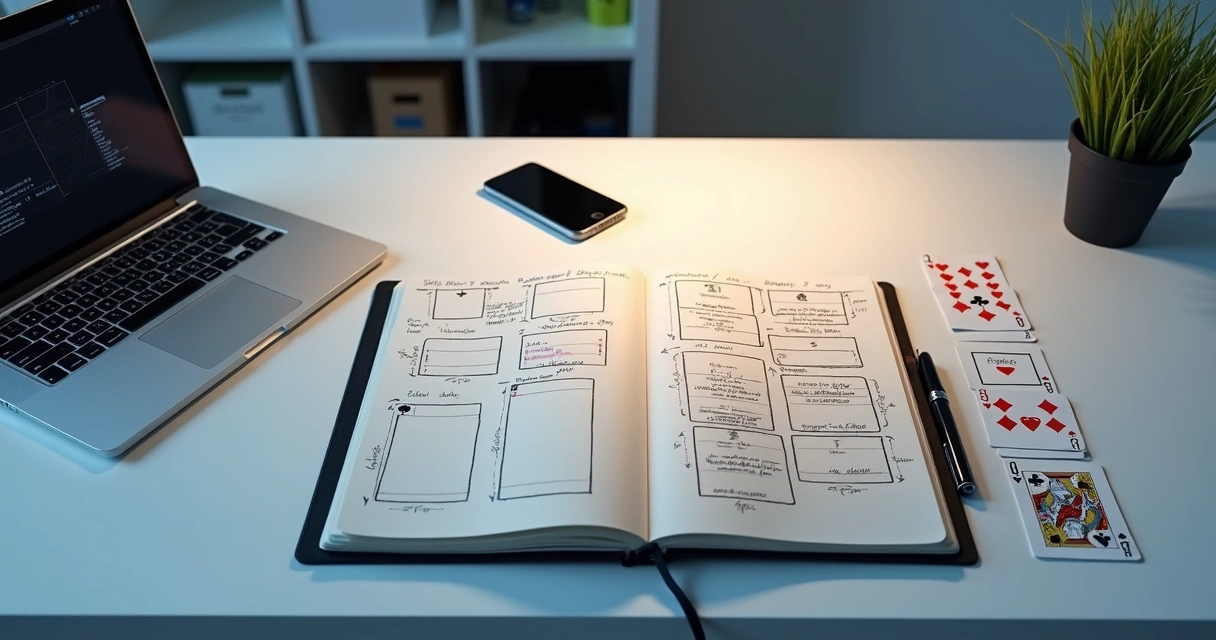
When we read with playing cards, the spread may look simple at first. A few rows. A central card. A timing line. A cluster around the significator. Then a client returns three months later and asks, “What was that card near the outcome?” That is when memory starts to blur.
The best spread notes do not just list cards, they preserve structure, context, and meaning.
In our experience, complex playing card spreads become hard to revisit when we only record card names. We need more than a card list. We need the question, the layout, the order of pull, card interactions, and the final message given to the querent. Without that, even a strong reading can fade into fragments.
This is one reason organized recordkeeping matters so much for professional readers. MysticLog was built around this real need. When we are working with many querents, scattered notebooks and loose screenshots stop being enough. A clean record makes future sessions calmer, faster, and more personal.
Why complex spreads are harder to record
A three-card reading is usually easy to track. A 21-card spread with directional links, houses, clarifiers, and timing notes is different. The challenge is not only the number of cards. It is the web between them.
We have seen this happen often. A reader writes: “7 of Hearts, King of Clubs, 10 of Spades, good love sign, delay in work.” A month later, that note says very little. Which card crossed the significator? Which one repeated the theme? Which card softened the harder card? The reading is there, but only in pieces.
Structure carries meaning.
To avoid that loss, we need a note method that captures several layers at once:
- The spread name or custom format
- The querent’s exact question
- The card positions and their role
- The order in which cards were drawn
- Card clusters, repeats, and directional patterns
- The spoken interpretation and next steps
That may sound like a lot, but once we build a repeatable system, it becomes natural.
Start with a repeatable spread record
We think every spread record should begin with a stable template. This lowers mental load during or after the reading. Instead of guessing what to save, we save the same types of details each time.
A good documentation template turns a one-time reading into a usable long-term record.
A practical template can include these fields:
- Date and session type
- Querent name or client ID
- Question asked
- Deck used
- Spread format or layout name
- Card positions
- Cards drawn in each position
- Clarifiers or extra pulls
- Main themes
- Advice or likely outcome
- Follow-up date or future check-in note
We also like adding one short field called “reader reflection.” This is where we note what stood out intuitively, what felt unusual, or what we want to watch if the querent returns. It gives the record a living quality without making it messy.
If you already work with layered divination notes, our article on keeping accurate notes for complex spreads supports this same habit from a broader reading perspective.
Map the layout before writing meanings
One of the smartest habits we can build is to record the shape of the spread first. Before writing interpretations, we capture where each card sat. This matters because the same card can speak very differently depending on position.
For example, a 9 of Spades in an obstacle line is not the same as a 9 of Spades in a hidden influence cluster. A King of Diamonds near the significator may carry more weight than the same card at the edge of the spread.
We can map the layout in a few simple ways:
- Draw a quick diagram with numbered positions.
- Write cards in rows that match the table layout.
- Use labels such as center, above, below, left, right, crossing, near future, outcome.
This method is especially helpful for custom playing card spreads, where there may be no standard textbook structure to rely on.
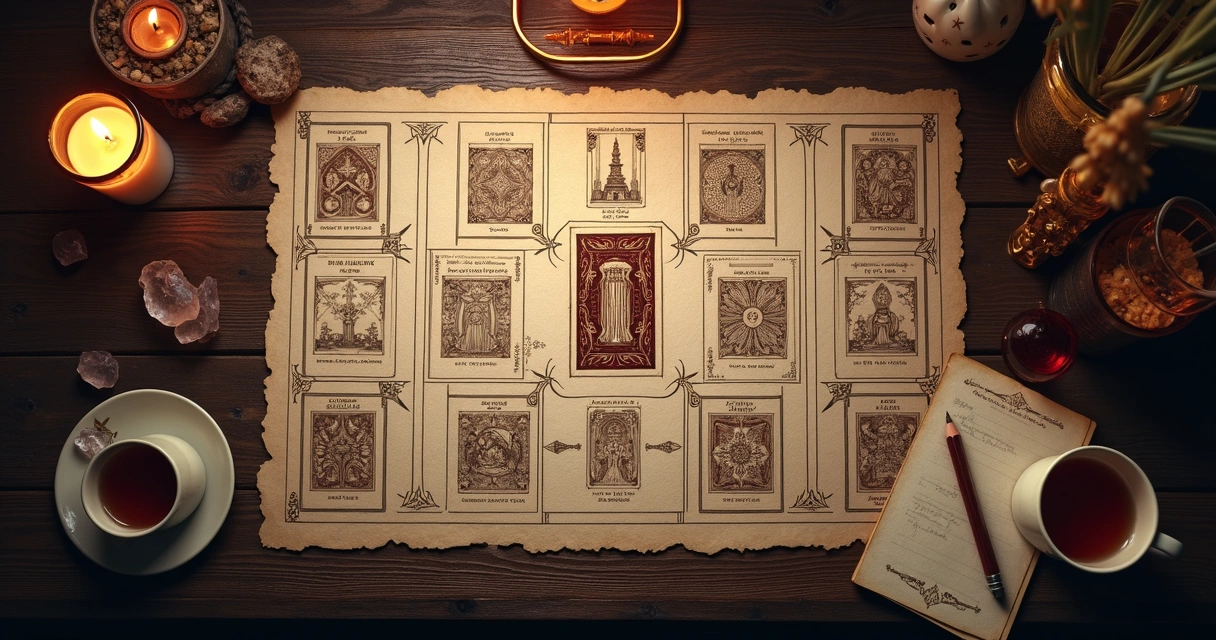 When readers want more visual depth, we can also borrow ideas from research introducing a graphical technique for visualizing sequence and structural patterns. While that study focused on musical performance, the idea adapts well to card spreads. We can mark rhythm, repetition, and sections in a reading by using arrows, grouping marks, or line paths across positions.
Record relationships, not just positions
After the layout is saved, we move to relationships. This is where many notes become thin. A spread is not only made of separate cards. It is also made of links.
Future clarity often depends more on card relationships than on isolated card meanings.
We suggest looking for at least four kinds of relationship in complex playing card spreads:
- Repeats: repeating suits, repeating numbers, or repeated court energy
- Tension: cards that conflict in tone, timing, or direction
- Support: cards that soften, confirm, or strengthen another card
- Movement: visual flow toward the outcome, away from the significator, or around a key issue
We once reviewed an old reading where the note only showed “many Clubs, warning around money.” But the real message had been about social pressure feeding financial risk. That came from the relation between court cards, not from one suit alone. If we had not stored the spread shape and card grouping, the original message would have been lost.
This is where a platform like MysticLog can be especially helpful. Being able to keep structured notes, uploaded images, and session-specific observations in one client history makes later recall much smoother.
Use a short code system for speed
Many readers avoid detailed documentation because they think it will take too long. We understand that. After a full client day, no one wants to write three pages for each spread. That is why a short code system helps.
We can create a set of abbreviations that are clear to us and consistent across all records. For example:
- SG for significator
- CL for clarifier
- RF for repeating focus
- BL for blocking line
- NF for near future
- TR for timing reference
Then a note might read: “SG = QH. BL: 10S + 8C. RF = Clubs x4. NF: KD next to 6D.” This is short, but still useful. The key is keeping your code stable. If your symbols change every week, future you will not thank present you.
If your style includes journaling after sessions, our guide to tarot journaling for insightful readings offers ideas that also work well for cartomancy records.
Take one clear image of the full spread
Written notes are strong. A full-spread image adds another layer. It preserves spacing, angles, and the physical feel of the reading in a way words often miss.
A single overhead photo can save details that written notes may miss.
We suggest keeping the photo simple and consistent:
- Use an overhead angle when possible
- Keep lighting soft but bright enough to read pips and suits
- Remove unrelated objects from the frame
- Take the image before moving clarifiers or side cards
For larger spreads, take one full image and, only if needed, one closer image of dense areas. More than that can become hard to sort later.
 If you provide written reports after sessions, our post about whether readers should offer digital reports may help you decide how much of this material should also be client-facing.
Separate raw observation from interpretation
This step helps more than people expect. We recommend keeping raw observation and interpretation in separate parts of the note. First, write what is there. Then write what you think it means.
For example:
- Observation: three Hearts in the left cluster, two Spades crossing the center, Queen of Clubs beside King of Clubs
- Interpretation: strong emotional concern shaped by stress, with a pair dynamic tied to work or planning
This creates cleaner records. It also helps if you revisit the spread later and want to check your first reading against what actually happened. We think this is one of the best ways to build trust in your own method over time.
For readers who move between simple and layered layouts, our article on spread design from simple to deeper insight can also support clearer note structure.
Store notes where retrieval is easy
Documentation is not just about what we record. It is also about where we keep it. If a spread note is buried in a camera roll, a paper notebook, and two random files, future reference becomes slow.
We suggest storing each spread with a client-centered structure:
- Client name or ID
- Date of reading
- Reading topic
- Spread image
- Written notes
- Follow-up outcome if the client reports back
That last item matters. A documented spread becomes much more valuable when we can compare the reading to later events. Over time, this gives us a stronger sense of how our own card language works in practice.
MysticLog supports this kind of client-based organization well, especially for readers handling many repeat sessions. And for safer storage habits, we also recommend our piece on how to securely store and back up digital divination records.
Build a habit of post-reading review
The final step is simple. Review the spread note soon after the session. Not hours later if you can avoid it. While the reading is still fresh, add any missing context, clean up vague lines, and tag the main themes.
We like asking three quick review questions:
- Would this note make sense in six months?
- Did we capture the spread shape and relationships clearly?
- Did we save the final message given to the querent?
If a note cannot guide a future session, it is not finished yet.
That sentence may sound firm. Still, it has saved many readers from vague archives and half-lost insights.
Conclusion
Complex playing card spreads deserve more than quick shorthand on a loose page. When we document the question, layout, sequence, card relationships, image, and final interpretation, we create a record that stays useful long after the reading ends. That helps us serve querents with more continuity and more care.
We believe good documentation is part of good spiritual practice. If you want a better way to organize spread notes, client histories, images, and follow-up sessions in one place, take a closer look at MysticLog and see how it can support your reading work.
Frequently asked questions
What is a playing card spread?
A playing card spread is a planned layout used in cartomancy where each card position has a role or meaning. The spread can be small and direct or large and layered, with lines, clusters, timing positions, and clarifiers.
How to document card spreads easily?
The easiest way to document card spreads is to use one repeatable template for every session. Include the question, layout, cards by position, key patterns, and a short final interpretation. Adding one overhead photo also helps.
What tools help record complex spreads?
Useful tools include a structured journal, a note template, a phone camera for spread images, and a digital client record system. MysticLog is a good fit for readers who want to store notes, images, and session history together.
Why document my card spreads?
Documenting your spreads helps you remember past readings, track repeat themes, prepare for follow-up sessions, and compare interpretations with later outcomes. It also helps you build a steadier professional practice over time.
Where to store card spread notes?
Store card spread notes in a place where they are easy to search by client, date, and topic. A secure digital system is often better than scattered paper notes or unorganized photos because it keeps the full reading history together.