

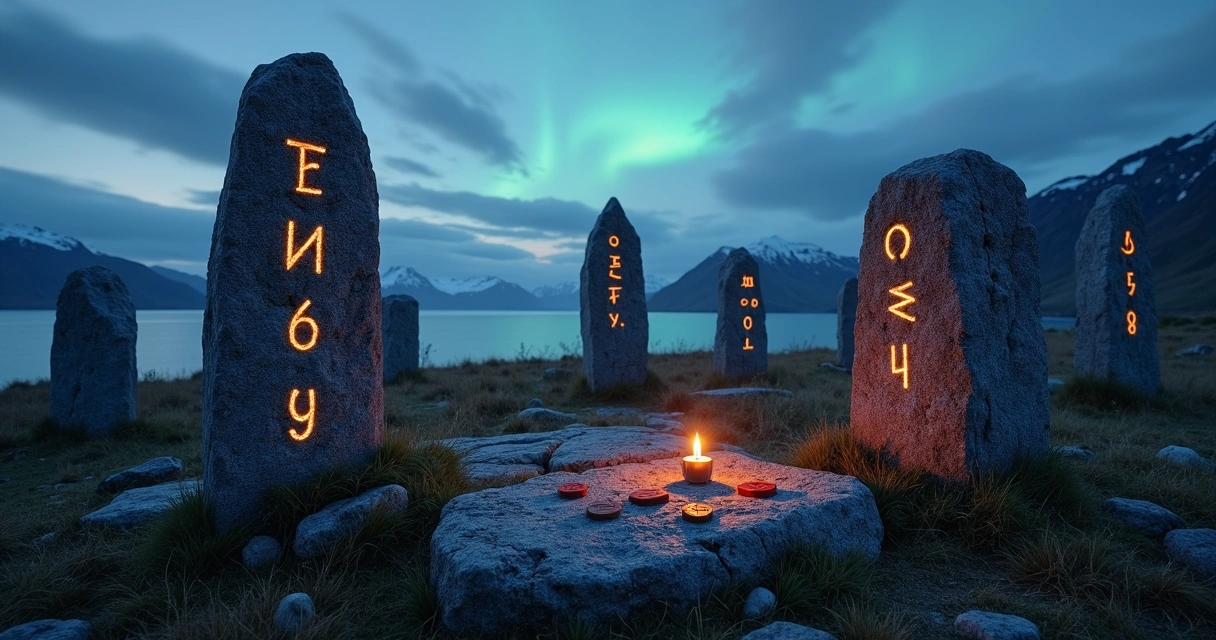
When we speak about viking runes, we are speaking about far more than carved marks on stone or wood. We are looking at a writing system, a body of symbols, and a living spiritual language that still speaks to many people today. In our experience, runes invite both study and silence. They ask us to learn history, but they also ask us to listen.
Runes were both letters and symbols, used for writing, memory, identity, and in some cases ritual meaning.
Many readers first meet Norse runes through modern divination. That path is valid, but it becomes richer when we know where these signs came from, how they changed over time, and what place they held in daily and sacred life. For spiritual professionals, this deeper view can shape better readings, better questions, and better records. That is one reason platforms like MysticLog can be helpful, since rune readers often want to preserve not only spreads or casts, but also context, client patterns, and long-term symbolic themes.
Where the runes came from
The earliest runic alphabet known to us is the Elder Futhark. Its name comes from its first six signs: F, U, Th, A, R, and K. This older system had 24 characters and was used by Germanic peoples before the Viking Age. Over time, language changed. Sounds shifted. Writing changed with them.
The Elder Futhark had 24 characters, and later Norse societies moved to the 16-character Younger Futhark.
This shift is well supported. According to the University of Washington, the Elder Futhark was used until about 700 CE, when a 16-character script replaced it during the Viking Age. That later script is what many people picture when they think of Viking Age inscriptions.
It is easy to imagine runes as frozen in time. They were not. They developed through real speech, regional habits, and social use. A rune row had to serve the spoken language of its users, and old systems do not always fit new sounds neatly. So the alphabet became smaller, even while the language itself became more varied. That can seem strange at first. Fewer signs had to carry more sound values. Readers and carvers relied more on context.
We find that this fact alone changes how people approach rune reading today. The symbols were never just neat one-to-one labels. They were alive in use.
Elder Futhark and Younger Futhark
To understand historical rune work, we should keep these two systems distinct.
The Elder Futhark is older and often preferred in modern spiritual practice because its 24 symbols allow fuller symbolic sets in contemporary interpretation. The Younger Futhark belongs more directly to the Viking Age and appears on many inscriptions from that period.
Elder Futhark is older, while Younger Futhark is the script most closely tied to the Viking Age.
The Younger Futhark had forms that changed by region and carving style. Some inscriptions used long-branch forms, often linked with Denmark. Others used short-twig forms, often linked with Sweden and Norway. There were also later medieval rune developments. So when someone says “viking runes,” the exact form may differ depending on place and date.
This matters for readers who value historical clarity. If we are studying a memorial stone from the 10th century, we are not dealing with the same rune row used centuries earlier. If we are doing divination with a modern Elder Futhark set, we are already working in a later spiritual framework, even if it draws from older roots.
For readers who want a broader foundation, our guides on the history, meanings, and uses of runes and the Elder Futhark and divinatory meaning can support that next step.
How runes were used in Norse life
Runes were not made only for divination. They were used in ordinary and public ways. People carved them on stone monuments, personal items, weapons, amulets, trade objects, and wooden sticks. Some inscriptions were brief and plain. A name. An ownership mark. A memorial. Others carried formal statements, social claims, or religious words.
Most historical rune inscriptions were practical, social, or memorial in purpose, not purely divinatory.
The Milwaukee Public Museum notes that more than 6,000 Viking Age rune stones have been found across Scandinavia. These stones served as memorials, statements of family standing, and signs of belief during a period of cultural change. That number helps us see scale. Runes were not rare curiosities. They were part of public memory.
We can picture a person standing before a carved stone, reading aloud a father’s name or a son’s achievement. The text was visible, but it also carried voice, grief, honor, and land. It said, “This person lived. This family remembers.”
Runes could preserve a life.
At the same time, some inscriptions suggest wishes for protection, blessing, power, or curse. The line between practical and magical was not always sharp in premodern life. A carved object might be useful and sacred at once.
 Phonetic values and symbolic meaning
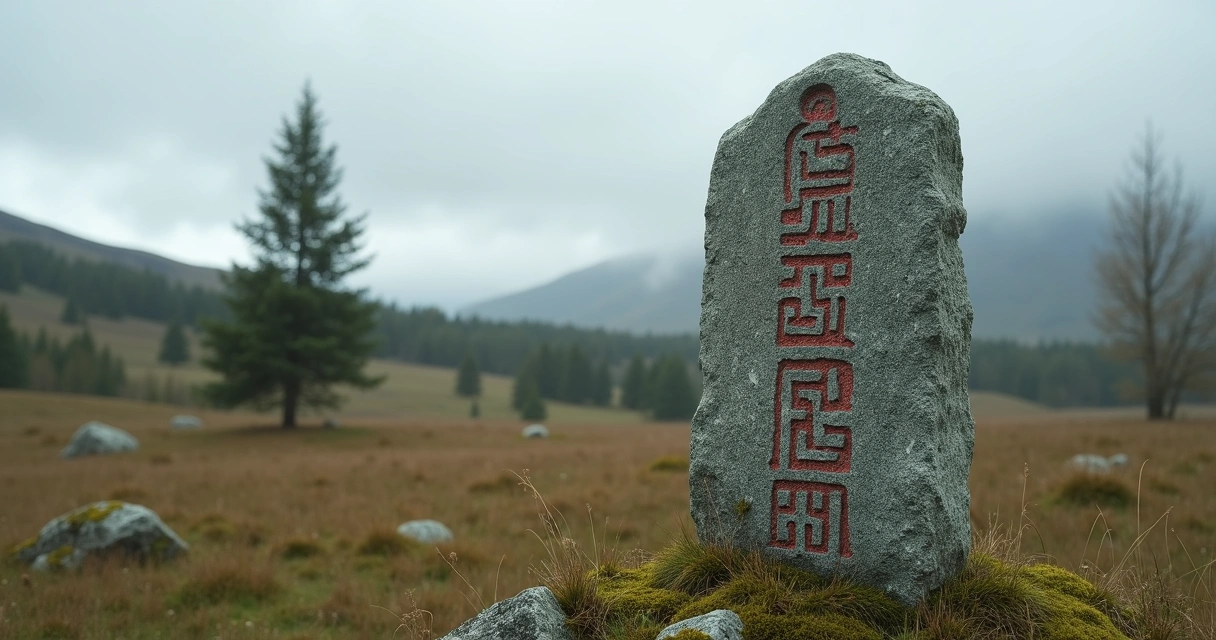
Each rune originally had a sound value, like a letter. Many also had names tied to concrete ideas such as cattle, gift, journey, or sun. This is one reason they hold such power in modern practice. A rune can be read at several levels at once:
- As a sound in a word
- As a named symbol with cultural meaning
- As part of a phrase or inscription
- As an image that carries spiritual weight
Take Fehu, for example, from Elder Futhark. Its sound is linked to F, and its name is often tied to cattle or movable wealth. In old societies, cattle meant value, trade, status, and survival. In modern divination, Fehu may point toward money, resources, exchange, or the flow of energy. But we should not flatten it into “good fortune” and stop there. Wealth in old life required care, movement, and risk.
A rune’s meaning grows from its sound, its name, and the cultural world that gave that name force.
Another example is Raidho, linked to riding or journey. It can suggest travel, movement, process, timing, or right order. In a reading, it may point to a physical trip, but it may also speak about how a matter is unfolding. Is the path straight? Is the rhythm right? Is the person moving in alignment with purpose?
This layered method helps rune readers stay grounded. We begin with what the rune was, then we widen into what it may mean now.
Some core rune meanings
We often see students try to memorize rune meanings as fixed keywords. That can help in the early stages, but it is only a start. Below is a simple way to hold a few well-known Elder Futhark runes in mind without reducing them too much.
- Fehu often points to wealth, exchange, and what is in motion.
- Uruz can suggest strength, raw force, health, and untamed potential.
- Thurisaz may refer to pressure, defense, danger, or a force that must be faced carefully.
- Ansuz is linked with speech, breath, wisdom, and messages.
- Kenaz often relates to fire, insight, craft, and revealed knowledge.
- Gebo speaks of gift, exchange, bond, and mutual obligation.
- Algiz may suggest protection, alertness, and contact with higher support.
- Sowilo is often read as sun, clarity, success, and directed will.
These are not mechanical meanings. They are starting points. In our practice, the best readings happen when the symbol, the question, and the reader’s trained intuition meet in one clear moment.
Runes in magic and ritual
There is long-standing interest in runes as magical signs. Some historical texts and inscriptions suggest that certain rune carvings were thought to protect, heal, bless, or affect outcomes. We should be careful here. Not every claimed magical use can be proven, and modern ideas sometimes stretch beyond the evidence. Still, there is enough to show that runes could carry ritual force in the minds of their users.
Historical evidence suggests that some runes were used with ritual intent, even if not every modern claim can be traced to the Viking Age.
This is where respect matters. For many people today, rune work is part of Norse spirituality, ancestral practice, or personal sacred discipline. That calls for attention, not performance. A carved rune on wood, a spoken invocation, or a cast before prayer can all be meaningful when done with knowledge and care.
We think this is also where record keeping becomes more valuable than many expect. When a reader notes recurring runes, moon phases, client themes, and outcomes over time, patterns become easier to see. MysticLog fits naturally into that kind of disciplined spiritual work, especially for professionals who want a clear record of readings without losing the sacred tone of their practice.
How divination with runes works today
Modern rune divination is not a direct copy of one single historical Viking method. It is a living practice built from historical material, later occult use, and present-day spiritual insight. That does not make it false. It means we should be honest about what is old and what is new.
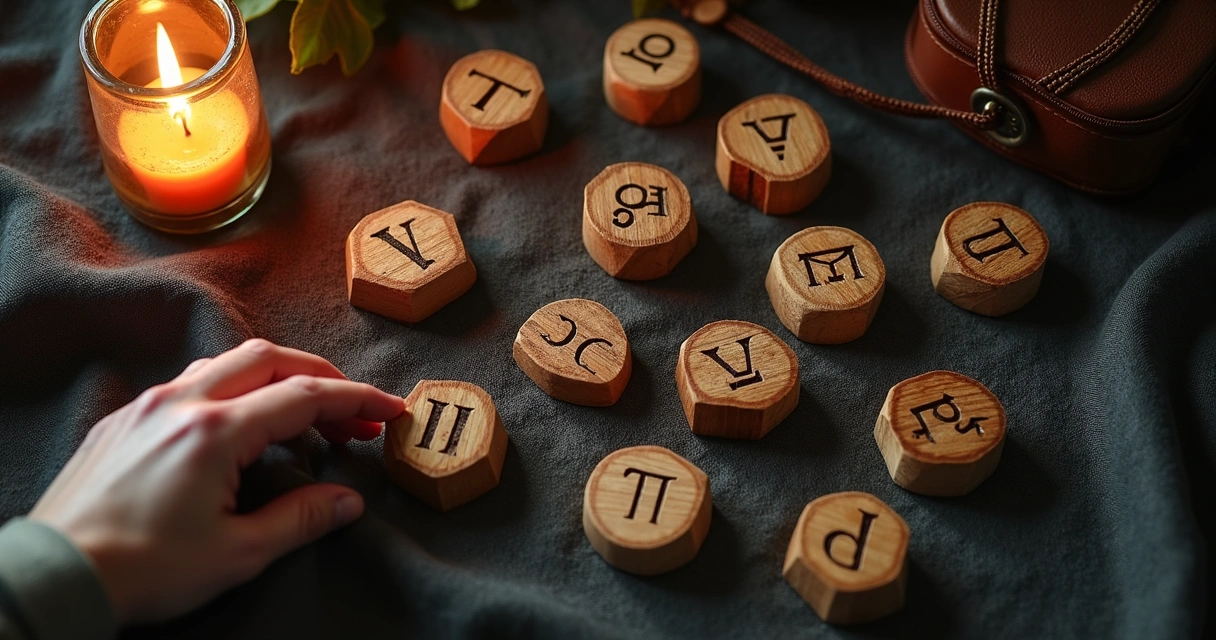
Most readers work with rune sets made of wood, stone, bone, clay, or metal. The runes may be drawn one at a time, cast onto a cloth, or laid in a spread. Some people read reversals. Some do not. Some include an empty rune, while others leave it out as a modern addition.
Modern rune reading is a contemporary spiritual practice rooted in old symbols, not a perfect copy of one ancient method.
If you are building your own method, it helps to keep a simple structure:
- Ask a clear question.
- Choose a draw or cast style.
- Read each rune first by its core meaning.
- Then read it in relation to position, neighbors, and context.
- Record what happened and review later.
This final step is often missed. Yet it is one of the best ways to mature as a rune reader. A message that seems abstract today may become obvious after a month. If you work with clients, this matters even more. Long-term notes can show whether certain runes appear around repeated life cycles, relationships, career changes, or healing periods.
For those still refining method, our articles on reading, casting, and interpretation and how to read runes as a beginner offer practical support.
 How to interpret a rune reading
Interpretation begins with restraint. We do not rush to force a message. We look. We ask what the rune says in its plain sense before we ask what it says in mystical language.
Let us say someone asks about a strained friendship and draws Gebo, Hagalaz, and Ansuz. We might read gift or exchange, then disruption, then speech. The pattern may suggest that balance between two people has been broken and must be restored through honest communication. If the same client has a history of overgiving, that changes the tone. Gebo then may point to imbalance disguised as generosity.
That is why context matters so much.
A good rune reading comes from the meeting of symbol, question, context, and trained judgment.
We often recommend these habits when interpreting:
- Start with the oldest, simplest meaning you know.
- Notice whether the rune points to action, warning, support, or timing.
- Look for tension between runes rather than trying to make them all agree.
- Ask what in the client’s life matches the symbol without stretching too far.
- Keep notes and return to them after real events unfold.
That last step turns intuition into craft. In our experience, serious readers grow through review. A tool like MysticLog can make that process easier by keeping readings, themes, and follow-up notes in one place.
Authenticity and common myths
Rune work attracts many claims. Some are honest mistakes. Some are romantic inventions. So we should speak plainly. Not every object sold as ancient runic material is authentic, and not every famous story about Norse inscriptions holds up.
One well-known case concerns the Spirit Pond rune stones found in Maine in 1971. Research from the University of Cincinnati concludes that these inscriptions could not have been carved by medieval Scandinavian Vikings and likely date only as far back as 1932. This kind of example reminds us to be careful with dramatic claims.
Authentic rune study asks for both spiritual openness and historical caution.
If we want authenticity, we should look at proven artifacts, trusted museum material, and sound linguistic study. In spiritual practice, authenticity also means being honest about our method. If we use modern divination spreads with ancient symbols, that is fine. We simply say so.
That honesty creates stronger work. It also builds trust with clients.
Runes in modern spiritual practice
Today, Norse rune reading appears in many forms. Some people use the symbols for meditation. Some draw one rune each morning. Some cast for client sessions. Some pair runes with astrology, tarot, trance work, or ancestral offerings. None of these paths are identical, yet many share a common wish: to receive guidance through symbol and pattern.
We have also seen a growing desire for structure. Readers do not just want inspiration. They want a way to track recurring symbols, client growth, and the changing tone of a practice over time. This is where a system like MysticLog can support spiritual professionals who read runes alongside tarot, astrology, or other methods.
If your practice includes other Northern traditions, our article on Nordic runes, meanings, magic, and divination can add another layer of perspective.
 Building a deeper rune practice
Depth in rune work does not come from memorizing more keywords than everyone else. It comes from slow contact. We read. We compare forms. We study inscriptions. We sit with a rune in silence. We track what it means in real readings. We let the symbol become familiar without becoming flat.
Here are a few ways we can deepen a practice over time:
- Study the historical rune rows before building spiritual meanings.
- Keep a rune journal with dates, questions, and follow-up results.
- Work with one rune for several days instead of rushing through all of them.
- Compare your intuitive sense with linguistic and cultural background.
- Notice which runes repeat in client work and what patterns follow.
This kind of steady attention changes everything. A rune stops being a symbol on a page and becomes a known presence in your practice.
Meaning grows through repetition.
We think this is especially true for professional readers. A personal reading can be remembered by feeling alone. Client work needs a cleaner trail. Names, dates, themes, spreads, and impressions matter. When those records are kept well, future readings become sharper and more personal.
Conclusion
Viking Age runes stand at the meeting point of language, memory, belief, and symbol. They began as writing signs, changed with speech, appeared on stones and objects across Scandinavia, and carried both public and sacred weight. The Elder Futhark gave way to the Younger Futhark, and modern diviners later gave fresh life to these old forms through spiritual practice.
To read runes well, we need both historical grounding and present-day sensitivity.
When we approach them with care, the runes offer more than quick answers. They offer a way to think in symbols, to honor legacy, and to follow patterns that unfold over time. For readers who want to build a serious practice, keep client histories, and preserve the living thread between one session and the next, MysticLog can help bring rune work into a clear and well-held professional space. We invite you to get to know MysticLog and see how it can support your rune readings, notes, and long-term spiritual practice.
 Frequently asked questions
What are Viking runes used for?
Viking runes were used for writing, memorial inscriptions, ownership marks, public monuments, and at times ritual or symbolic purposes. In modern spiritual practice, many people also use them for meditation, divination, and personal guidance.
How can I read Viking runes?
We can read them by learning the rune row, each sign’s sound value, and the basic meaning tied to its name. In divination, we usually begin with a clear question, draw or cast the runes, and interpret them through symbol, position, and context. Study plus practice gives the best results.
What do different Viking runes mean?
Different Norse symbols carry different meanings based on their names, sounds, and cultural use. For example, Fehu is often tied to wealth or exchange, Ansuz to speech or messages, Raidho to journey or right movement, and Algiz to protection or alertness. Their meaning in a reading depends on the full question and surrounding runes.
Where can I find authentic Viking runes?
Authentic Viking Age runes are found on historical artifacts, inscriptions, and rune stones preserved in museum collections, academic records, and archaeological studies. If we are buying a modern rune set for practice, it is best to choose one made with clear knowledge of historical forms rather than relying on dramatic claims of ancient origin.
Are Viking runes used in divination today?
Yes. Many modern practitioners use runes in divination today, especially within Norse spirituality and related spiritual paths. This practice is modern in form, even though it draws from old symbols and cultural memory. Readers often cast runes, draw single signs, or use spreads to interpret guidance for themselves or clients.