


Tarot reading prices vary by city, session length, and format, so there is no reliable single rate for every neighborhood. In the United States, published marketplace estimates range from low-cost written readings to more than $100 for a private session. To judge what a nearby reader charges, compare the same session length and service details, not just the headline price.
Key points before you book
- Ask for the full price and session length before paying.
- Compare live, written, and event readings separately.
- A higher fee does not automatically mean a better reading.
- Check whether follow-up questions, travel, or booking fees cost extra.
- Choose a price that fits your budget without pressure to buy more.
What does a tarot reading typically cost?
Published prices differ because marketplaces measure different kinds of readings. Thumbtack’s 2025 cost guide lists a national estimate of $73 to $162 per reading, with an average of $109. Treat that as a broad marketplace reference, not a guaranteed local rate or a quote for a specific session length. Thumbtack’s national cost guide notes that location, time, and the practitioner can affect the final price.
Online listings can be much cheaper, especially for written readings. In a September 28, 2026 snapshot, Divina’s live listing snapshot covered 73 offers from 31 readers: most listings cost $11 to $28, while the five live sessions listed commonly cost $35 to $60. That is a small platform sample, not a representative survey of local, in-person readers.
| Price reference | What it measures | How to use it |
|---|---|---|
| $73 to $162 | Thumbtack’s national estimate per reading | Broad context, not a quote for your city |
| $11 to $28 | Most offers in Divina’s online listing sample | Useful for comparing written readings on that platform |
| $35 to $60 | Common prices among five live sessions in that sample | A limited reference, not a local average |
Because these figures describe different services and marketplaces, they should not be read as competing price lists. Your local options may fall outside either range.
Why can two nearby tarot readers charge different rates?
The fee often reflects more than the cards on the table. A 15-minute single-question reading takes less appointment time than a 60-minute consultation exploring several connected concerns. Some readers also spend time preparing a spread, writing a personalized interpretation, or answering an agreed follow-up question.
Location and delivery format matter, too. A reader renting a studio or traveling to a private event may include those costs in the fee. A remote appointment avoids travel, but a live video call is still scheduled one-on-one time. Experience, demand, and a reader’s specific approach may influence pricing, though none of these factors guarantees a particular outcome or level of compatibility.
Ask what the session includes rather than trying to judge quality from price alone. A clear description of the format, time, and boundaries is more useful than a vague promise of a life-changing result.
Does the format change the price?
Yes. A short in-person session, an online video appointment, and a written reading are different services, even when all use tarot. Written readings may cost less because they are not live appointments, while event bookings may be priced by the hour or include a minimum booking period.
- In person: Confirm the location, duration, and whether travel or venue costs are included.
- Video or phone: Check whether you are paying a flat session fee or a per-minute rate.
- Written: Ask how many questions or cards are covered and when the response will arrive.
- Events: Confirm the minimum booking time and how many guests can be read.
If you are considering a professional tarot practice from the practitioner’s perspective, organized client records can also support continuity between appointments. MysticLog is a secure client management workspace for spiritual professionals to keep reading histories, notes, spreads, and follow-ups together. That organization can help a returning client receive a more informed session, but software alone does not justify a higher fee.
How do you compare local prices fairly?
Compare at least three nearby options using the same checklist. A 30-minute quote is not directly comparable with a 60-minute appointment, and the cheapest advertised offer may cover only one question.
- Write down the session length and format you want.
- Check what the fee includes, such as the number of topics, a written summary, or follow-up time.
- Ask whether there are extra charges for travel, deposits, or late changes.
- Read recent reviews for comments about communication, punctuality, and clear expectations.
- Choose the reader whose approach and boundaries suit you, not simply the lowest price.
For example, a $60 appointment lasting 45 minutes works out to $80 per hour, but that calculation is only a comparison tool. It does not measure the reader’s skill or tell you whether their style will feel right for you.
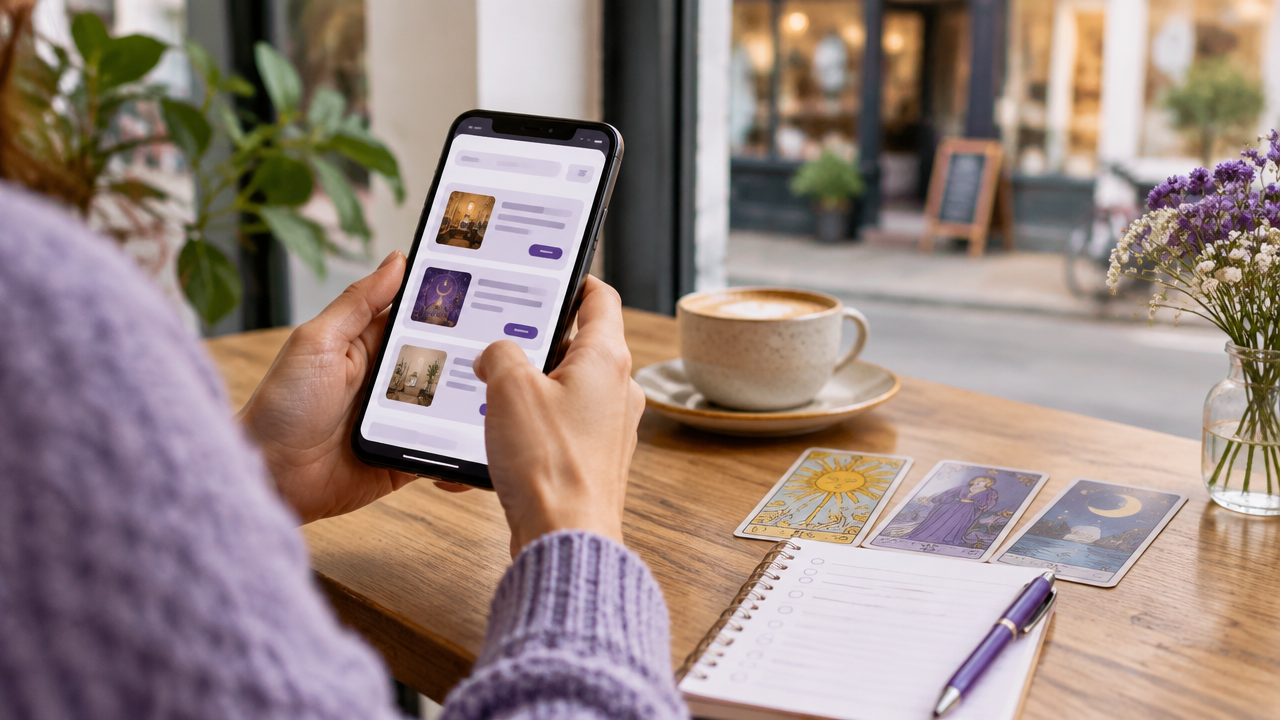
Before booking, look for a visible price list or ask for the total in writing. A reputable reader should be able to explain the service without pressuring you to add paid extras or make repeated appointments.
What should a fair price include?
A fair price should come with clear expectations. You should know how long the appointment lasts, how the reading will be delivered, and whether there is time for questions. If the session is meant to focus on a specific topic, ask whether related questions are included or treated as a separate reading.
Be cautious when a reader uses fear, urgency, or guaranteed predictions to sell add-ons. Tarot readings are interpretive, and no price can guarantee a particular result. If a reader says you must pay more to remove a curse, prevent harm, or secure a promised outcome, step away rather than making a pressured purchase.
When deciding whether a free online tarot reading or a paid human appointment suits you, consider what you want from the experience. A free digital draw can offer a quick prompt for reflection; a live professional reading may allow conversation, clarification, and an interpretation shaped around your question. Neither option needs to replace your own judgment.
How to find today’s local rate
Because you have not named a city or ZIP code, an exact neighborhood price cannot be verified here. Search current local listings and reader booking pages, then compare the same session duration and format. Call or message to confirm that the displayed fee is still current, especially if a directory listing has no update date.
Pick a reader whose approach feels comfortable and whose price is clear before you book. A grounded comparison gives you a better sense of local value than a national average, while keeping your budget and expectations in your own hands.