


A free online tarot reading can offer a quick introduction to the cards, while a professional session gives you time to explore a specific question with a human reader. Knowing the difference helps you choose a format, set realistic expectations, and decide whether a paid consultation is right for you.
Key points to know before you book
- Free readings are often automated or limited in scope; check how the reading is generated.
- A professional consultation should explain its format, duration, price, and boundaries before you pay.
- No reader can guarantee an outcome. A useful reading offers perspective, not certainty or a substitute for expert advice.
- Choose the session format that suits your question, whether live video, chat, phone, or a written reading.
What does a free online tarot reading offer?
A free online reading can be a real way to explore tarot, but the experience may differ greatly from a one-to-one consultation. Some sites generate a result from a card-selection tool or automated text. Others offer a short sample from a human reader, a limited introductory session, or a free reading in exchange for practice or feedback.
Before starting, look for a clear explanation of what is free and what may cost extra. Check whether you need to create an account, share personal information, or agree to a follow-up offer. A reading should not require you to disclose sensitive details that are unrelated to your question.
Free tools can help you learn card meanings or reflect on a broad theme. They are less suited to a nuanced question that requires follow-up, context, and a conversation about what the cards may mean for you. Treat the result as a prompt for reflection, not a guaranteed forecast.
Which online reading format suits your question?
The right format depends on how much interaction you want. A live appointment allows clarification as the reading unfolds, while an email reading gives you a written interpretation to revisit later.
| Format | What to expect | Best suited to |
|---|---|---|
| Video or phone | A scheduled conversation with cards interpreted in real time | Questions that benefit from dialogue and follow-up |
| Live chat | A text-based session, sometimes with card images or a transcript | People who prefer writing or cannot speak privately |
| Email or recorded reading | A prepared interpretation delivered after the reader reviews your question | Those who want time to absorb and revisit the reading |
| Automated tool | Cards and interpretations generated through a website or app | Learning, casual reflection, or a quick card prompt |
If you are used to searching for a reader nearby, apply the same care to an online provider: look at their approach, experience, and session terms rather than relying on location or a star rating alone.
What happens during a professional online tarot session?
A professional session usually begins with a short conversation about your question and what you hope to understand. The reader may ask you to narrow a broad concern into a question that supports reflection, such as what to consider in a career decision rather than asking for a guaranteed prediction.
Next, the reader selects or lays out cards and explains how the imagery and positions relate to your question. You should have room to ask what an interpretation means, share relevant context, or say when a reading does not resonate. A responsible reader does not need to pressure you into accepting every interpretation.
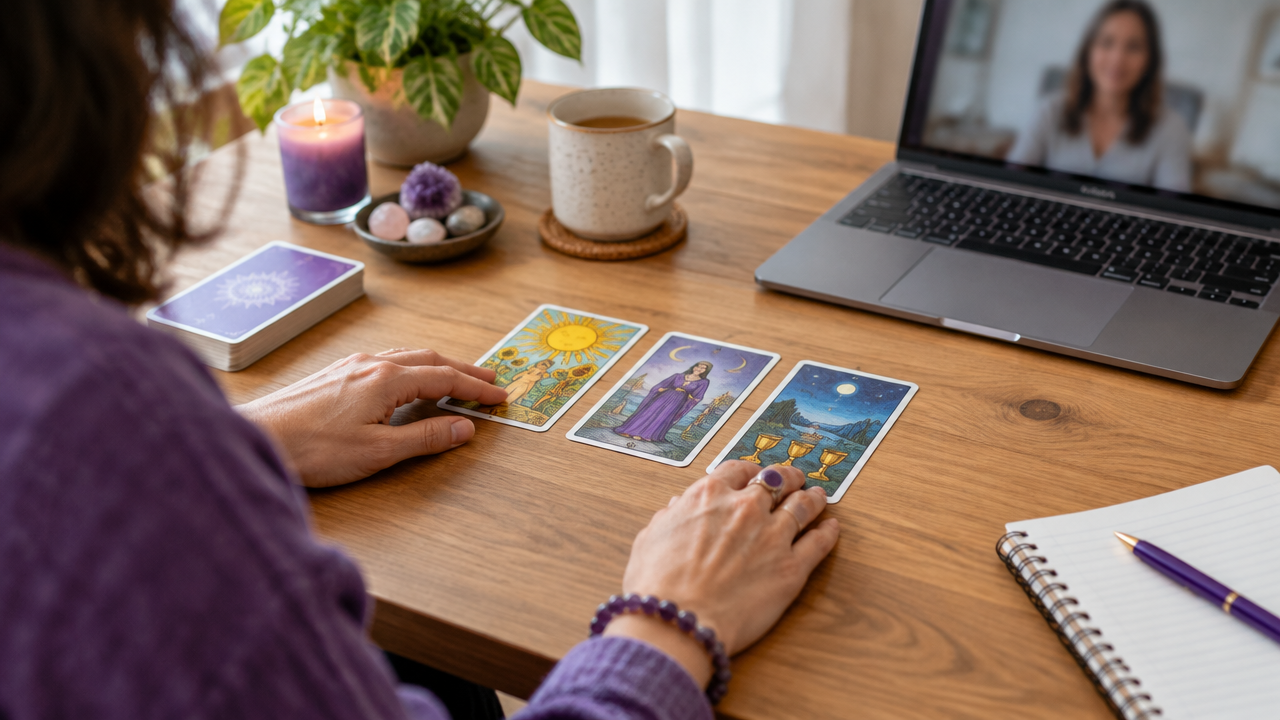
Before the appointment, ask whether you need a camera, a quiet space, or your own deck. Afterward, you may receive a summary, card images, or a recording if these are included in the offer. Confirm in advance how long the session lasts and whether follow-up questions are part of the price.
How can you tell whether an online tarot reader is trustworthy?
A trustworthy reader describes their service plainly, respects your choices, and makes no promises of guaranteed results. Their profile should explain their reading style, areas of focus, format, price, cancellation terms, and how they handle personal information. Specific, realistic claims are more useful than sweeping promises of perfect accuracy.
Reviews can help you understand a reader’s communication style, but they are only one signal. Look across more than one source and pay attention to how recent and detailed the feedback is. The FTC’s guidance on online reviews recommends considering who posted a review and where it appears, rather than treating a star average as proof.
A professional tarot conduct code also emphasizes making sure a client knows what to expect before a reading begins. Use that principle as a practical check: the reader should welcome questions about the process, explain the limits of the service, and avoid using fear or urgency to sell extra sessions.
Be cautious if someone claims they can guarantee a relationship, diagnose a health condition, or remove a curse for an additional fee. Tarot can support reflection, but it does not replace medical, legal, financial, or mental health advice.
Are free readings enough, or is a paid session worth it?
A free reading may be enough when you want to explore a card, test a tool, or reflect on a general topic. A paid session may be more useful when you want an experienced reader to listen to your context, explain a spread, and respond to follow-up questions. The fee pays for the reader’s time and service, not a promise that a particular outcome will happen.
Compare the full cost, not just an advertised starting rate. Check the session length, introductory pricing conditions, extra charges, payment terms, and refund or cancellation policy. Local prices can provide context, but rates vary by experience, format, and location. If you are comparing a free online tarot reading with paid options, decide what kind of support you need before comparing prices.
Readers who offer free samples should also set a clear scope so clients understand what is included. For practitioners thinking about how introductory sessions fit into a sustainable fee structure, fair pricing starts with the time, preparation, and follow-up a reading actually requires.
How can you get more value from your reading?
Prepare one open-ended question and a brief note about the decision or situation you want to explore. You do not need to share every personal detail. Clear expectations help the reader focus the spread and make the session more useful.
- Ask what the session includes and how long it lasts.
- Tell the reader whether you prefer a direct, gentle, practical, or exploratory style.
- Take notes on interpretations that feel useful, and give yourself time to consider them.
- Choose what to do based on your own judgment, values, and real-world information.
If you read tarot professionally, reliable notes can make a return consultation more personal without relying on memory alone. MysticLog gives spiritual professionals a centralized place to record client histories, spreads, interpretations, and follow-up details. Organized records can help a reader revisit earlier themes while keeping the client’s present question at the center.